
Last updated October 30, 2026
 Wrought iron
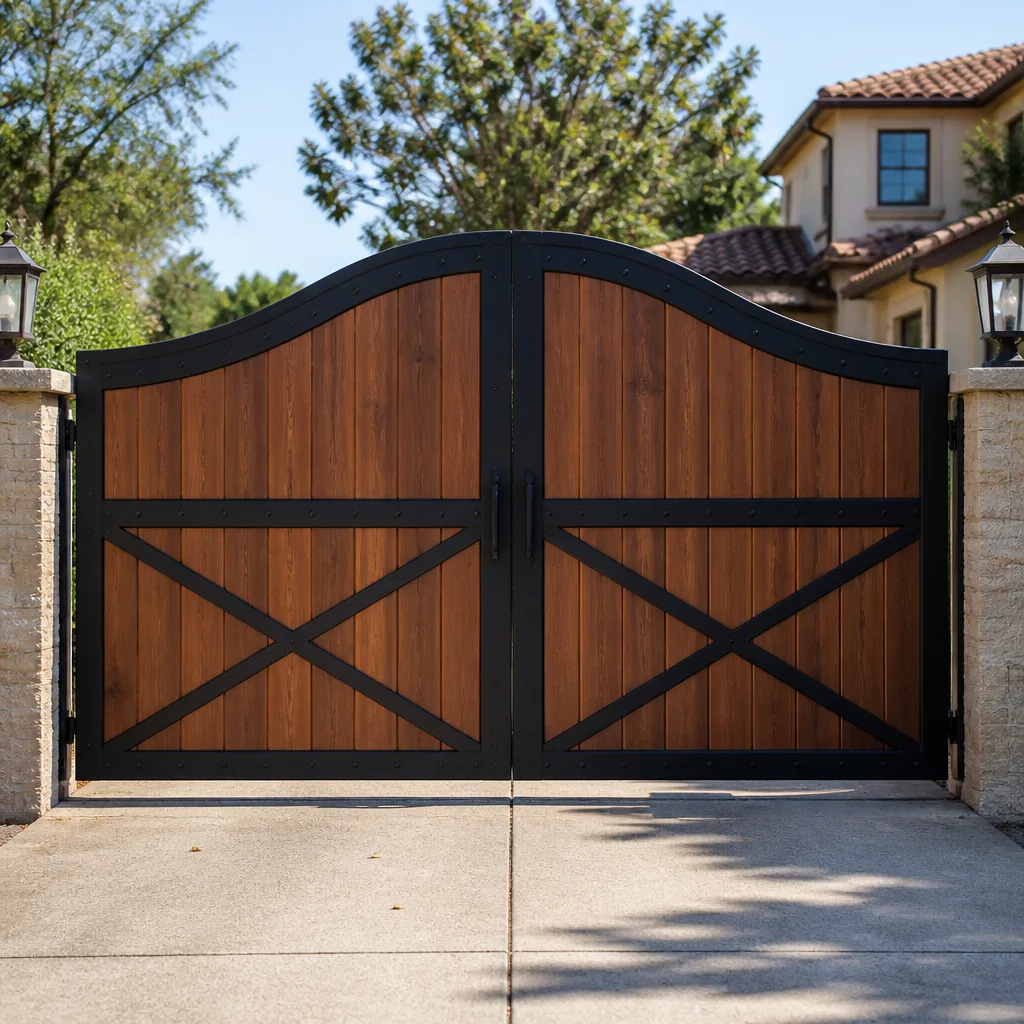 Wood & steel frame
 Farm & ranch
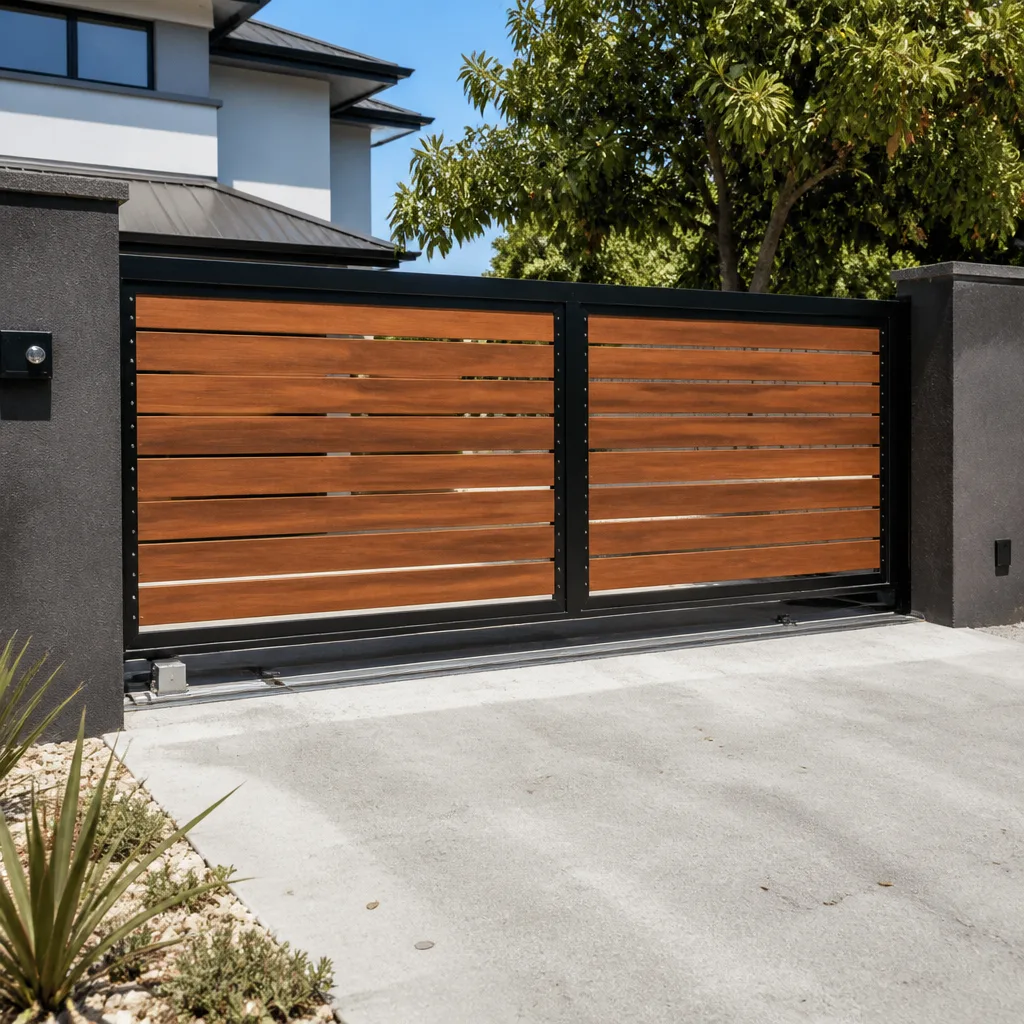 Sliding driveway gates
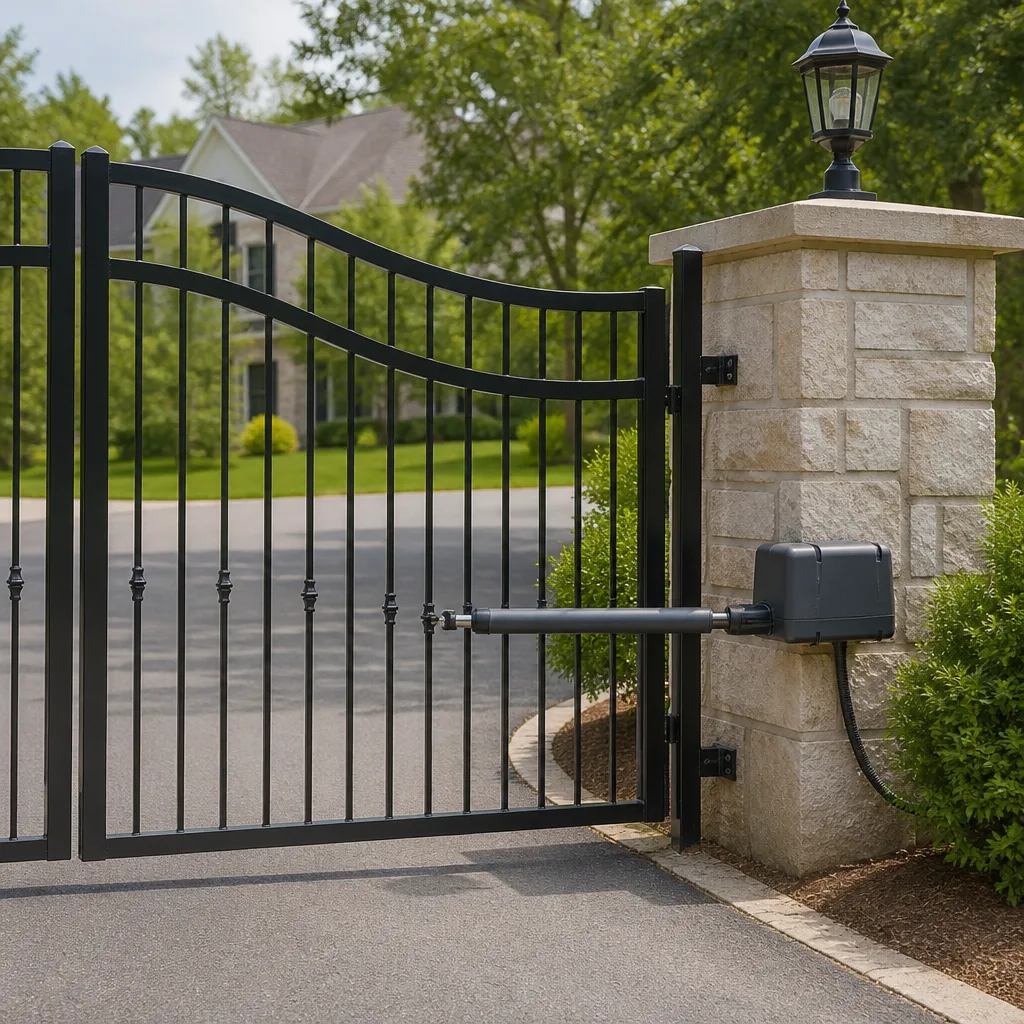 LiftMaster operators
Free on-site gate assessment - hinges, posts, and your LiftMaster or Nice gate operator checked before anything is quoted
The assessment is free and the quote is the invoice.
Get your free estimateDIY vs Professional Gate Repair: The West Palm Beach Homeowner’s Decision Guide
Here’s a number most West Palm Beach homeowners don’t know: Florida law does not allow unlicensed homeowners to perform electrical work on automated gate systems, even on their own property, when that work extends beyond a narrowly defined exemption. We see the aftermath of that misunderstanding at least once a week, a Viking operator wired incorrectly after a YouTube tutorial, a FAAC control board fried by a well-meaning homeowner. This guide maps the actual boundary between what you can legally and safely do yourself, and what belongs in the hands of a Gate Repair services specialist. We’ll cover Florida’s licensing line, the hidden risks in tasks that look simple, what a failed DIY repair does to your warranty, and the real cost math when the parts bill arrives.
Styles & brands we work with
Quick Answer
Most mechanical maintenance on a residential gate in West Palm Beach, hinge lubrication, sensor cleaning, clearing debris from the track, is safe for a capable DIYer. Anything involving the electric operator, control board, loop detector, or access wiring is electrical work under Florida law and requires a licensed contractor. Between those two poles sit spring tensioning, chain adjustment, and post realignment, which are technically mechanical but carry injury and property damage risks that make professional service the rational choice for most homeowners.
Table of Contents
- The Florida Legal Boundary: Where Homeowner Exemption Ends
- Genuinely Safe DIY Tasks: What You Can Do This Weekend
- Tasks That Look Simple but Carry Real Risk
- Warranty Coverage and Insurance Claims After a DIY Attempt
- The Real Cost Math: When DIY Is Actually More Expensive
- Why West Palm Beach’s Climate Changes the Equation
- Common Mistakes to Avoid
- When to Call a Professional
- Frequently Asked Questions
- The Bottom Line
The Florida Legal Boundary: Where Homeowner Exemption Ends
Florida’s licensing framework treats gate automation as electrical work. Chapter 489 of the Florida Statutes governs contractor licensing, and automated gate operators, control boards, loop detectors, and access keypads all fall under the electrical contractor’s scope because they involve low-voltage and line-voltage wiring, relays, and integrated circuitry. The statute carves out a homeowner exemption for certain work on a homeowner’s own residence, but that exemption does not extend to electrical systems, and an electric gate operator is an electrical system. If you open the control box and rewire a relay on a BFT operator in your own driveway, you are performing unlicensed electrical work under a plain reading of the statute.
What does this mean in practice? In West Palm Beach, the city follows the Florida Building Code as amended locally. Any gate installation or repair involving a new electrical connection, a replaced operator, or a new access control device requires a permit in most circumstances, and permits require a licensed contractor of record. The mechanical side of the gate, the hinges, the wheels, the track, is fair game. The moment your wrench touches a wire, you’ve crossed the line. This is not an abstract legalism. We’ve been called to correct DIY electrical work that failed a city inspection during a home sale, and the cost to bring it into compliance exceeded what the original professional repair would have cost two or three times over.
What You Can Legally Do Yourself
- Lubricate hinges, wheels, and the chain with proper gate lubricant
- Clean photo-eye sensors and adjust their alignment within the manufacturer’s bracket
- Clear debris, leaves, and sand from the gate track and wheel path
- Reprogram existing remotes, keypads, and key fobs using the manufacturer’s instructions
- Tighten loose bolts on hinges, brackets, and non-load-bearing hardware
- Paint or treat the gate surface for rust prevention
- Replace batteries in remotes, keypads, and the operator’s backup battery
What Requires a Licensed Contractor Under Florida Law
- Any wiring inside the operator or control box, regardless of voltage
- Replacing an electric operator, motor, or control board
- Installing or repairing loop detectors cut into the driveway
- Adding or rewiring any access control device: keypad, intercom, card reader, telephone entry
- Running new conduit or wire from the house or panel to the gate operator
- Connecting a gate operator to a new power source after a panel upgrade
- Installing safety edges and photo-eye circuits that interface with the operator’s logic board
Genuinely Safe DIY Tasks: What You Can Do This Weekend
There is a meaningful set of maintenance tasks any careful West Palm Beach homeowner can handle without a contractor, and doing them regularly will genuinely extend your gate’s service life. The key word is maintenance, not repair. Maintenance preserves what works. Repair fixes what has failed. The distinction matters because the risk profile is entirely different.
Step-by-Step: Hinge and Wheel Lubrication
- Start with the gate in the fully open position and the operator switched off at the breaker or disconnect.
- Clean each hinge pin with a rag to remove built-up salt, sand, and old grease. West Palm Beach’s coastal air accelerates grease breakdown, so this matters more than inland homeowners realize.
- Apply a silicone-based or white lithium lubricant to each hinge pin, moving the gate slightly by hand to work the lubricant into the joint.
- Inspect the wheels and track. Remove any caked debris with a stiff brush.
- Apply lubricant sparingly to the wheel bearings. Avoid overspray on the track surface, which can cause the gate to slip and trigger safety reversal.
- Switch the operator back on and run one full open and close cycle to verify smooth travel.
Step-by-Step: Photo-Eye Sensor Cleaning and Alignment
- Locate the photo-eye sensors, one on each side of the gate opening, typically mounted on the posts or gate frame.
- Wipe each lens with a dry microfiber cloth. Do not use glass cleaner; residue can scatter the infrared beam.
- Check for condensation inside the lens housing. Coastal humidity in West Palm Beach is a common cause of phantom sensor faults. If you see moisture, the sensor needs replacement, not cleaning.
- If the sensor has an alignment indicator LED, confirm it is solid, not blinking. A blinking LED means misalignment.
- Gently adjust the sensor bracket until the LED returns to solid. This is a mechanical adjustment, not an electrical repair, so it falls within the homeowner exemption.
- Test with the operator’s obstruction reversal by placing a solid object in the beam path during a closing cycle. If the gate does not reverse, stop and call a professional.
The same logic applies to remote reprogramming. Every major brand, whether you have a Linear or a Viking system, uses a learn button or a keypad menu to pair new remotes. The manufacturer’s manual walks you through it. No wires are touched. You are not altering the operator’s programming logic, just adding a transmitter code. That is legitimate homeowner territory.
But notice what all these tasks share. They are preventive. They do not require you to open the operator housing. They do not involve spring tension, chain tension, or any component under stored energy. The moment a repair requires releasing or adjusting stored energy, you have moved into a different risk category, which we cover next.
Tasks That Look Simple but Carry Real Risk
Some gate repairs masquerade as straightforward mechanical work. They use ordinary tools. They appear in homeowner forums as easy weekend projects. And they injure people every year in Palm Beach County. Here are the three we see most often, and why they fool people.
Spring Tension Systems
Many sliding and cantilever gates use tension springs to counterbalance the gate’s weight. To a homeowner, adjusting a spring looks like turning a bolt. It is not. The spring is under hundreds of pounds of stored energy. Release that energy incorrectly and the spring becomes a projectile. The injuries are crush wounds, fractures, and in the worst cases, fatal blunt force trauma. Spring tension work on a gate is not equivalent to adjusting a screen door spring. It is closer to working on a garage door torsion spring, which every competent handyman refuses to touch without proper training. We treat gate spring work the same way. It requires the correct winding bars, the correct procedure, and the experience to read when a spring has fatigued and is about to fail, something you cannot determine by looking at it.
Operator Chain and Belt Tensioning
A loose operator chain causes a gate to jerk or stall. Tightening it seems logical. But over-tightening puts axial load on the operator’s drive shaft and bearings. That load transfers to the motor. A BFT or FAAC operator with an over-tightened chain will burn out its motor in months, and the manufacturer will not cover the failure under warranty because the damage is traceable to improper tensioning. Proper chain tension has a specific deflection specification, measured in millimeters, that varies by brand and model. Guessing is how a $50 adjustment becomes a $1,200 operator replacement.
Post Realignment and Gate Sag Repair
A sagging gate is usually a foundation problem, not a hinge problem. The post has shifted in the soil, or the concrete footing has cracked, or the gate frame has fatigued from years of wind load and salt exposure. West Palm Beach’s sandy soil and seasonal rain patterns accelerate post movement. A homeowner’s natural response is to shim the hinges or raise the gate with washers. This masks the problem for a few months while the post continues to shift, and eventually the gate drops far enough to bind the operator and destroy the drive gear. Correct post realignment involves excavating the footing, resetting the post in new concrete with proper drainage, and sometimes installing a heavier post. That is a two-person job with a concrete mixer and a level. It is not a Saturday morning fix.
Warranty Coverage and Insurance Claims After a DIY Attempt
Here is the conversation we hear at least once a month. A West Palm Beach homeowner tried to fix their own gate operator. The repair did not work, or it worked briefly and then failed worse. They call us. We open the control box and find spliced wires, a bypassed safety circuit, or a control board with scorched terminals. The operator is a name brand, a system we repair every week in West Palm Beach. But the warranty is void. Not because the brand wants to avoid paying. Because the manufacturer’s warranty terms explicitly exclude damage caused by unauthorized service, and burned traces on a control board are unambiguous evidence of unauthorized service.
Manufacturer warranty coverage for gate operators typically runs one to five years depending on the brand and the component. A control board from a premium brand like FAAC can cost $300 to $700 as a part alone. A DIY attempt that voids a five-year warranty on a two-year-old operator converts a free warranty repair into a paid out-of-warranty repair, and the homeowner pays retail for the part instead of the contractor’s trade price. The irony is that the DIY attempt often starts as an effort to save money.
The insurance dimension is more serious. Suppose your gate fails after a DIY repair, the operator logic no longer detects an obstruction correctly, and the gate closes on a vehicle or, worse, a person. Your homeowner’s insurance carrier will investigate. If the investigation finds that the gate had been serviced by an unlicensed person and that the service bypassed or disabled a safety device, the carrier may deny the liability claim on the grounds that the homeowner created the hazard. You are then personally exposed for the damages. The gate operator’s safety circuits, photo-eyes and safety edges, exist specifically to prevent entrapment injuries. Disabling them, even accidentally while troubleshooting, is a liability you do not want to own.
The Real Cost Math: When DIY Is Actually More Expensive
The DIY pitch is always the same: parts cost less than labor. But the math breaks down under honest accounting. Here is what a typical DIY gate repair actually costs in the West Palm Beach market when you count everything.
| Cost Component | DIY Reality | Professional Reality |
|---|---|---|
| Diagnosis | Hours of forum research, video watching, and trial-and-error. For an intermittent fault, often days of chasing the problem. | A specialist who has seen the same fault dozens of times identifies it in minutes. Diagnostic time is included in a service call. |
| Parts | Retail price from an online supplier, plus shipping, plus the risk of receiving a counterfeit or incompatible part. | Trade price from authorized distributors, with brand-correct compatibility verified before ordering. |
| Tools | Specialized tools you buy for one job: multimeter, winding bars, torque wrench, possibly a scissor lift for overhead operators. | Tools the contractor already owns and uses daily. Their cost is amortized across hundreds of jobs. |
| Risk of compounding | High. One wrong connection can damage the control board, the motor, or the transformer. The original fault now has company. | Near zero. The repair is warrantied, and the contractor’s insurance covers any damage caused during service. |
| Time | A weekend lost, possibly two, plus the stress of a non-functional security gate while the repair stalls. | Most repairs are completed in a single visit. Your gate is back online the same day. |
The real cost of DIY is not the parts bill. It is the probability-weighted cost of the outcomes. If there is a 70% chance your DIY fix works and saves you $200, and a 30% chance it fails and creates an additional $800 repair, the expected value of the DIY attempt is negative $100. You are paying to take the risk. We are not saying this to protect our trade. We are saying it because we run the numbers on the other side of the failed attempt and see what the homeowner actually paid.
Consider a specific West Palm Beach example. A homeowner notices their gate is reversing for no reason. They search online, find a forum thread, and decide the limit switch is the culprit. They order a $45 limit switch, install it, and the problem persists. They then replace the photo-eye sensors for $80. Still reversing. They finally call us. We diagnose a failing loop detector, a component they had not considered, replaced it for $160 including labor. The homeowner spent $125 on parts they did not need, plus our $160, when the professional repair alone would have been $160. The DIY attempt doubled the total cost. We see this pattern, diagnose-by-replacement-shopping, constantly. It is the most expensive way to repair a gate. For better approaches, see our Gate Repair Cost Breakdown: The West Palm Beach Homeowner’s Reference for 2026.
Why West Palm Beach’s Climate Changes the Equation
Gate systems in West Palm Beach fail differently than gate systems in Orlando or the Midwest. Salt air, intense UV, torrential summer rain, and sandy soil combine to create failure patterns that a generic repair guide will not mention, and that a homeowner following national advice will misinterpret.
Salt corrosion is the big one. Electronics in coastal Palm Beach County environments corrode faster than the same components inland. A control board that lasts 8 years in Wellington might last 5 in West Palm Beach, and the failure mode is often intermittent before it becomes permanent. Mistaking salt corrosion for a wiring problem, and replacing wiring instead of the corroded component, is a common DIY misdiagnosis. The symptom looks electrical, but the cause is environmental.
UV degradation attacks plastic components. Photo-eye housings become brittle and crack. Keypad membranes fade and delaminate. Remote control cases split at the seam. These are not operator failures, but they present as system failures. South Florida’s sun also bakes lubricants out of hinges and chains faster than the manufacturer’s maintenance schedule assumes, which means the recommended lube interval in the manual is too long for West Palm Beach conditions.
And then there is the rain. A West Palm Beach summer afternoon delivers an inch of water in an hour. Underground loop detectors and conduit runs in sandy soil are vulnerable to moisture intrusion. A gate that works fine for six months, then fails after the first heavy rain, is telling you something specific about where the water is getting in. That is a diagnostic puzzle, not a part replacement. The fix is sealing and protecting the vulnerable point, not swapping the operator.
Common Mistakes to Avoid
- Lubricating the track. A greasy track causes the gate wheels to slip, which triggers the safety reversal and creates a new “fault” that did not exist. Lubricate the wheels and bearings, never the running surface.
- Ignoring the first symptom. A gate that hesitates, jerks, or makes a new noise is telegraphing a developing failure. Waiting until the gate stops working entirely converts a minor repair into a major one. In West Palm Beach’s climate, corrosion compounds quickly once it starts.
- Using the wrong lubricant. WD-40 is a solvent, not a gate lubricant. It strips the existing lubricant and leaves moving parts drier than before. Use a silicone-based or white lithium product designed for gate and garage door hardware.
- Adjusting the force settings to “fix” a dragging gate. Cranking up the operator’s force limit to push a gate through a physical obstruction is how gates crush things. The force setting is a safety parameter, not a performance dial. If the gate needs more force to move, the friction or alignment problem needs fixing, not the dial.
- Bypassing a safety device because it is “annoying.” Jumping out a photo-eye or safety edge to stop false reversals removes the only thing standing between the gate and a serious entrapment injury. The false reversal is a symptom. The bypass is a liability.
- Buying parts before diagnosing. Online parts sellers are happy to ship you a $200 control board without asking whether the control board is actually the problem. Replacement-by-guessing is the single most expensive DIY mistake we see in West Palm Beach.
- Forgetting that a gate is a security device, not an appliance. A broken gate on a home with a gated driveway is a security failure. The front door lock is not doing much if the driveway gate is stuck open and the property is now openly accessible from the street.
When to Call a Professional
Call a professional if the problem involves anything electrical: the operator, the control board, the loop detector, the keypad, the intercom, the safety edges, or any wiring between them. Call a professional if the gate is sagging, dragging, or binding, because the root cause is almost always structural or foundation-related, not something a shim will fix. Call a professional if the gate has stopped responding entirely, because diagnosing a dead system requires systematic testing, not part swapping. Call a professional if you have a commercial gate system, a FAAC or BFT operator on a condo or HOA gate, because commercial access systems have additional code requirements and liability exposure. Call a professional if you are preparing the property for sale, because a DIY repair that fails a buyer’s inspection converts a cosmetic repair into a sale contingency. Sovereign Gate Repair offers free estimates for gate installation and repair in West Palm Beach. Call (855) 360-5979 and we’ll give you a written price before any work begins.
Frequently Asked Questions
A homeowner in West Palm Beach can legally perform mechanical maintenance on their own residential gate: lubricating hinges and wheels, cleaning and aligning photo-eye sensors within their factory brackets, clearing debris from the track, tightening non-structural bolts, and reprogramming existing remotes and keypads. Any work involving the gate operator’s electrical system, including wiring, control boards, loop detectors, and access control devices, is electrical work that requires a licensed contractor under Florida Statute Chapter 489. For a free assessment of what your gate needs, call (855) 360-5979.
In most West Palm Beach situations, yes. A new electric gate operator is an electrical installation under the Florida Building Code, and the city generally requires a permit issued to a licensed contractor. There is no permit requirement for homeowner maintenance like lubrication and sensor cleaning. If you are planning an operator replacement, a licensed gate contractor will handle the permit as part of the installation.
You can physically install a non-automated gate yourself, though a properly set post requires a concrete footing that resists the gate’s weight and wind load, which most homeowners underestimate. Once you add an electric operator, the installation becomes electrical work and falls under the licensed-contractor requirement. A Sovereign Gate Repair installation includes the operator, the safety devices, and the permit work as a single package.
Professional gate repair in West Palm Beach typically starts around $150 to $250 for a service call and basic mechanical repair, with most common electric gate fixes such as a photo-eye replacement, limit switch adjustment, or remote reprogramming falling between $200 and $450. Control board and operator replacements run higher, from $500 to $1,500 depending on the brand and model. The price is quoted and agreed in writing before any work starts, so there are no surprise invoices.
Rainwater intrusion is the most common cause of post-storm gate failures in West Palm Beach. The usual culprits are a loop detector conduit that has filled with groundwater, a cracked photo-eye housing that has taken on moisture, or a control box seal that has failed and allowed humidity into the board. The fix is identifying and sealing the intrusion point, not replacing the operator. A gate that only fails after rain is almost always a water intrusion issue.
Yes, in most cases. Gate operator warranties from brands including FAAC, BFT, Linear, and Viking explicitly exclude damage caused by unauthorized service. Evidence of DIY work, such as spliced wires, soldered connections on the control board, or a bypassed safety circuit, will void the warranty on the affected components. If the operator is still under warranty, professional service that documents the repair preserves the coverage.
The Bottom Line
The DIY versus professional gate repair decision in West Palm Beach is not a philosophical question. It is a legal and risk-management question with a surprisingly clear boundary. Homeowner maintenance on the mechanical side, lubrication, sensor cleaning, remote programming, is legal, safe, and genuinely worth doing. Electrical work on the operator and its control systems is a licensed-contractor domain under Florida statute, and the penalty for getting it wrong is not just a broken gate. It is a voided warranty, a potential insurance denial, and a safety risk on a device designed to move a heavy gate under power. When you factor in diagnostic time, retail parts pricing, and the compounding risk of a misdiagnosis, the professional route is often less expensive for the same fix. For more guides & resources, visit our blog. Sovereign Gate Repair works on the brand you already have, from residential Mighty Mule systems to commercial-grade FAAC operators, with the same diagnostic rigor across all of it. If your gate needs attention, call (855) 360-5979 for a free estimate.
Written by the team at Sovereign Gate Repair, serving West Palm Beach since 2015.
See the difference
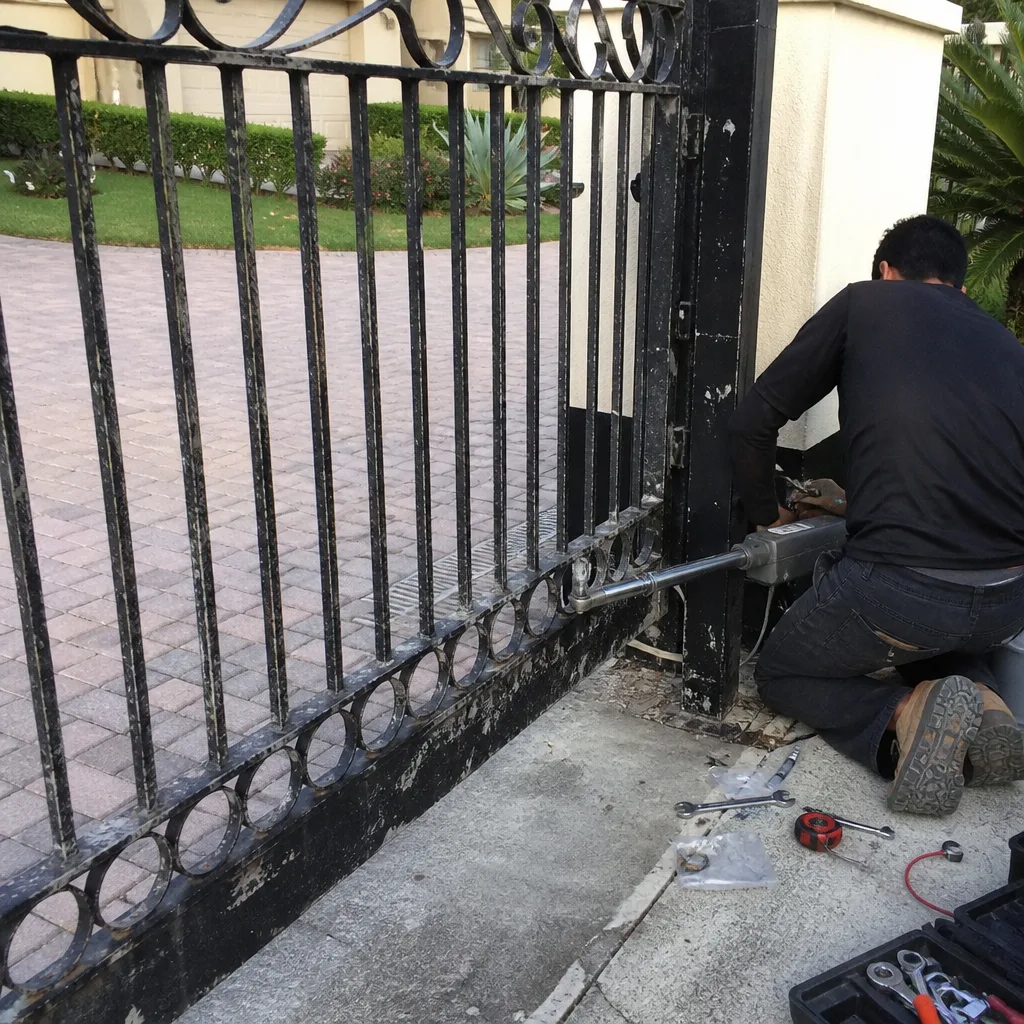 Before
 After
 Before
 After
 Before
 After