
Last updated October 30, 2026
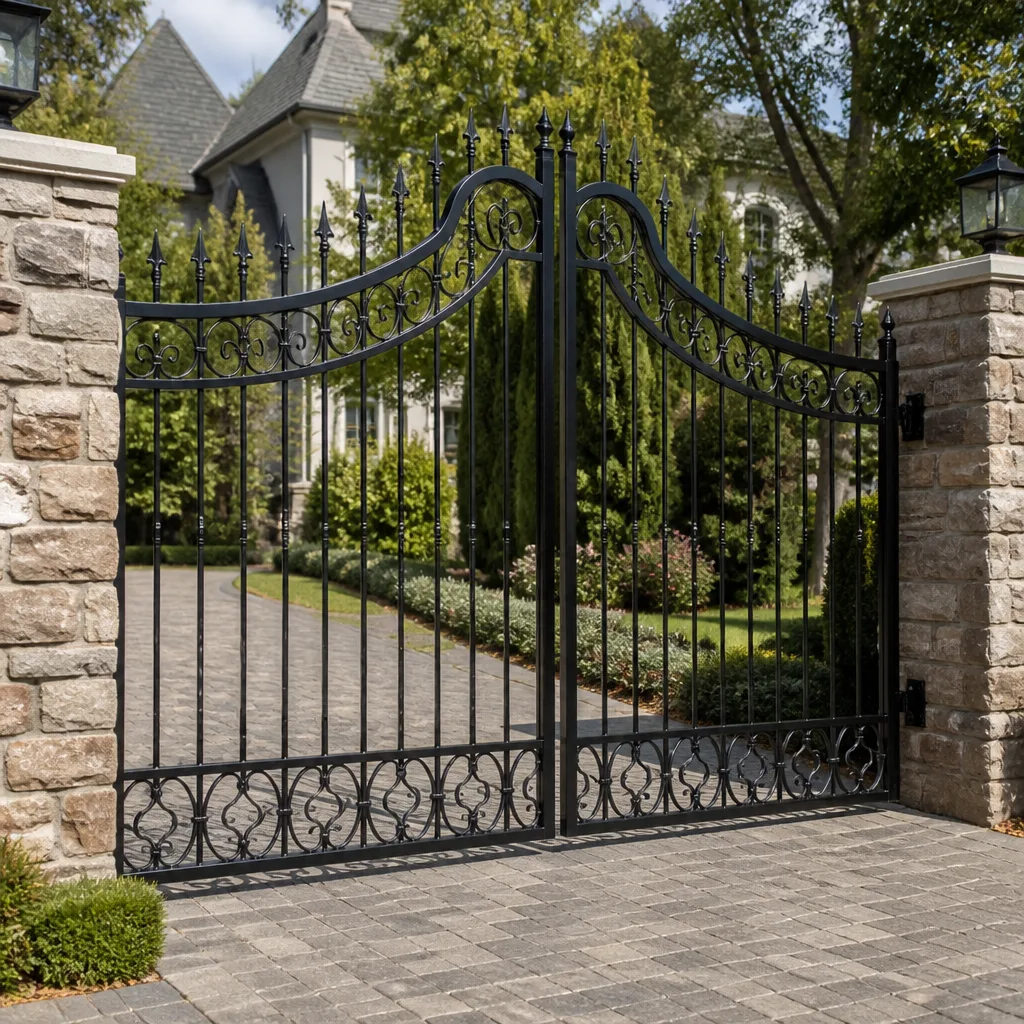 Wrought iron
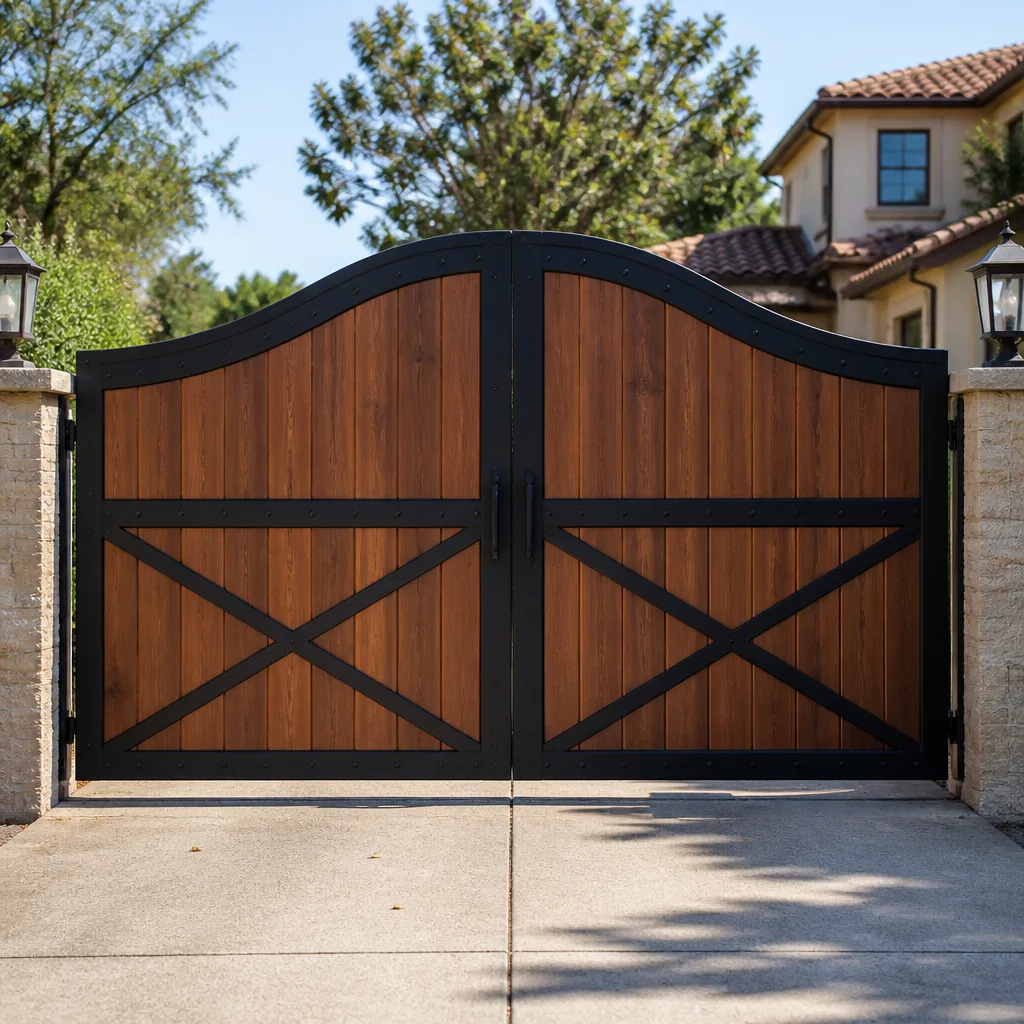 Wood & steel frame
 Farm & ranch
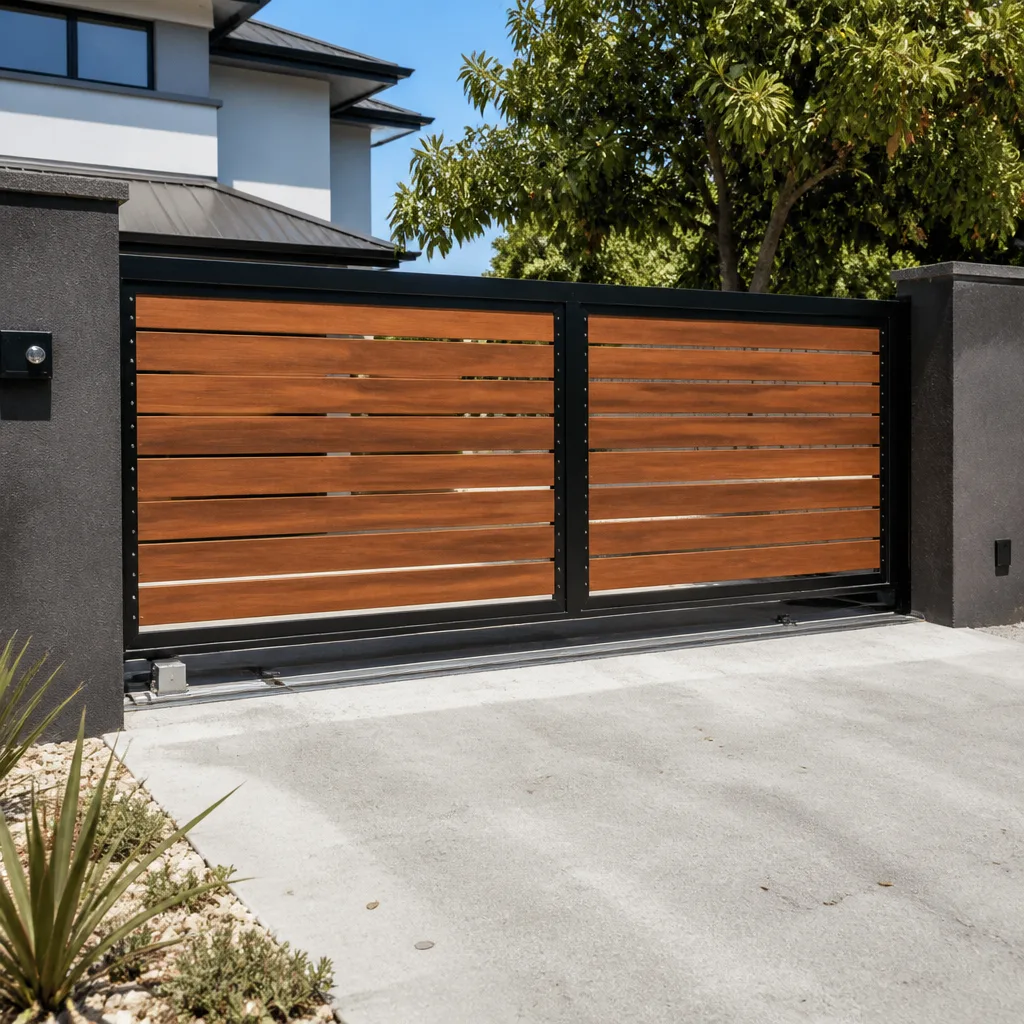 Sliding driveway gates
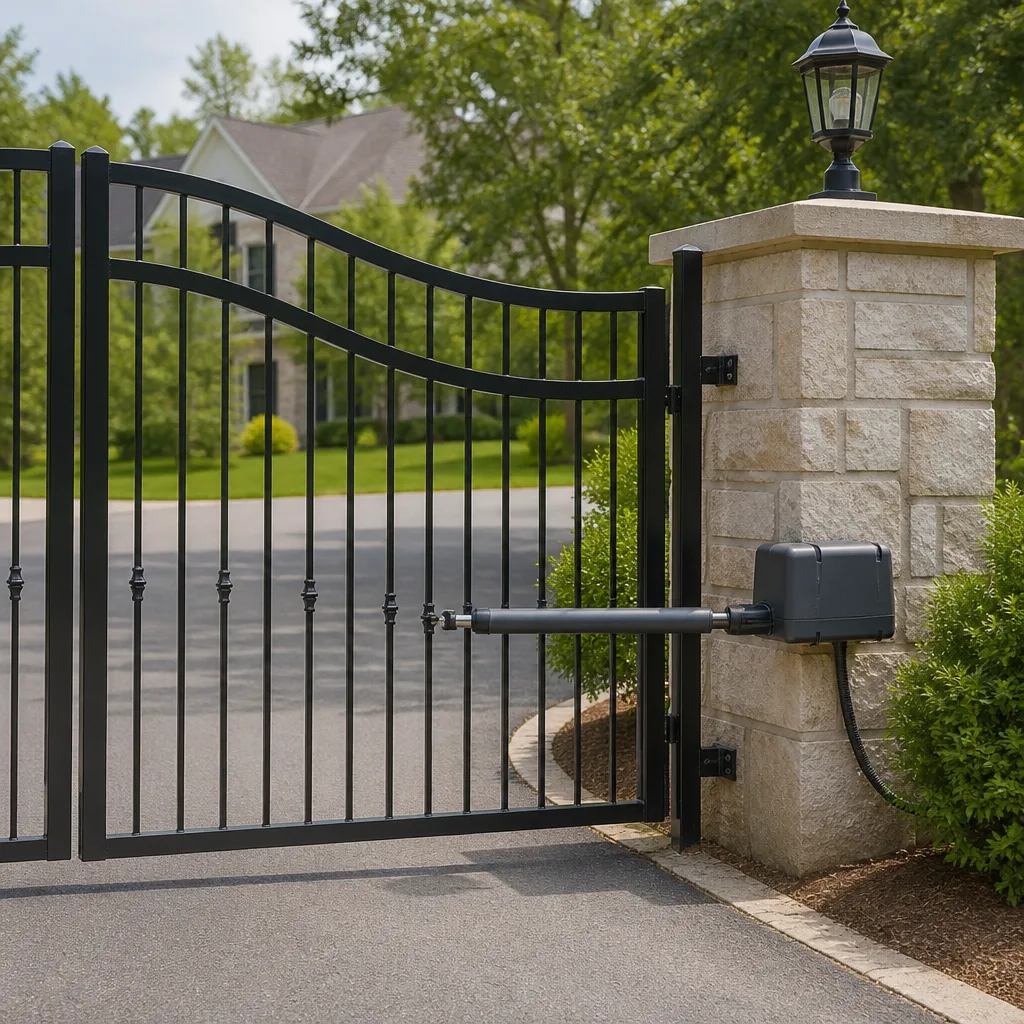 LiftMaster operators
Free on-site gate assessment - hinges, posts, and your LiftMaster or Nice gate operator checked before anything is quoted
The assessment is free and the quote is the invoice.
Get your free estimateGate Repair Emergency Preparedness Guide for West Palm Beach Homes
During Hurricane Irma’s approach, hundreds of Palm Beach County homeowners discovered a problem they never saw coming: their electric gates had lost power, and they couldn’t leave their own driveways. The manual release mechanism that every gate has as a fail-safe was either never located, corroded from years of salt air, or simply too stiff to operate by hand. A gate that fails on any other day is a nuisance. A gate that fails when you’re under an evacuation order is something else entirely. This guide gives West Palm Beach homeowners a specific, practical emergency readiness plan for gate systems, covering what breaks, how to prevent it, and exactly what to do when the power goes out and you need that gate open.
Styles & brands we work with
Quick Answer
Gate repair emergency preparedness in West Palm Beach means knowing how to manually release your gate operator before a storm hits, having a battery backup system sized for at least 72 hours of operation, and keeping the physical gate components (hinges, tracks, chains, release mechanisms) free of corrosion and debris. The single most important step is testing your manual release today, not after the power fails, because a corroded or jammed release is the number one reason homeowners get stranded during an evacuation order.
Table of Contents
- Why West Palm Beach Gates Fail Differently
- Manual Release Operation for the Five Most Common Brands
- Battery Backup Systems: The Real 72-Hour Requirement
- Securing an Open or Failed Gate During a Storm
- Realistic After-Hours Response Times in Palm Beach County
- The 20-Minute Pre-Storm Gate Readiness Checklist
- Post-Storm Gate Assessment and Priority Repairs
- Common Mistakes to Avoid
- When to Call a Professional
- Frequently Asked Questions
- The Bottom Line
Why West Palm Beach Gates Fail Differently
West Palm Beach gate systems face a combination of environmental stressors that gates in Orlando, Atlanta, or Dallas simply never see. Salt air from the Atlantic works on every metal component year-round, not just during storms. High humidity accelerates corrosion on exposed electrical connections inside operator housings. And the summer rain pattern means that even a sealed control board can fail if a gasket has a hairline crack. We’ve opened operators in West Palm Beach where the control board looked like it had been sitting in a shallow dish of seawater, simply because the housing seal had failed months earlier and nobody noticed until the gate stopped responding.
The storm season adds a second layer of risk. Wind-driven rain penetrates operator housings that would stay dry in a normal thunderstorm. Debris, from palm fronds to roof shingles to entire fence sections, strikes gates and tracks at speeds that no residential gate is designed to withstand. And the power grid that feeds your gate motor is exactly the infrastructure most likely to fail during a named storm, which means a gate that works perfectly on a sunny day becomes a barrier the moment you need it to move.
What makes West Palm Beach unique is the timing. A gate failure in January is an inconvenience you can live with for a day or two. A gate failure in September, when an evacuation order is active and every road west is packed, is a completely different problem. That’s why emergency preparedness for gates in this market isn’t a luxury, it’s part of the same hurricane readiness planning that includes water, food, and flashlights. Your gate repair in West Palm Beach needs to be viewed as a storm-readiness system, not just a mechanical fix.
Most homeowners don’t realize their gate operator has a manual release at all. Of the ones who do, a shocking number have never tested it. The release mechanism is a mechanical connection, and mechanical connections seize up when they sit unused in a salt-air environment. We’ve tested manual releases on gates that had been installed for eight or nine years and found them completely frozen. The homeowner had been living under the assumption that the release would work, and it wouldn’t have. In an evacuation scenario, that’s not a mechanical problem, that’s a safety problem.
Manual Release Operation for the Five Most Common Brands
Every electric gate operator has a manual release mechanism, but the design varies by brand. Knowing where yours is and how it works is not optional if you live in West Palm Beach. The release exists specifically for the moment when power is out and you need the gate to move by hand. Here’s what we see across the brands most commonly installed in this area.
DoorKing
DoorKing operators, common on residential and light commercial gates throughout Palm Beach County, use a T-shaped release handle that disengages the drive mechanism from the gate. On most residential DoorKing units, the handle is located on the side of the operator housing. You pull the handle to disengage the drive, then push the gate open manually. The same handle re-engages the drive. The critical failure mode with DoorKing releases is corrosion on the internal linkage. The handle moves, but the disengagement mechanism inside doesn’t, because the connecting rod has seized. If you pull the handle and feel no resistance, or the gate doesn’t free up, the internal mechanism needs service before storm season.
Viking
Viking operators, particularly the popular Viking F-1 and H-10 models common on West Palm Beach residential properties, use a manual release that’s built into the drive unit. On swing gate models, the release is often a lever or knob on the top of the operator. On slide gate models, you’ll find a T-bar release on the side. The Viking release is generally robust, but the failure mode we see most often is the release cable if the unit has a remote release pull. That cable runs through a conduit or along the gate frame, and in coastal environments, the cable itself can corrode to the point where pulling it does nothing. The cable sheath might look fine while the internal wire has snapped or rusted through.
Elite
Elite gates are less common than Viking or DoorKing in West Palm Beach, but they appear regularly enough that homeowners should know their release. Elite operators typically use a fork-and-slot release mechanism. The release lever disengages a fork from a slot in the drive chain or belt, freeing the gate to move manually. The problem with Elite releases is that the fork assembly sits close to the ground on some models, where standing water during a storm can reach it. If the release mechanism has been submerged, even briefly, the fork may not pivot freely when you need it. Test it, and listen for grinding or resistance.
Ghost Controls
Ghost Controls systems, which are popular with homeowners who want a quieter operator, use a release mechanism that’s integrated into the swing arm. The release is typically a pull-pin or a lever on the arm itself. Ghost Controls units are generally newer and less likely to have decade-old corrosion, but they have their own vulnerability. The release pin on many Ghost Controls models is designed to be pulled by hand, and if the pin has been painted over, or if the gate frame shifted slightly during settling, that pin can bind. The release should pull smoothly with moderate pressure. If you need tools to move it, service it before you need it.
Regardless of brand, the pre-storm rule is simple: locate the release, operate it at least once, and verify that the gate actually moves freely by hand when the release is engaged. A release that works on paper but results in a gate that still won’t budge is not a working release. That’s the moment to call a professional, before, not after, the storm. We handle manual release service and repair on all of these brands, and we’ll show you how to operate the release yourself so you’re never stranded.
Battery Backup Systems: The Real 72-Hour Requirement
Most residential gate operators sold in the last decade offer an optional battery backup system, but what most homeowners don’t know is that the standard backup systems are sized for short-duration outages, not for the multi-day power loss that a direct or near-direct hurricane strike can cause in West Palm Beach. Florida Power & Light’s own historical data shows that after hurricanes like Irma and Wilma, some neighborhoods in Palm Beach County were without power for 7 to 10 days. A standard gate battery backup that provides 20 to 30 cycles is not going to get you through that.
The real question isn’t whether your gate has a battery backup, it’s how many open-close cycles that backup actually provides, and whether you can conserve those cycles. A typical residential gate draws significant current during the initial startup of the motor, and that startup draw is what drains batteries fastest. A backup system with two 12-volt batteries in series might provide 20 to 40 cycles on a light-duty residential swing gate, but on a heavier slide gate or a double-swing gate, that number can drop to 10 or fewer cycles.
For a 72-hour outage, you need to think about cycle conservation, not just battery capacity. The strategy is to open the gate when the storm has passed, leave it open if your property allows for that, and only operate the gate when you absolutely must. Every time the gate opens and closes during a power outage, you’re spending battery capacity you may not get back. This is something we walk West Palm Beach homeowners through when we install or service battery backup systems: the numbers matter, but so does the behavior.
There’s also the matter of battery age. A backup battery that’s four years old has lost a significant percentage of its rated capacity, even if it tests fine at a surface level. Battery replacement should be part of your pre-storm gate readiness routine if the backup system is older than three years, and that’s especially true in West Palm Beach’s heat, which degrades lead-acid batteries faster than cooler climates. If your electric gate repair history includes battery issues, address it before storm season, not during the first named storm watch.
The backup system should also be integrated properly with your access devices. A gate with battery backup that powers the operator but not the keypad or the receiver is useless if you can’t send the open command. We’ve seen systems where the backup wiring excluded the receiver, meaning the gate had power but no way to activate it remotely. That’s the kind of integration detail that separates a working backup from a backup that’s just decoration.
Securing an Open or Failed Gate During a Storm
There’s a moment after the power fails, after the manual release doesn’t work, or after the gate simply won’t move, when you have to make a decision: leave it where it is, or force it open. Forcing a gate open by hand without properly disengaging the drive mechanism can destroy the operator, the chain or belt, and in some cases, the gears inside the motor. The damage from a forced gate can turn a $200 repair into a $1,200 replacement. Before you apply force, understand what you’re doing.
If the gate is open and you need it to stay open, the concern is wind load. A swing gate that’s left unsecured in the open position becomes a massive sail. During tropical-storm-force winds, an unsecured gate can slam against its stops, bend its own frame, tear the hinges, or snap the chain. The safest approach is to physically secure the gate using a chain and padlock around the gate leaf and a solid anchor point, like a fence post or a deeply set bollard. Do not use rope or bungee cords. Rope stretches, and in high winds, a gate that’s tied with rope can build momentum and snap the rope, turning the gate into a projectile.
If the gate is closed and you need it open, and the manual release is operational, open it patiently. Move the gate slowly by hand and stop if you feel resistance. Resistance means the drive mechanism hasn’t fully disengaged, and continuing to force the gate will drag the chain or belt through the operator, causing catastrophic internal damage. Once the gate is open, secure it as described above. A gate that’s left free to swing during a storm will almost certainly be damaged, and it may damage whatever it hits.
There’s also the security angle. After a storm, West Palm Beach neighborhoods see an increase in opportunistic property crime. An open gate that can’t be closed is an invitation. If you cannot secure your gate in a closed or locked position, treat your driveway as an open access point and secure whatever is behind the gate accordingly. Move vehicles into a garage if available, lock exterior doors, and be aware that the visual signal of an open gate is exactly what thieves look for in the days after a storm.
If the gate failed in the closed position and you can’t get it open, and you don’t have another way out of your property, this is the emergency scenario. You need to make a decision between forcing the gate, which may cause damage, and calling for emergency service. If there’s an evacuation order active and you cannot leave your property, forcing the gate is the right call, and the damage can be repaired later. A gate operator is replaceable. Your safety is not.
Realistic After-Hours Response Times in Palm Beach County
Every gate repair company in Florida markets itself as “24/7” and “emergency response,” but the reality of post-storm gate service in Palm Beach County is far more complicated. After a named storm makes landfall or passes nearby, road conditions, bridge closures, and the sheer volume of service requests reshape what’s actually possible. A gate repair company that dispatches a technician to your neighborhood on a sunny Tuesday afternoon may take 48 hours to reach the same neighborhood after a hurricane, simply because roads are blocked, traffic lights are out, and every other homeowner on your street has a similar emergency.
What’s realistic is this: before a storm, when there’s a watch or warning active but conditions haven’t deteriorated, same-day and next-day service is generally achievable. This is the window when you should address a gate issue, if you know about it in advance. Once the storm arrives, all bets are off. During the storm itself, no technician can safely work on your gate, and after the storm passes, the response time depends on the severity of the impact and the accessibility of your location.
In the aftermath of Hurricane Irma, we saw neighborhoods in West Palm Beach that were cut off by fallen trees and flooded intersections for days, not hours. The gate repair calls in those neighborhoods had to wait, not because the repair company was slow, but because the roads physically weren’t passable. That’s the argument for doing everything in your power before the storm: testing the manual release, servicing the battery backup, and addressing any known issues. The pre-storm window is a real, actionable window. The post-storm window is conditional. Sovereign Gate Repair home service area includes all of Palm Beach County, but our ability to reach you after a storm depends on county road conditions, not on our willingness to help.
What we recommend to every West Palm Beach homeowner is this: build your gate readiness plan around the assumption that you will be on your own for at least 72 hours after a major storm, and possibly longer. Know how to manually release your gate. Have a plan for securing it open or closed. Charge your backup batteries before the storm, or run a test cycle on the backup system to confirm it’s operational. If you wait until after the storm to figure these things out, you may be waiting a while for help.
The 20-Minute Pre-Storm Gate Readiness Checklist
When a storm is in the forecast and you have a day or two of lead time, twenty minutes spent on your gate can prevent the most common failure modes that strand West Palm Beach homeowners. This checklist is designed to catch issues early enough that you can address them yourself or call for service before conditions deteriorate.
- Test the manual release. Locate the release mechanism on your operator, engage it, and move the gate by hand. If it’s stiff, corroded, or unresponsive, service it now. This is the single highest-priority item on the list.
- Run a backup battery test. If your system has battery backup, disconnect or simulate the power outage per the manufacturer’s instructions, and open and close the gate on battery power. Confirm the keypad or remote receiver also works on backup power.
- Inspect the hinges and track rollers. Spray the hinges and any moving rollers with a lubricant designed for outdoor metal. Avoid WD-40, which displaces water but doesn’t provide lasting lubrication. Use a silicone-based or lithium-based lubricant instead.
- Clear debris from the gate travel path. Palm fronds, coconuts, and loose landscaping materials can jam a slide gate or block a swing gate mid-travel. Remove anything within a foot of the gate’s full range of motion.
- Check for loose hardware. With the gate in the closed position, test every bolt, nut, and bracket for tightness. Storm-force winds will exploit any looseness, and a gate that rattles today will bend or break tomorrow.
- Verify the safety edges and photo eyes. Walk through the gate’s path while it’s closing to confirm the safety reversal works. A malfunctioning safety edge is a code violation in Palm Beach County, and it’s also a failure point that can cause the gate to stop mid-operation and leave you stranded.
- Charge the backup batteries. If your backup batteries are serviceable, top them off. If they’re older than three years, consider replacing them. A charged but aged battery is still a weak battery.
- Secure the access devices. Cover or protect keypads, card readers, and intercom panels from wind-driven rain if they’re not rated for full exposure. A keypad that shorts out during the storm means no way to send an open command, even if the operator itself is dry.
This checklist takes under 20 minutes, and it catches the failure modes that most commonly strand West Palm Beach homeowners: a frozen manual release, a dead backup battery, a jammed track, or a failed safety edge. If you find a problem during the checklist, that’s the moment to call for service, while a technician can still reach you.
Post-Storm Gate Assessment and Priority Repairs
After the storm has passed and the power is either back on or you’re running on generator or battery, assess your gate’s condition before you attempt to operate it. The most dangerous thing you can do post-storm is press the remote button and expect the gate to behave normally, because storm damage doesn’t always announce itself. A gate that was struck by debris may have a bent track, a damaged hinge, or a misaligned photo eye, and operating it under power can convert a minor issue into a major repair.
Start with a visual inspection. Walk the entire length of the gate and look for anything that’s bent, leaning, or out of alignment. Inspect the track for slide gates, and look at the hinges and pivot points for swing gates. If you see any sign that the gate is not sitting square in its frame, do not operate it under power. A motor straining against a misaligned gate can burn out quickly, and the repair bill from a burned motor plus a damaged gate is far higher than fixing the alignment issue alone.
Next, check the operator housing. If the housing shows signs of water intrusion, water stains, condensation, or visible moisture, open it carefully and allow it to dry before restoring power. Do not power up a wet operator. A control board with standing water on it can short instantly when power is applied, and that’s a $400 to $800 part replacement that could have been avoided with a few hours of drying time.
If the gate won’t respond at all, check the obvious first: the breaker, the disconnect switch, and any GFCI outlet that may have tripped. These are not gate component failures, they’re electrical supply failures, and they’re the easiest things to fix yourself. If the power supply is fine and the gate still won’t respond, you’re looking at a component failure, and that’s where gate installation in West Palm Beach expertise matters. Our technicians diagnose motor, control board, loop detector, and access system failures, not just mechanical gate issues.
We also recommend documenting everything with photos before you touch anything. Insurance claims for storm damage to gates are common in Palm Beach County, and photographic evidence of the pre-repair condition strengthens those claims. Take wide shots of the gate in its post-storm condition, close-ups of any visible damage, and a photo of the operator housing if it’s wet or damaged.
Common Mistakes to Avoid
- Forcing the gate when the manual release is not fully engaged. A partially disengaged drive mechanism will drag the chain or belt through the operator, stripping gears and destroying the motor. If the gate doesn’t move freely by hand after releasing the drive, stop and call a professional.
- Assuming the battery backup is working because it worked last year. Batteries degrade, especially in West Palm Beach’s heat. A backup system that provided 30 cycles twelve months ago may provide 10 today. Test it before every storm season, and replace batteries older than three years.
- Using rope or bungee cords to secure an open gate. Rope stretches, and a gate swinging in storm-force winds can snap improvised restraints and become a projectile. Use a chain and padlock secured to a solid anchor point.
- Running the gate from battery power during an outage as if the power were still on. Every cycle drains the backup. If you’re on battery, open the gate once, leave it open, and conserve the remaining cycles for actual needs.
- Ignoring a stiff or corroded manual release because “the gate still works on power.” The manual release is your only option when the power is out. If it doesn’t work smoothly on a sunny day, it won’t work any better in a storm.
- Delaying gate service until a storm is already in the forecast. Once a watch is issued, repair companies in Palm Beach County are flooded with calls, and technicians are on a first-come, first-served basis. The best time to service a gate is before the season starts, not during the first warning.
When to Call a Professional
Some gate issues are DIY-adjacent, and some require a specialist. If your manual release is stiff but functional, lubrication may solve it. If it’s frozen solid, you need a professional to disassemble and service the mechanism. If your gate won’t respond after a storm and you’ve verified the breaker and the GFCI, you’re likely dealing with a control board, motor, or wiring failure, and those are not beginner-level repairs. If your backup system isn’t holding a charge, there may be a charging circuit failure in addition to a battery issue. If your gate was struck by debris and the frame is bent, do not attempt to straighten it with a jack or a winch, that’s how you turn a repairable gate into a replacement. Gate repair in West Palm Beach from a brand-agnostic specialist means we work on the gate you already have, from Mighty Mule to FAAC, without steering you toward a replacement you don’t need. Sovereign Gate Repair offers free estimates in West Palm Beach, call (855) 360-5979.
Frequently Asked Questions
The most common reason is a frozen or untested manual release mechanism combined with a power outage, which means the homeowner can’t operate the gate under power and can’t move it by hand, leaving them stuck in their driveway. Salt-air corrosion on the release linkage is the primary culprit, and it’s completely preventable with annual testing and lubrication.
A standard residential gate battery backup system provides between 10 and 40 open-close cycles depending on the gate’s weight and the motor’s draw, which translates to roughly one to three days of ordinary use, assuming you’re opening and closing the gate multiple times per day. To stretch a 72-hour outage, open the gate once after the storm, leave it open if property security allows, and conserve cycles. Call (855) 360-5979 for an assessment of your existing backup or an installation quote, estimates are free.
Yes, forcing the gate open is justified in a life-safety emergency, and the operator damage can be repaired after the storm. Before forcing anything, try the manual release on the operator directly, and try pulling the gate by hand from the leading edge, not from the middle, to avoid bending the leaf.
Secure the gate in the open position with a chain and padlock so it can’t swing and damage itself, then treat your property as having an open access point and secure vehicles and doors accordingly. After the storm, call for service to diagnose the failure, whether that’s a power issue, a release that won’t re-engage, or a damaged component.
Yes, if you live in West Palm Beach and you rely on your gate for security, a battery backup is the single most valuable pre-storm upgrade you can make, because it means at least one open-close cycle when the power is out, and often many more with cycle conservation. We install battery backup systems on all nine brands we service, including Viking, Ghost Controls, DoorKing, and Elite.
Most gates can be repaired after saltwater exposure, but the repair must address corrosion at the component level, not just symptom-level fixes like replacing a blown fuse. A flooded operator needs to be disassembled, inspected, and dried, and components like the control board and the motor should be evaluated individually, rather than replacing the entire unit unless the damage is extensive.
The Bottom Line
Gate repair emergency preparedness in West Palm Beach comes down to three things: knowing your manual release and proving it works before the storm, having a battery backup that’s actually sized to your gate and conserving those cycles during an outage, and securing your gate properly so the storm and the aftermath don’t destroy it. A gate that’s maintained for storm season is a gate that gets you out when you need to leave and stays secure when you need it locked. A gate that’s ignored is one power outage away from becoming a barrier. If your gate’s manual release hasn’t been tested in the last year, test it this weekend. If it’s stiff, call us. The pre-storm window is real, and once it closes, it doesn’t reopen until after the roads do.
Sovereign Gate Repair serves West Palm Beach and all of Palm Beach County with gate repair, electric gate repair, and gate installation. We work on LiftMaster, FAAC, BFT, Linear, Viking, Ghost Controls, DoorKing, Elite, and Mighty Mule, residential and commercial. Call (855) 360-5979 for a free estimate.
Written by the team at Sovereign Gate Repair, serving West Palm Beach since 2015.
See the difference
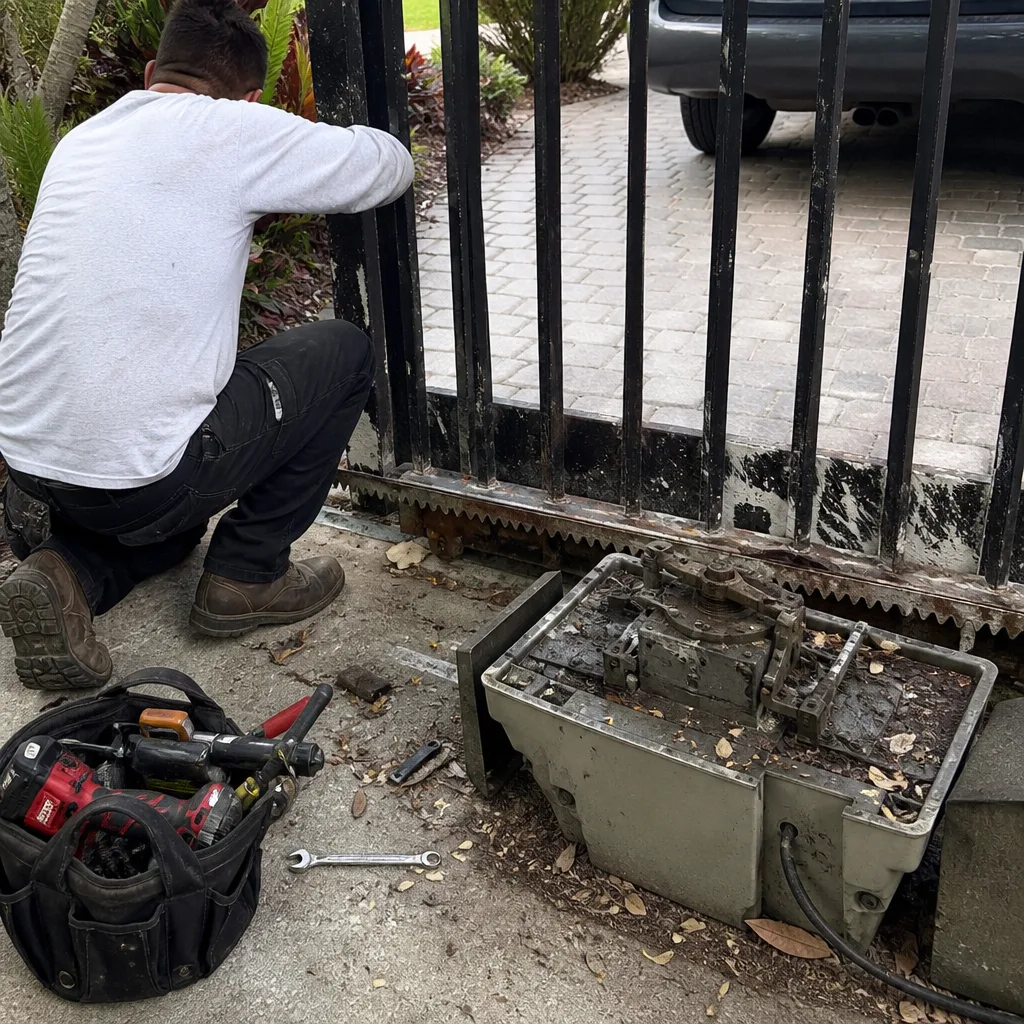
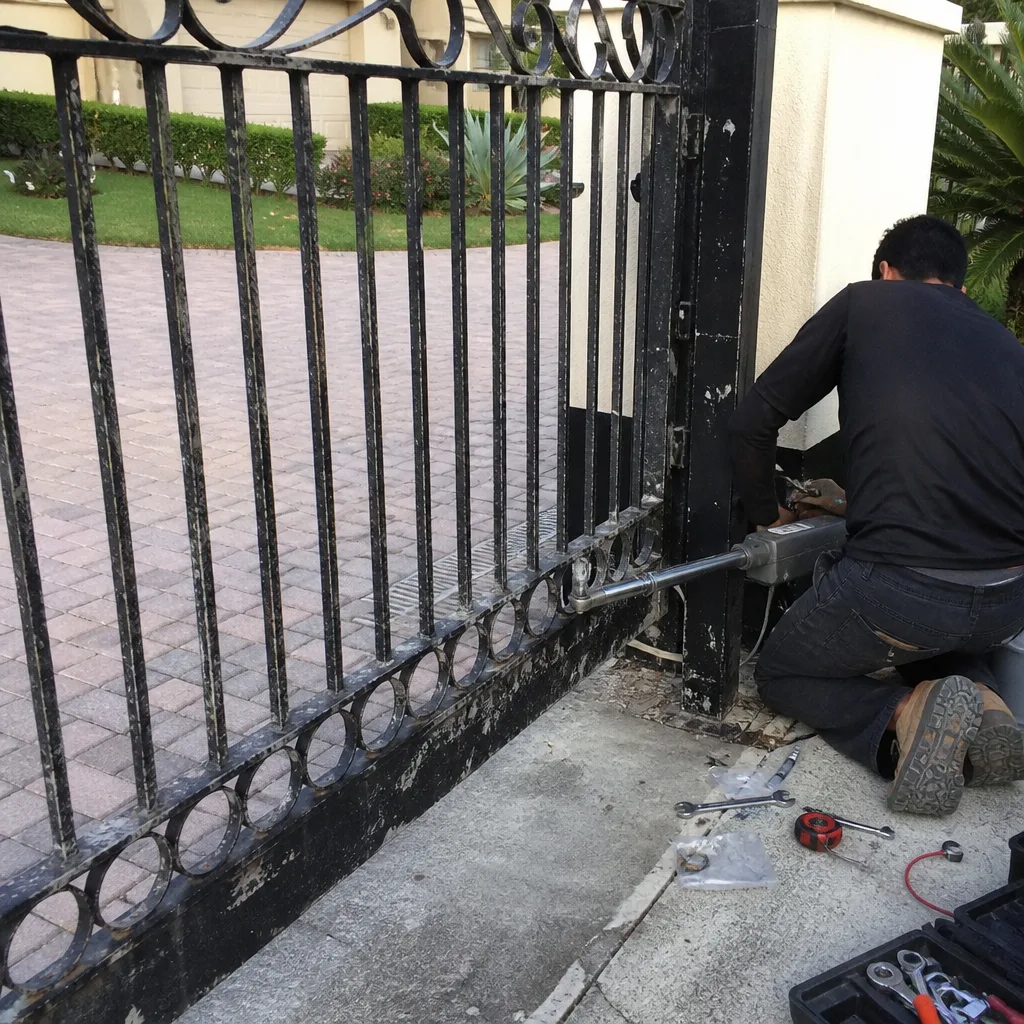 Before
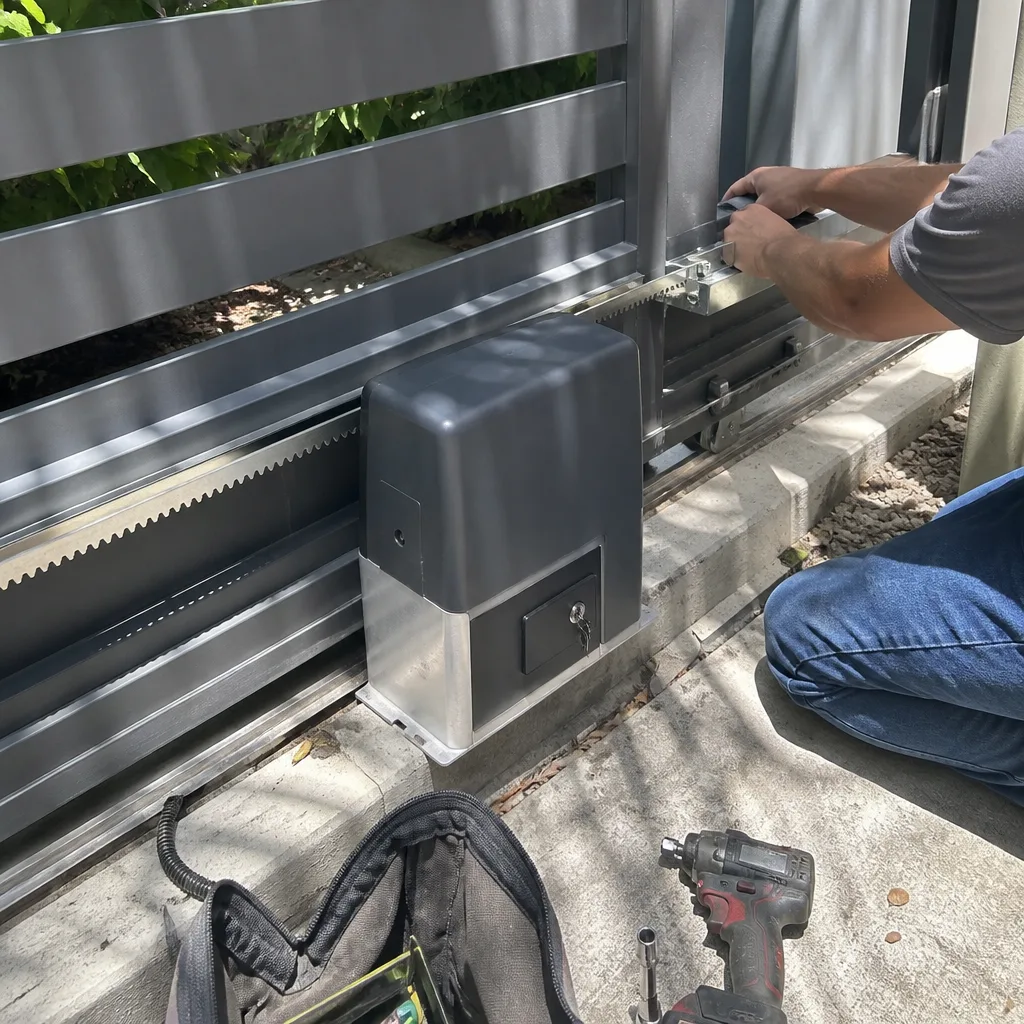
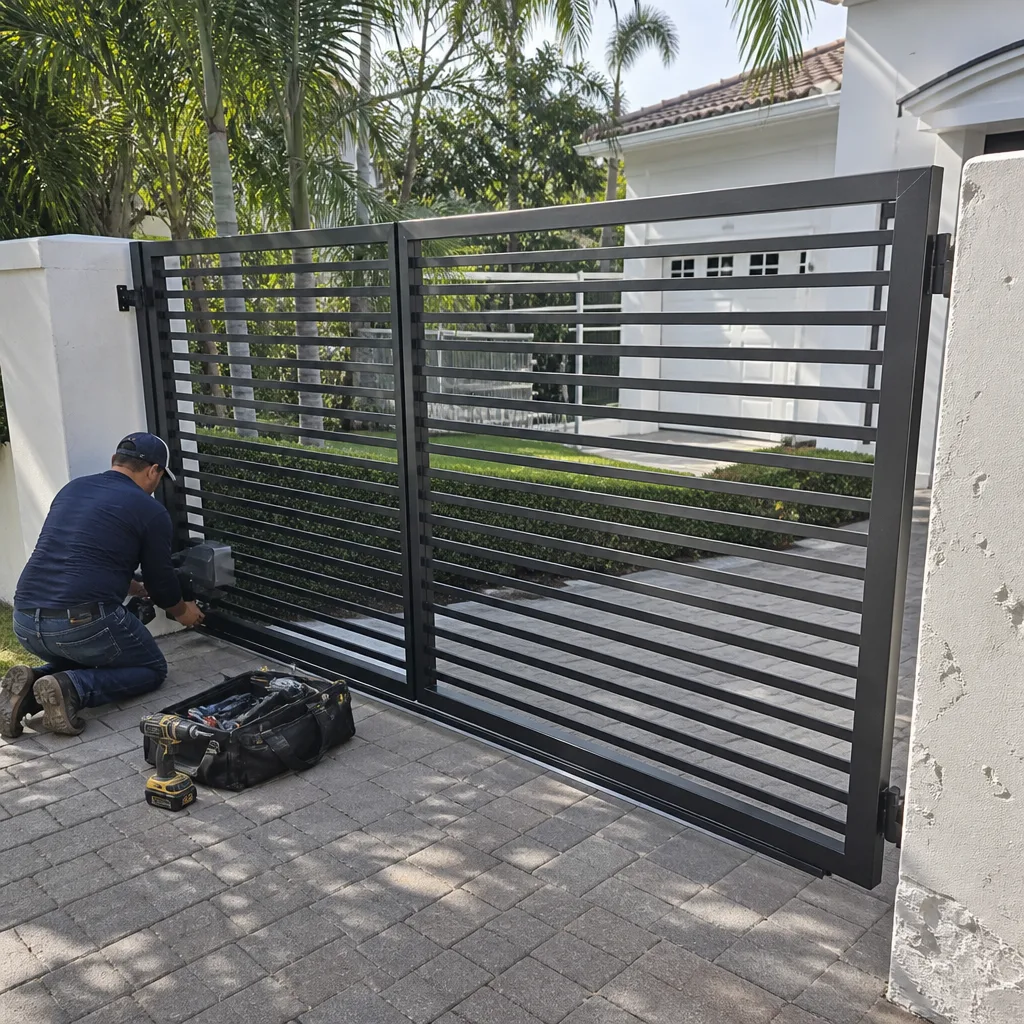 After
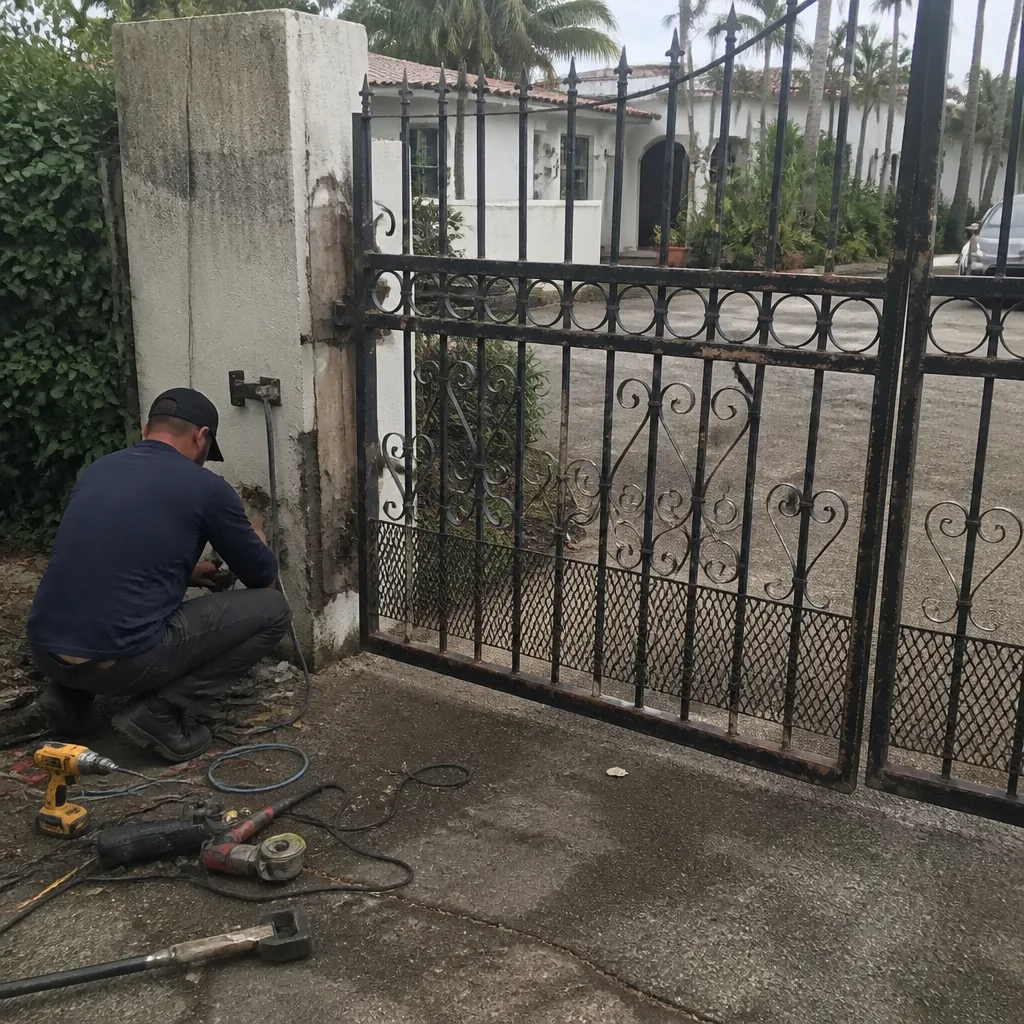 Before
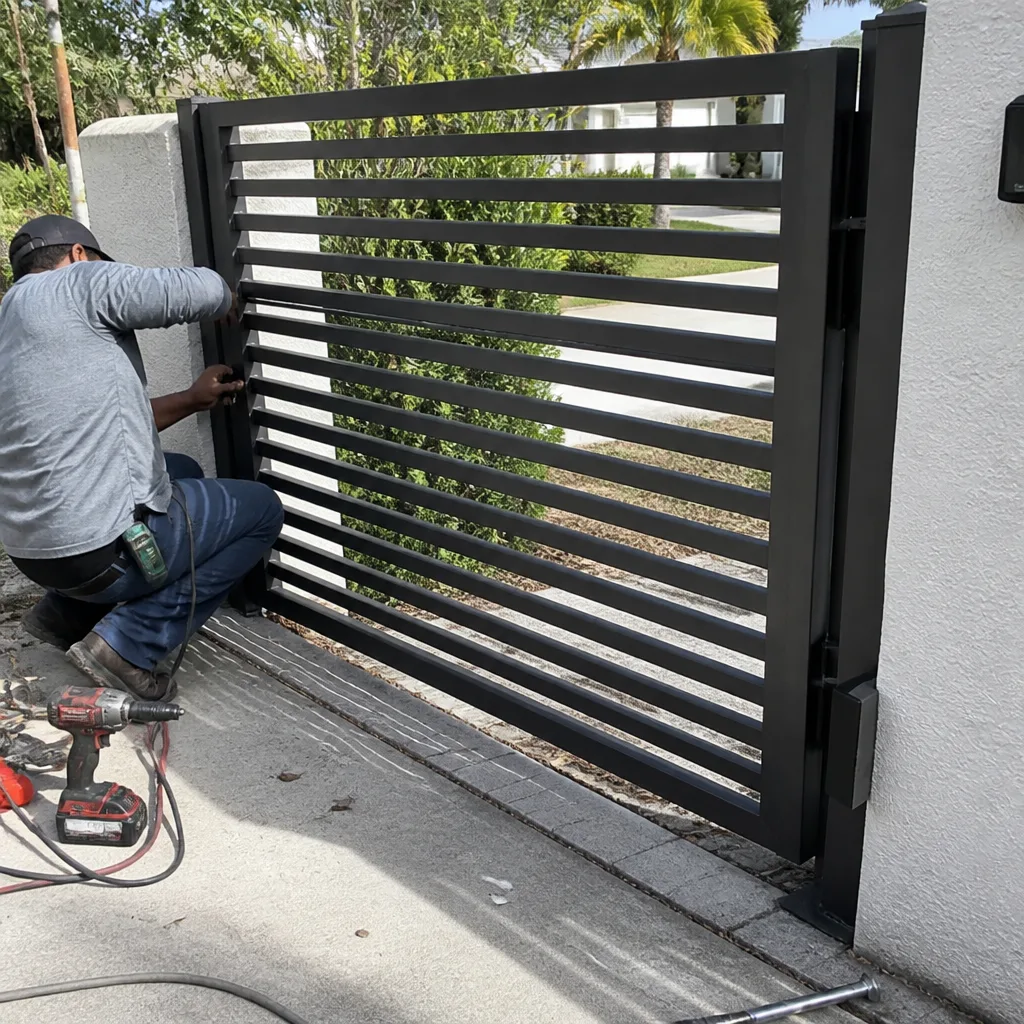 After
 Before
 After