
Last updated October 30, 2026
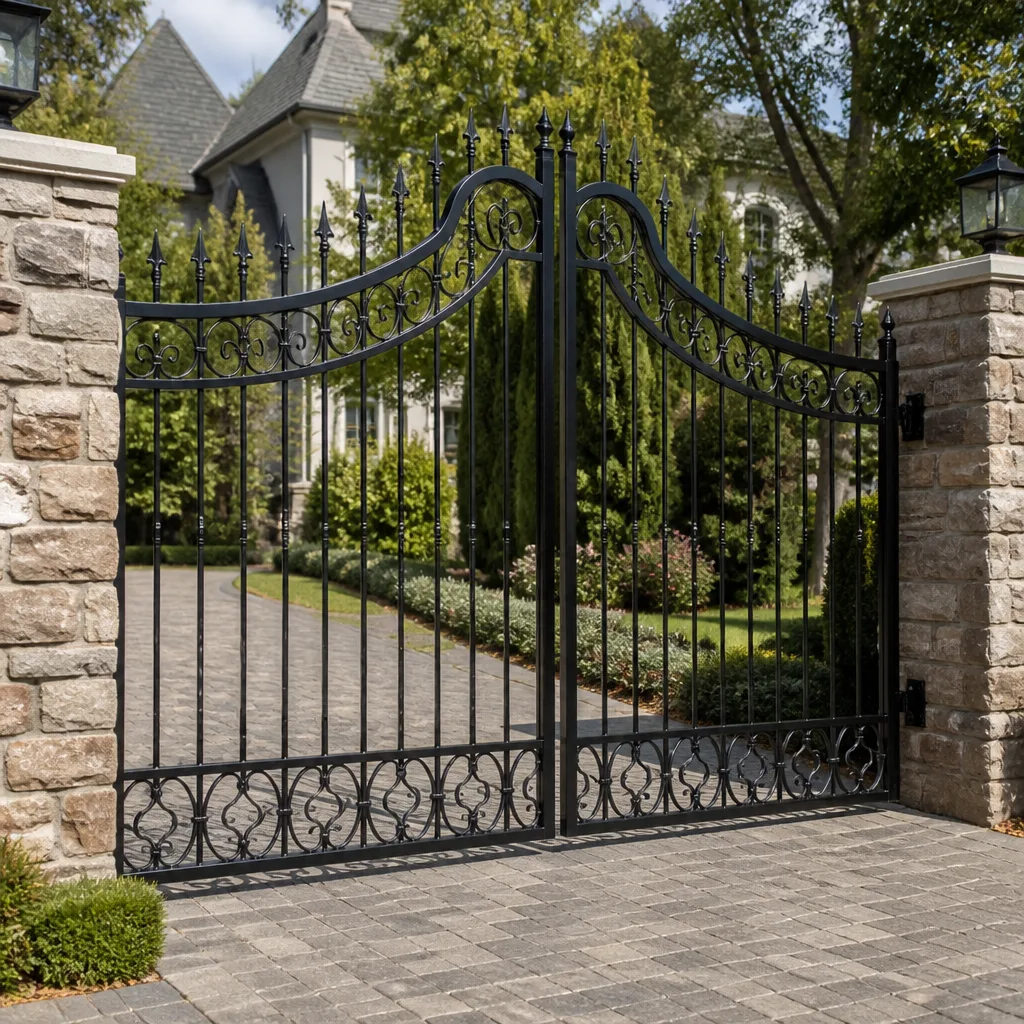 Wrought iron
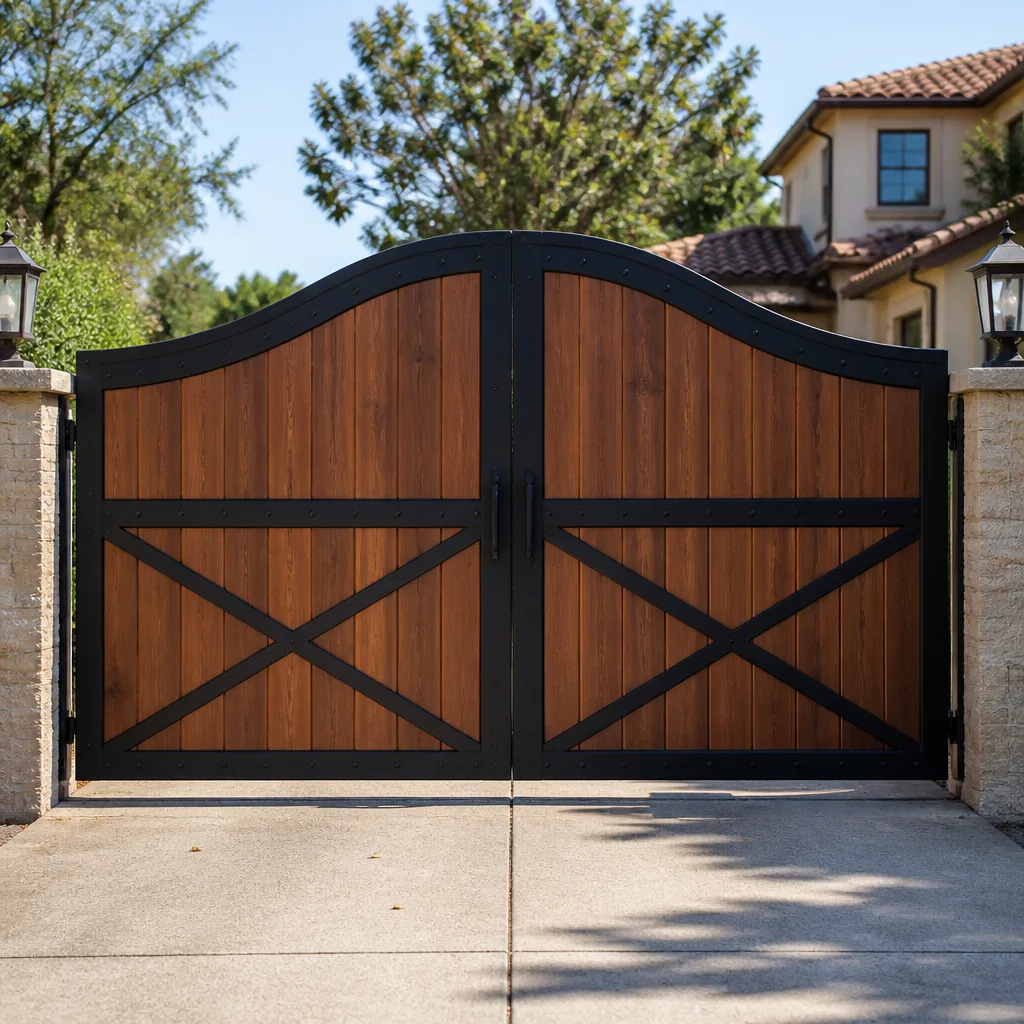 Wood & steel frame
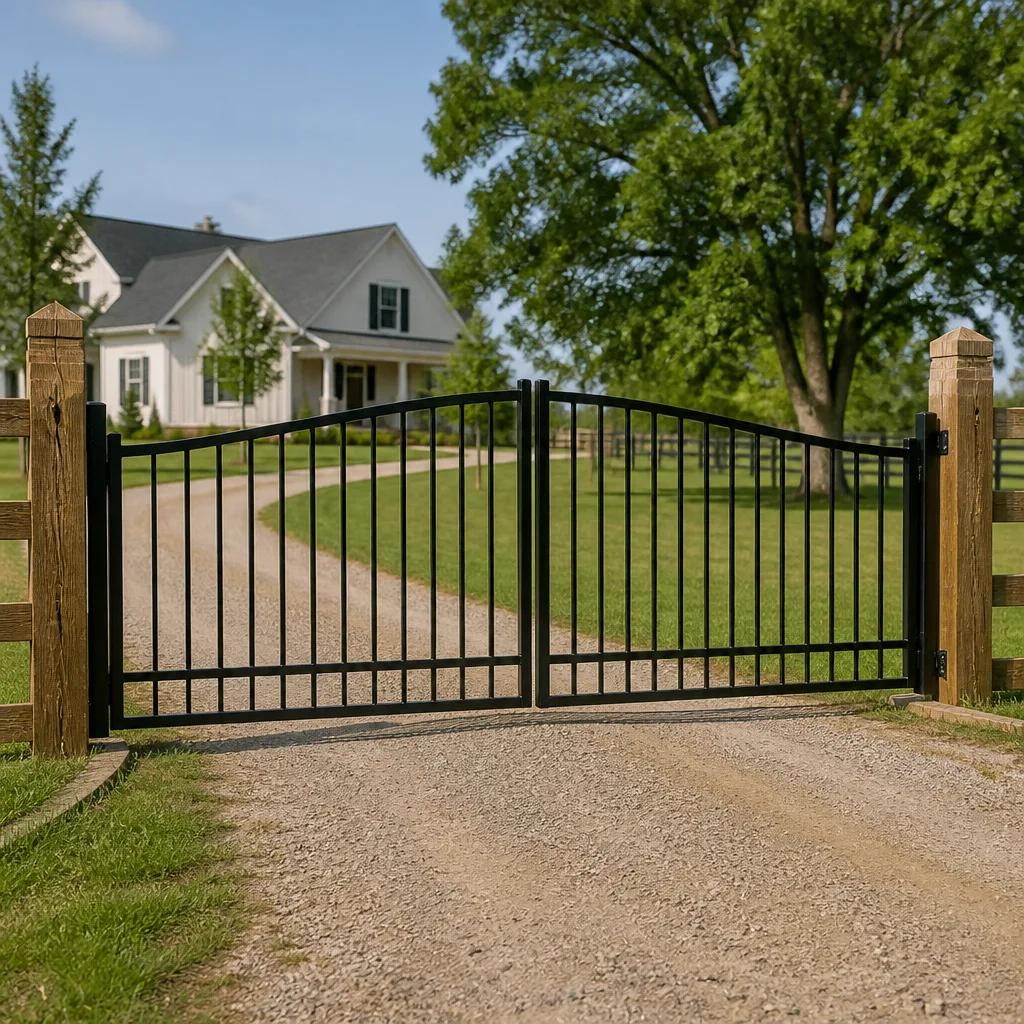 Farm & ranch
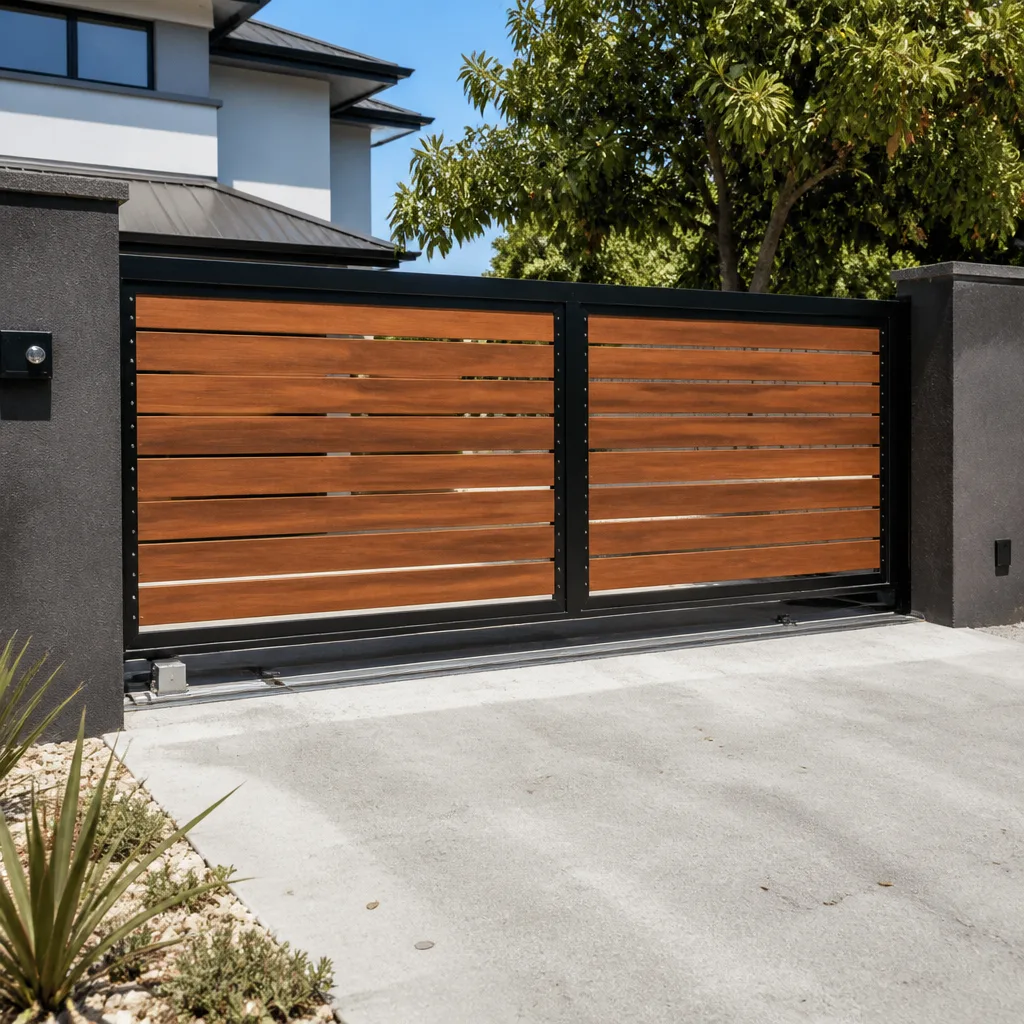 Sliding driveway gates
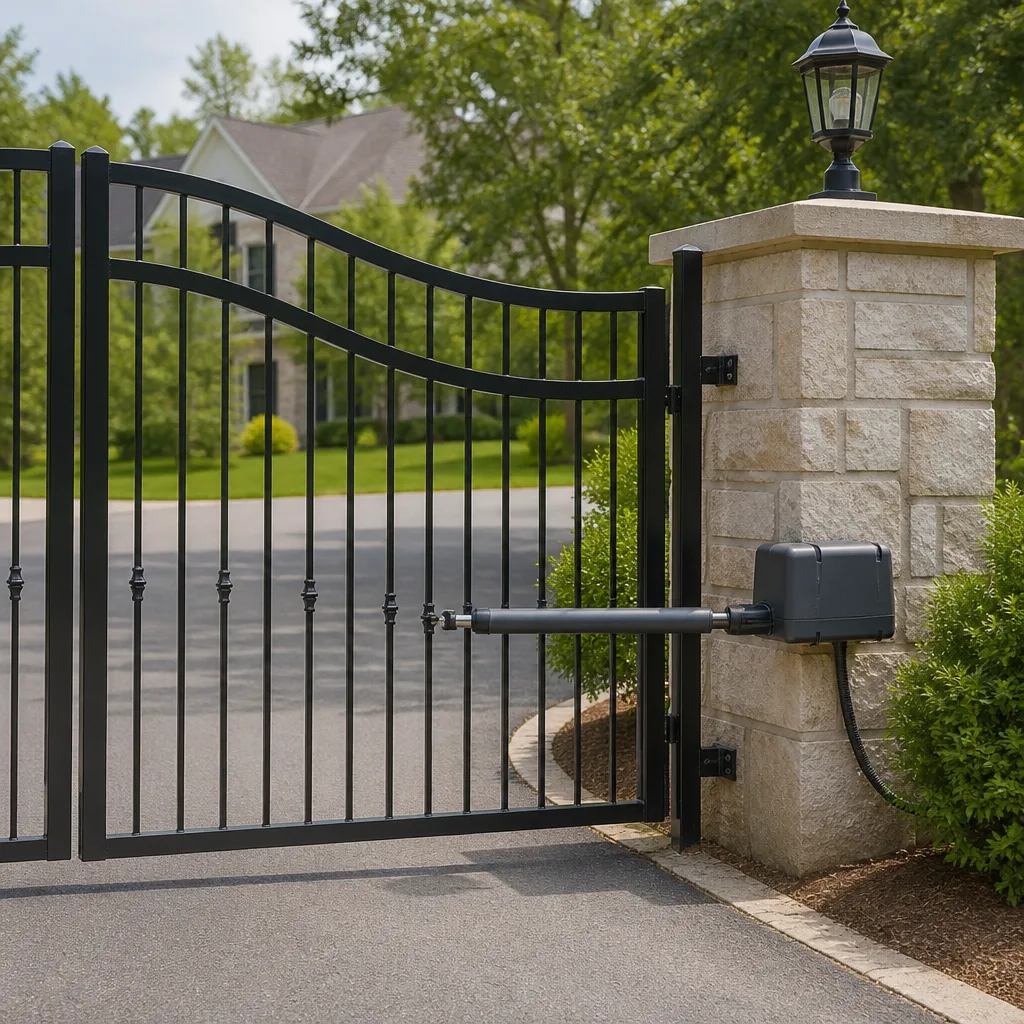 LiftMaster operators
Free on-site gate assessment - hinges, posts, and your LiftMaster or Nice gate operator checked before anything is quoted
The assessment is free and the quote is the invoice.
Get your free estimateGate Repair Warning Signs: A West Palm Beach Homeowner’s Reference Guide
A gate that hesitates for two seconds before moving isn’t a quirk. It’s a diagnostic signal pointing to one of three specific root causes, and two of those causes lead to complete operator failure within 30 days if left alone. Most homeowners in West Palm Beach don’t replace gates because they suddenly break. They replace them because warning signs went unread for months. This guide translates what you see and hear at your gate into what’s actually failing inside it, so you can act before a security gate becomes a decorative fence. For more guides & resources, see our blog.
Quick Answer
The most common Gate Repair services warning signs in West Palm Beach are hesitation on startup, grinding or metal-on-metal sounds during travel, partial opening or closing, reversed direction mid-cycle, and failure to hold position once stopped. Hesitation and grinding are the two most urgent because they indicate motor or gear wear that escalates to full failure quickly. Coastal humidity and salt air in West Palm Beach accelerate hinge corrosion, which changes the sound profile of a failing gate long before you see rust.
Styles & brands we work with
Table of Contents
- Hesitation Before Movement: The Two-Second Warning
- Grinding and Metal-On-Metal Noise: Gear Wear You Can Hear
- Partial Travel: When the Gate Stops Halfway
- Reversed Direction: The Safety System Is Talking
- Failure to Hold Position: Backdriving and What It Means
- Coastal Warning Signs: What Salt Air Changes About Gate Failure
- Audio Cues That Precede Visible Damage
- Security Risk vs. Convenience Issue: How to Prioritize
- Common Mistakes to Avoid
- When to Call a Professional
- Frequently Asked Questions
Before digging into symptoms, it helps to understand that an automated gate has three distinct systems that fail differently: the mechanical assembly (hinges, wheels, track, chain), the electrical operator (motor, gears, control board, capacitors), and the safety/access layer (photo eyes, loop detectors, keypads, remote receivers). Each produces its own warning signature. The sections below map symptoms to the system responsible.
Hesitation Before Movement: The Two-Second Warning
When you press the remote or keypad and the gate pauses before it starts moving, something is struggling. In our experience across West Palm Beach service calls, this symptom accounts for roughly a third of electric gate repair visits where the homeowner waited too long to call. The pause is not a personality trait of your gate. It is the sound of a system compensating for excess resistance or insufficient starting torque.
Three root causes produce this hesitation:
- Worn start capacitor. The capacitor gives the motor its initial jolt of electrical energy. As it degrades, the motor takes longer to spin up. This is the most common cause on residential slide gates with LiftMaster and Mighty Mule operators that are five to eight years old. The hesitation starts as a fraction of a second and stretches as the capacitor fails. This is one of the two causes that leads to complete failure within a month because a failing capacitor eventually cannot start the motor at all.
- Increased mechanical resistance. The motor pauses because it’s working against a gate that doesn’t want to move freely. On slide gates in West Palm Beach, sand and fine grit work into the track rollers. On swing gates, hinge pins corrode and bind, particularly in coastal neighborhoods where salt air accelerates oxidation. The motor doesn’t pause. The gate pauses because the motor is winning a fight it shouldn’t have to fight.
- Control board delay circuit fault. Some operators have a deliberate soft-start feature that ramps power gradually. If the delay chip on the control board fails, the ramp becomes exaggerated. This is different from capacitor failure because the hesitation is consistent every cycle, not progressively worse.
Here’s the distinction that matters: if the hesitation has been getting longer over weeks, it’s the capacitor or mechanical resistance. If the pause has always been the same length, it’s likely a board issue. Either way, a technician who works on electric gate repair in West Palm Beach can isolate the cause with a multimeter and a manual resistance test in under an hour.
Urgency Rating: High
Capacitor failure takes the gate down without warning. Mechanical resistance is wearing your motor and gears every single cycle. Address hesitation within two weeks.
Grinding and Metal-On-Metal Noise: Gear Wear You Can Hear
A healthy gate produces a low, even mechanical hum. When that hum turns into grinding, scraping, or a rhythmic metallic complaint, you’re hearing metal surfaces that were designed to ride on lubrication now riding on each other. This is the second warning sign that points to failure within 30 days because gear teeth don’t rebuild themselves. Once they start wearing, they wear faster every cycle.
The pitch and location of the noise tell you what’s failing:
- Grinding from the operator housing. When a LiftMaster or DoorKing operator grinds, the internal gear set is usually stripped or stripping. These operators use sacrificial plastic gears in some models that are designed to fail before the motor does. The grinding is the sound of the motor spinning while the gear teeth skip. Left unaddressed, the gear fails completely and the motor spins freely while the gate doesn’t move.
- Scraping from the track or wheels. Slide gates on concrete tracks in West Palm Beach collect sand and shell grit. The wheels are typically steel or nylon. When they wear, the gate frame drops slightly and metal scrapes on metal. This produces a high-pitched scrape that’s different from the low grind of gear failure. The fix is wheel replacement and track cleaning, not operator replacement.
- Squealing from hinge points. Swing gates produce a piercing squeal when hinge pins lose their bearing surface to corrosion. In brackish air near the Intracoastal, hinge pins corrode faster than they would inland. The squeal is the metal pin turning inside a galled bearing. Lubricating a galled hinge is a temporary measure. The actual repair is pin and bearing replacement.
One useful diagnostic: stand near the operator and have someone cycle the gate. If the noise is loudest at the operator, it’s internal gearing. If it’s loudest at the wheels or hinges, it’s mechanical assembly wear. This distinction alone often saves homeowners from replacing an operator they didn’t need to replace, which is exactly the kind of misdiagnosis that a brand-agnostic shop avoids because we work on the brand you already have rather than selling you a new one.
Urgency Rating: Critical
If grinding noise is present, stop cycling the gate and call for service. Every additional cycle removes measurable material from the gear surfaces. This is the second sign that becomes full failure within a month.
Partial Travel: When the Gate Stops Halfway
A gate that opens partway and stops is sending a different message than one that hesitates. The motor runs, the gate moves, and then the system aborts the cycle. This is usually the operator’s control logic responding to something it interprets as an obstruction, a limit problem, or a power issue. Understanding which one matters because the fixes are completely different.
- Obstruction sensing is triggering falsely. The operator monitors current draw from the motor. When the gate encounters resistance, current spikes and the board reverses or stops the gate. If the gate stops at the same physical point every cycle, that point has an obstruction, a track defect, or a binding wheel. If the gate stops at random points, the current sensing threshold on the board may be miscalibrated or a failing capacitor is causing voltage sag that mimics resistance.
- Limit switch travel is misread. The limit switches tell the operator where open and closed positions are. A worn or misaligned limit switch can trigger a stop command mid-travel. This is common on older residential swing gate operators where the limit is set by a mechanical arm rather than magnetic sensors. West Palm Beach’s heat and humidity accelerate wear on mechanical limit components because they expand and contract with temperature swings.
- Power interruption. A gate that stops at the same position near the end of travel may be hitting a damaged section of power wiring that’s feeding the track or the operator. This is particularly relevant for properties that have underground conduit runs where water intrusion is common after heavy rain, which West Palm Beach gets in summer months. A licensed electric gate specialist can megger the wiring to find insulation breakdown.
Partial travel is especially frustrating because the gate often works fine on the next cycle. Homeowners dismiss it. We treat it as a diagnostic priority because the underlying cause is either wearing components or a failing board, neither of which self-corrects.
Urgency Rating: Medium-High
Schedule service within one to two weeks. If the gate stops in a position that leaves your property unsecured, treat it as urgent and call immediately: a partially open gate is a security exposure, not just an annoyance.
Reversed Direction: The Safety System Is Talking
You press open. The gate starts, travels a few feet, and reverses. Or it opens fully and then immediately closes on its own, sometimes with no input from you. Every automated gate in the United States is required to reverse when it encounters an obstruction. That’s a safety feature, not a failure. The failure is when it reverses without an obstruction, and there are three usual culprits.
First: a failing photo eye or reflector. The photo eye sends an infrared beam across the gate opening. If the lens is dirty, misaligned, or the eye is old enough that its output is weakening, the beam breaks intermittently. The board sees the beam loss as an obstruction and reverses the gate. In West Palm Beach, afternoon sun angles and heavy rain both affect photo eye reliability. Cleaning the lens and checking alignment is something you can do yourself. Replacing a weak eye is technician work.
Second: a loop detector that’s picking up phantom signals. Vehicle loop detectors in the driveway sense metal mass and hold the gate open or trigger reversal. A failing loop detector can ghost-trigger, especially after lightning storms, which are common in South Florida. If your gate reverses more often during or after rain, the loop circuit or detector box is the likely culprit.
Third: a control board that’s failing and issuing spurious stop or reverse commands. This is the most expensive component to replace and the one homeowners should not guess about. Board-level diagnosis requires checking input voltages, relay operation, and timing logic. A specialist who handles brands like FAAC, BFT, and Elite on commercial-grade systems is equipped to make that call accurately. The Sovereign Gate Repair home page details our diagnostic approach for boards, motors, and access control systems.
Urgency Rating: Medium
Reversing gates are safer than gates that won’t reverse, but the unpredictability makes them a security issue if the gate reverses while you’re driving through it. Photograph or note when the reversal happens (afternoon, after rain, only with the remote, etc.) before calling. That detail shortens diagnosis time.
Failure to Hold Position: Backdriving and What It Means
A slide gate that you push closed manually and it rolls back open. A swing gate that drifts after stopping. A gate that won’t stay in the closed position overnight without repositioning itself. These are all variations of the same mechanical issue: the gate is no longer holding its position, and the operator’s brake or the gearbox’s self-locking ability is compromised.
Slide gate operators use a gear reduction that acts as a natural brake. When the operator’s internal gears wear, the motor can freewheel slightly under the weight and momentum of the gate. The gate drifts. On a perfectly level track, the drift is minimal. On any property with a slight incline, which is common in West Palm Beach’s older neighborhoods where driveways settle over decades, the drift becomes pronounced. The gate creeps downhill until it trips a limit switch and stops.
Swing gates fail to hold position differently. The operator’s arm or the piston’s seals wear and hydraulic fluid bypasses internally on hydraulic models. The gate sags or pushes open when pressure is applied. On a double swing gate, one leaf holding position while the other drifts indicates a mechanical problem on the drifting leaf only, not a control board issue.
This symptom is particularly important for commercial property managers because a gate that won’t hold closed position is a gate that can be pushed open by a vehicle. That’s a security liability, not a maintenance item. For residential homeowners with a pedestrian gate or driveway gate in a gated community, the same principle applies: if the gate doesn’t stay where you left it, the access control system is effectively compromised regardless of what the keypad says.
Urgency Rating: High for commercial, Medium for residential
If the gate can be pushed open by hand, the property is not secured. This is security-critical. Call for service before relying on the gate for access control.
Coastal Warning Signs: What Salt Air Changes About Gate Failure
West Palm Beach sits on a saltwater estuary system, and properties within a mile or two of the Intracoastal Waterway or the ocean experience a different corrosion environment than properties further inland. The distinction matters because the same visual symptom means different things depending on where your property sits.
Surface rust on a gate frame is cosmetic until it isn’t. Here’s the pattern we look for when evaluating gates near the water: if rust appears as a thin, even orange bloom across the surface, that’s oxidation of the powder coat or paint layer, and it’s addressable with surface treatment and repainting. If rust appears as raised, flaking blisters concentrated at weld points, hinge plates, or the bottom rail where saltwater spray collects, that’s structural. The rust is inside the tube steel or at a stress concentration point, and the gate’s load-bearing capacity is compromised.
Bottom rails fail first on coastal gates. The gate frame is often made of hollow tube steel. Water enters through pinholes or minor coating damage and sits in the bottom rail. The rail corrodes from the inside out, which is why a gate can look fine and then snap at the bottom hinge point. In West Palm Beach, we see this failure mode accelerate on properties within a quarter mile of the water where salt spray deposits on the gate face every morning.
Hinges deserve special attention in coastal environments. A gate hinge on an inland property might last 15 years. The same hinge within salt spray distance can fail in five. The early warning is not visible rust but a change in how the gate moves: it starts to sag slightly, the gap at the latch side closes unevenly, or you hear a dry metallic click as the gate passes through its swing arc. That click is the hinge pin shifting in an enlarged bearing hole. It’s an inexpensive fix at that stage. It becomes a structural repair if the hinge plate tears out of the post or the gate leaf.
For homeowners weighing repair versus replacement, the coastal corrosion question usually comes down to whether the gate frame itself is compromised. Operators, boards, and hinges can be replaced. A frame with internal rust at the stress points is a replacement candidate because welding new metal to corroded metal produces a repair that fails at the boundary. That’s the kind of honest assessment a specialist provides, not a single-brand dealer who only replaces what they sell.
Urgency Rating: Situation-Dependent
Surface rust: address within months through your maintenance schedule. Blistering rust at welds or hinge plates: have it evaluated immediately. A gate that fails structurally is a safety and liability issue, not just a repair cost.
Audio Cues That Precede Visible Damage
Every gate system has an audio signature. Learning to listen for changes in that signature gives you the earliest possible warning that something is degrading. This section covers the four sounds we ask about first when a homeowner calls about gate repair in West Palm Beach.
- The click that comes every few seconds when the gate is idle. A faint, rhythmic click from the operator area when nothing is happening is usually the control board’s relay cycling, and it points to a failing board component or a short in low-voltage wiring. The board is trying to execute a command, failing, and retrying. This is not normal. It’s a hair-trigger for board replacement because continual relay cycling burns out the relay contacts.
- A hum with no movement. The motor windings are energized but the armature isn’t turning. This points to a seized gear, a failed start capacitor, or a mechanical bind so severe the motor can’t overcome it. The hum will stop after a few seconds when the thermal overload trips. Repeated hum-trip cycles burn the motor windings. If you hear this, stop cycling the gate and call a technician.
- A rattle during travel. Loose hardware generates a rattle as the gate moves. On slide gates, it’s usually the chain hitting the track cover or a loose wheel bearing. On swing gates, it’s a loose operator mount or a hinge with axial play. A rattle is the early warning for a component that will eventually detach or fail. Tightening hardware is part of the fix, but replacing the worn component that caused the loosening is the actual repair.
- A scrape that changes pitch as the gate moves. A single scrape point produces a consistent pitch. A scrape that rises in pitch as the gate travels indicates a wheel or hinge with progressive wear. The contact surface is changing shape under load, which means it’s actively failing. The gate is telling you where the problem is. Listen at the wheels and hinges with the gate in motion and you’ll locate it within a foot.
Most homeowners don’t realize how much diagnostic information is available before they ever open an operator cover. The sounds a gate makes are not random. They are repeatable signatures of specific failure modes. When a technician asks you to describe the noise, and you can say “it’s a scrape that gets higher pitched as the gate opens, loudest on the left wheel,” you’ve already cut diagnosis time in half.
Urgency Rating: Medium to High
Hmming without movement is urgent. Any sound that changes day to day is escalating. Sounds that are stable but unpleasant indicate a component that’s worn but not actively failing, which means you have a small window to schedule service at your convenience.
Security Risk vs. Convenience Issue: How to Prioritize
Not every warning sign demands the same response. Categorizing symptoms into security risks and convenience issues helps you allocate attention correctly, especially when you’re managing multiple gates or a property portfolio in West Palm Beach where gate failure affects tenants, guests, and vendors.
Security risks are symptoms that compromise the gate’s ability to control access or create a physical hazard:
- The gate won’t close fully or won’t hold closed position. This is the highest priority because the gate’s primary function is access control. An open gate is an unprotected property.
- The gate reverses unpredictably, leaving it open at random times. Unpredictable failure creates the same exposure as a gate that won’t close, with the addition of unpredictability.
- Structural rust at weld points or hinge plates. A gate that fails structurally while moving is a crushing and impact hazard. This is why coastal properties need more frequent hinge and weld inspection.
- Grinding from the operator with visible metal debris. A gear set that’s actively shedding metal will fail completely and lock the gate in whatever position it was in when the gear stripped.
- Any failure on a commercial gate that controls tenant, vendor, or emergency vehicle access. Downtime has contractual and safety implications.
Convenience issues are symptoms that affect usability but not security or safety:
- A keypad that needs a second press to register. Annoying, but the gate still closes and holds.
- Cosmetic surface rust with no blistering or flaking at structural points. Address it in your maintenance cycle.
- A remote that works intermittently from certain angles. This is a receiver or remote battery issue, not a structural or access control failure.
- A gate that’s slower than it used to be but completes its travel reliably. The motor is working harder, so this becomes a security risk if ignored, but as an isolated symptom it’s a scheduled repair, not an emergency.
The rule we use in our own evaluation: if the gate fails to do its job as a barrier, it’s security. If it does its job but annoys you, it’s convenience. Schedule security items immediately. Schedule convenience items before they migrate to the security column, because they will. For seasonal maintenance tips, see our Seasonal Gate Repair Care for West Palm Beach: Year-Round Homeowner’s Guide.
For homeowners with Mighty Mule or Ghost Controls residential operators, one additional distinction applies: those operator lines are popular for DIY installation, which means the installation quality varies widely. A properly installed Mighty Mule unit will serve reliably for years. A poorly installed one will produce warning signs that point to the installation, not the product. If your gate’s symptoms started shortly after a DIY or handyman install, the issue is often wiring, grounding, or limit setup rather than component failure. A technician who works on those brands, as we do, can distinguish the two quickly.
Common Mistakes to Avoid
- Lubricating a grinding gear set. Grease doesn’t rebuild worn gear teeth. It masks the sound for a few cycles while the wear continues. When the sound comes back, the gear is further gone. Grinding means replacement, not lubrication.
- Adjusting the force settings to push through resistance. Many control boards allow you to increase motor force to overcome a binding gate. This is the mechanical equivalent of turning up the radio to ignore an engine knock. The bind is still there, and now the motor is working harder against it. The motor fails sooner.
- Ignoring a hesitation because the gate eventually moves. The capacitor and the mechanical bind scenarios both worsen with every cycle. By the time the gate refuses to move, the repair is more expensive than it would have been at the first sign of hesitation.
- Pressure-washing the gate near the operator or photo eyes. In West Palm Beach, where mildew builds quickly on everything, homeowners pressure-wash gates frequently. High-pressure water around the operator housing, keypad, and photo eyes drives moisture into electronics and accelerates corrosion. Keep water pressure away from those components.
- Replacing the operator when the track or hinges are the problem. A worn wheel or hinge can mimic operator failure because the motor struggles against the resistance. We’ve seen homeowners replace a perfectly good LiftMaster operator only to have the new one exhibit the same symptoms because the original problem was a wheel bearing. Diagnosis before replacement always costs less.
- Waiting until the gate is completely down to call. A gate that has failed completely is usually a more expensive repair because secondary damage occurs during the failure. Gears strip, chains jump, limits get knocked out of alignment. Warning signs are your window to fix things before the cascade.
- Assuming a commercial gate operator brand isn’t repairable because a previous contractor said so. Some brands like DoorKing and Elite are widely serviced. Others like BFT and FAAC require parts and diagnostic familiarity that not every generalist has. Before you accept a diagnosis of “you need a whole new gate” on a commercial system, get a second opinion from a specialist who works across brands rather than a dealer who only sells one line.
When to Call a Professional
Call a gate specialist when the warning sign points to a component you cannot see, diagnose, or safely access: capacitor failure, control board malfunction, internal gear wear, loop detector issues, or structural corrosion at weld points. Not sure who to call? Read our guide on How to Hire a Gate Repair Contractor in West Palm Beach: A Step-by-Step Guide. These are not handyman repairs. A gate operator contains high-voltage capacitors that can hold a charge after power is removed. The gate itself is heavy enough to cause serious injury if it releases during repair work. We’ve been doing this long enough to respect both hazards.
You can handle basic things: cleaning photo eye lenses, clearing visible debris from the track, tightening a loose hinge bolt that has not wallowed out its hole. Everything else benefits from a technician who works on the brand you have and can test components rather than guess. Sovereign Gate Repair offers free estimates in West Palm Beach – call (855) 360-5979.
Frequently Asked Questions
Gate repair costs in West Palm Beach typically start around $150 for a service call plus diagnosis, with most residential repairs landing between $275 and $600 depending on the component involved. Control board replacement is the most expensive common repair, usually $500 to $900 for the part alone on residential operators. The price is always quoted and agreed before any work starts, and a free estimate is available by calling (855) 360-5979.
Emergency gate calls are prioritized when the gate is stuck open, stuck closed, or creating a security exposure for a residential or commercial property. Call (855) 360-5979 with your symptoms and location, and we’ll give you a straight answer on scheduling rather than promising a dispatch time we can’t keep.
Stand at the midpoint of the gate and open it manually using the release handle. If the gate moves freely by hand with no grinding, scraping, or uneven resistance, the mechanical assembly is probably fine and the problem is in the operator or its controls. If the gate is hard to move manually, binds, or produces noise as it travels, the issue is in the wheels, track, or hinges, and the operator is likely struggling against that resistance.
Yes. We service LiftMaster, FAAC, BFT, Linear, Viking, Ghost Controls, DoorKing, Elite, and Mighty Mule operators across residential and commercial installations. Brand-agnostic means we repair what you have rather than steering you toward a replacement because we don’t carry parts for your brand.
Within a quarter to half mile of the Intracoastal or ocean, salt spray deposits on gate surfaces daily, accelerating corrosion by roughly two to three times compared to inland West Palm Beach properties. Hinges, weld points, and the bottom rail are affected first. If your property is within that range, schedule hinge and weld inspections annually rather than every two to three years.
No. Gate warning signs are symptoms of component wear, corrosion, or board failure. None of those conditions reverse on their own. A symptom that disappears for a while usually means the component changed state, not that it healed, and the next failure is often more severe because the system has been running degraded. Call (855) 360-5979 for an evaluation before the gate makes the decision for you.
The Bottom Line
Your gate has been telling you what’s wrong since the first time it hesitated, scraped, or reversed for no reason. The question is whether you were listening. Hesitation points to capacitors and mechanical binds. Grinding points to gear wear that’s already underway. Partial travel points to obstructions, limits, or power issues. Reversing points to safety components. Failure to hold position points to braking and backdriving problems. Each symptom has a specific cause and a specific repair, and each one is cheaper and faster to fix before it cascades into a full gate failure. In West Palm Beach’s coastal environment, corrosion compresses the timeline on every mechanical component. The gate won’t wait, and the repair only gets more expensive while you think about it.
For gate installation in West Palm Beach or repair on any of the nine brands we service, call (855) 360-5979 for a free estimate. We work on the brand you already have.
Written by the team at Sovereign Gate Repair, serving West Palm Beach since 2015.
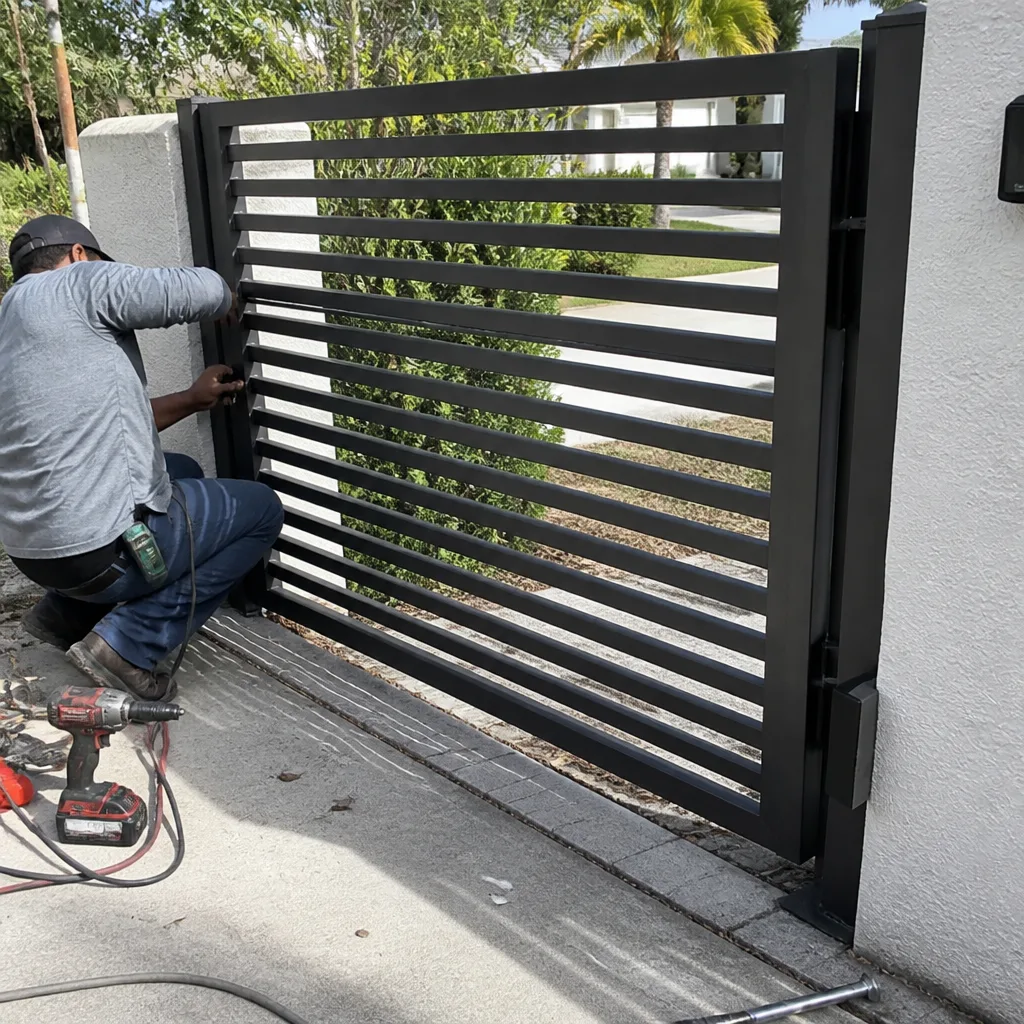
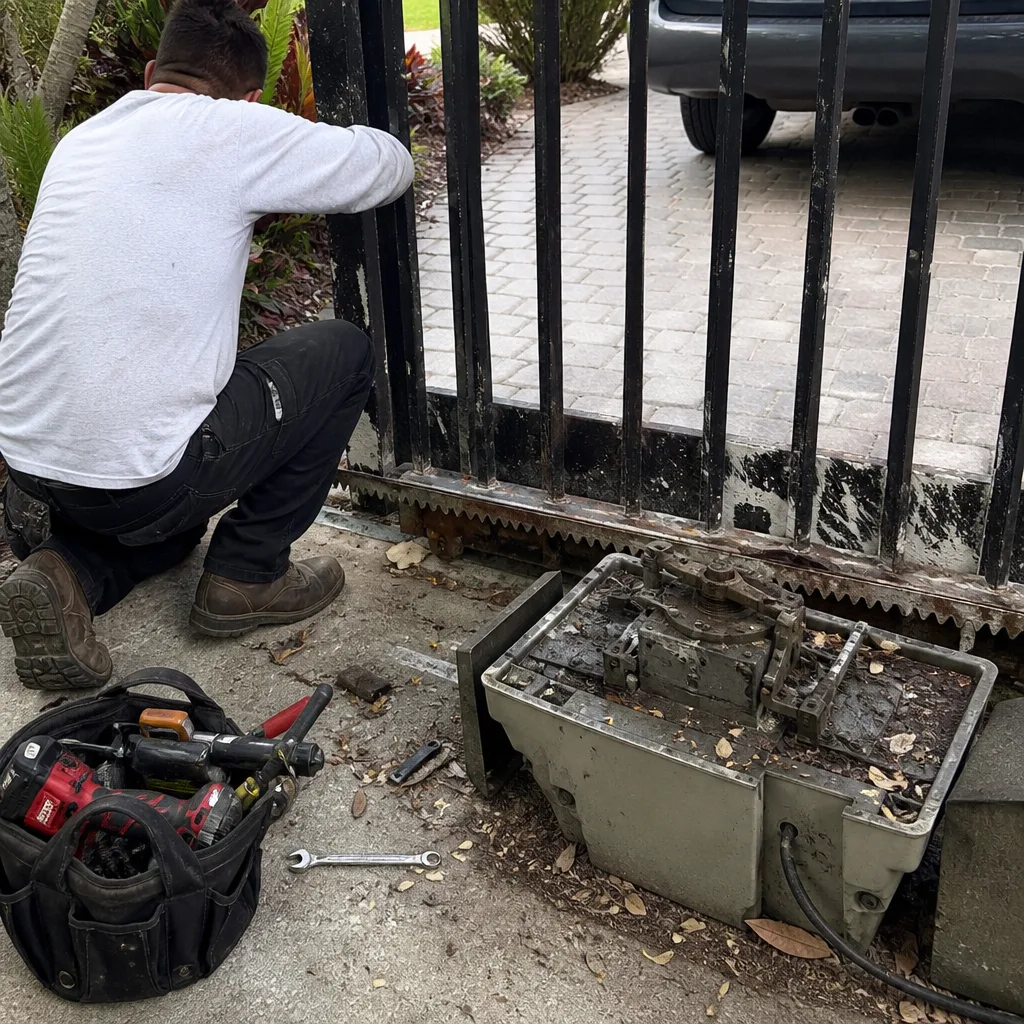
See the difference
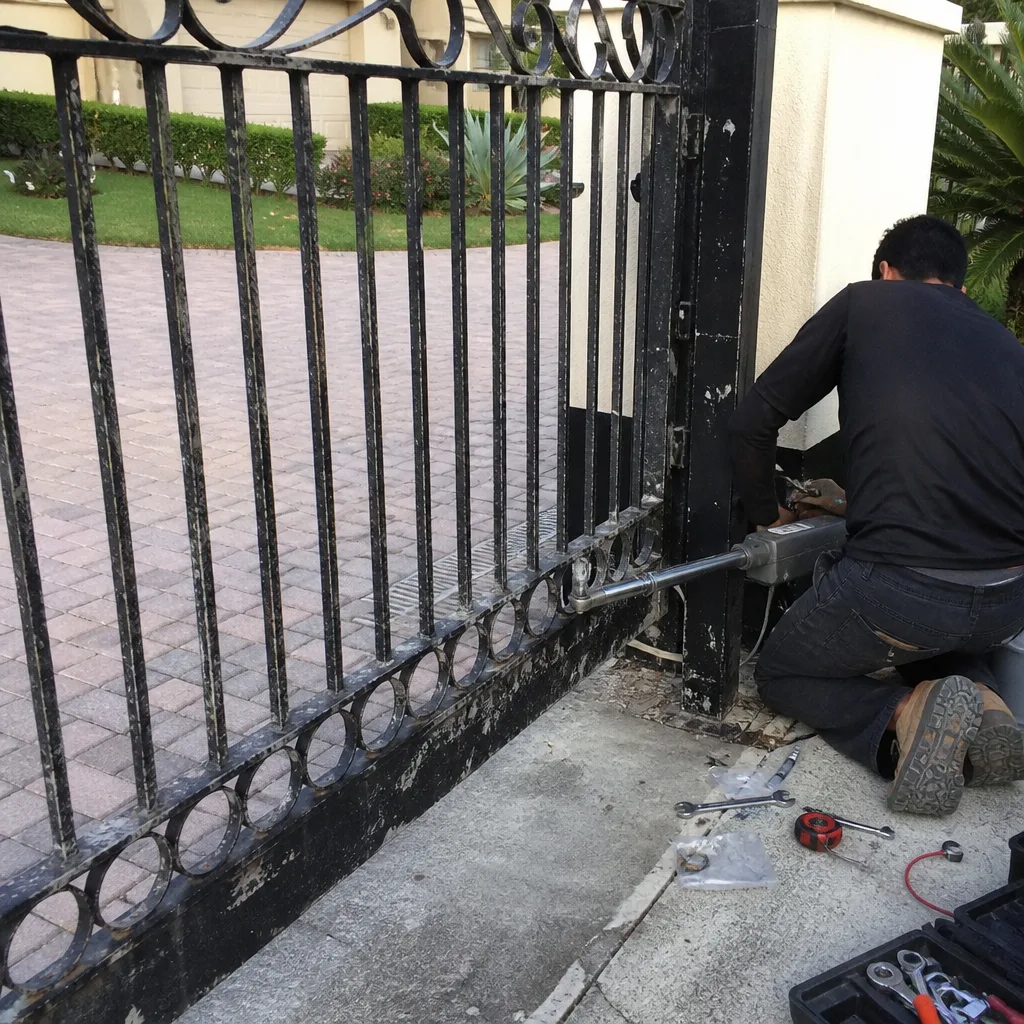 Before
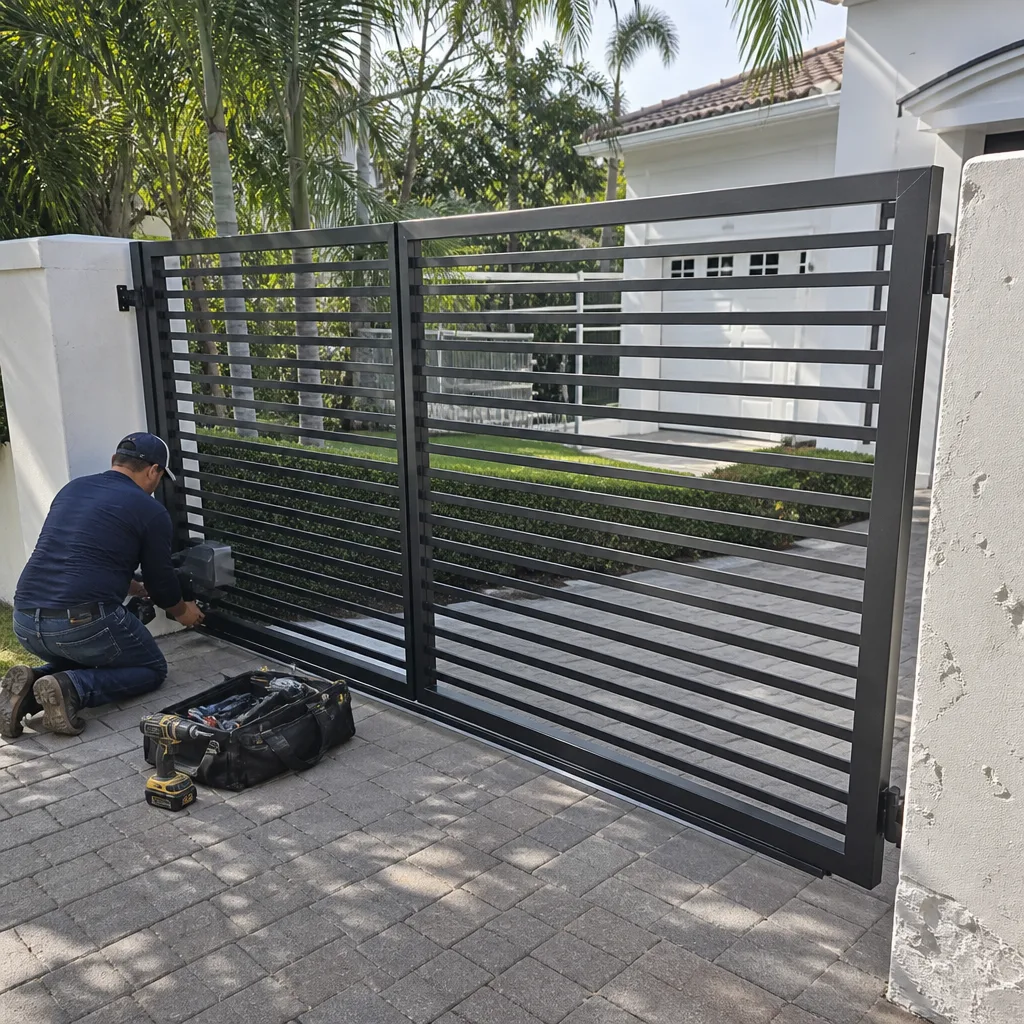 After
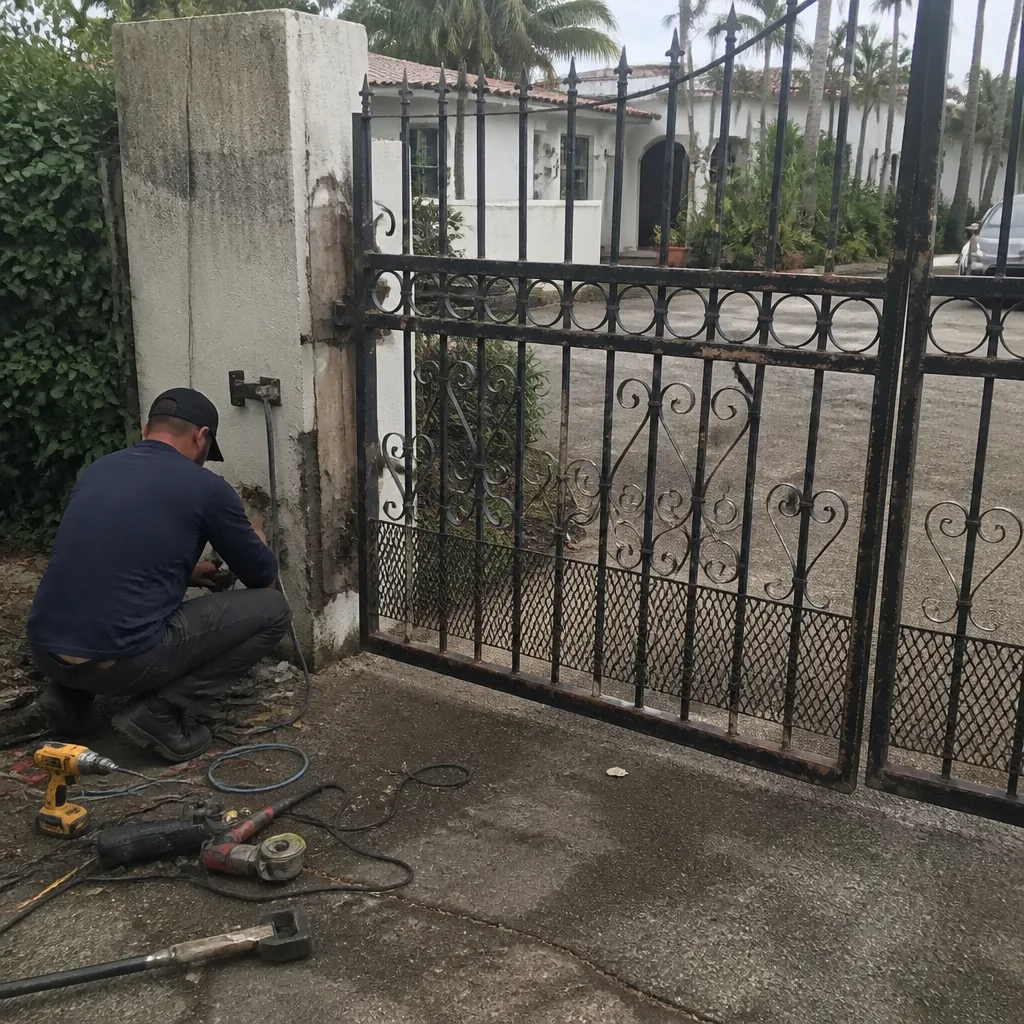 Before
 After
 Before
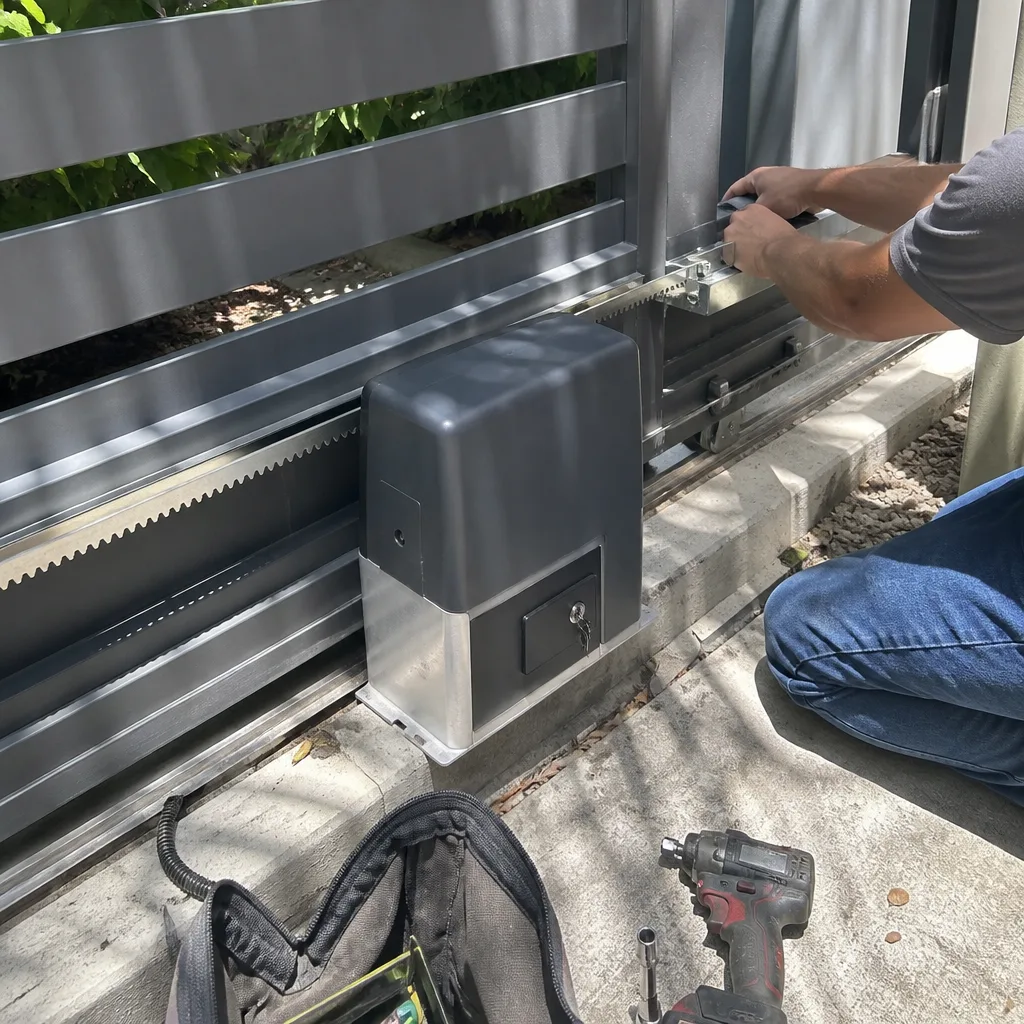 After