
Last updated October 30, 2026
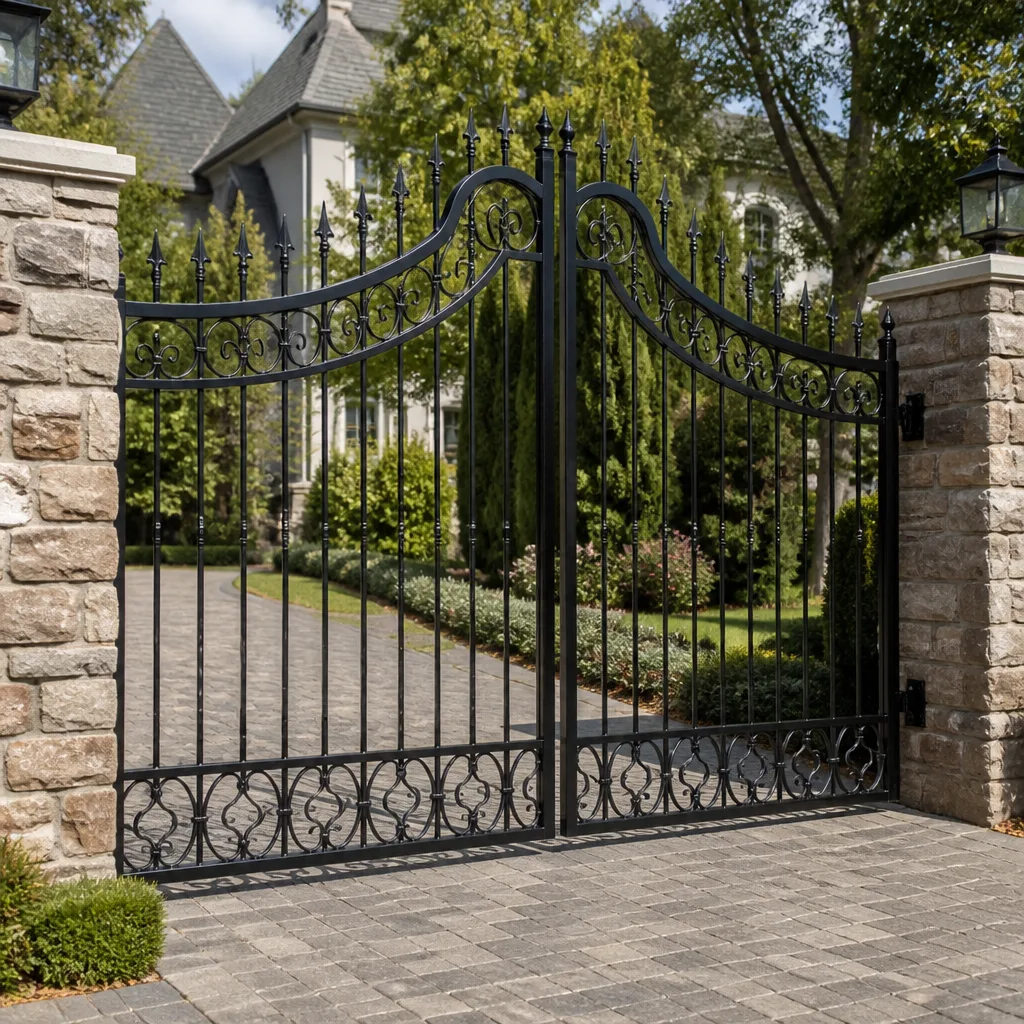 Wrought iron
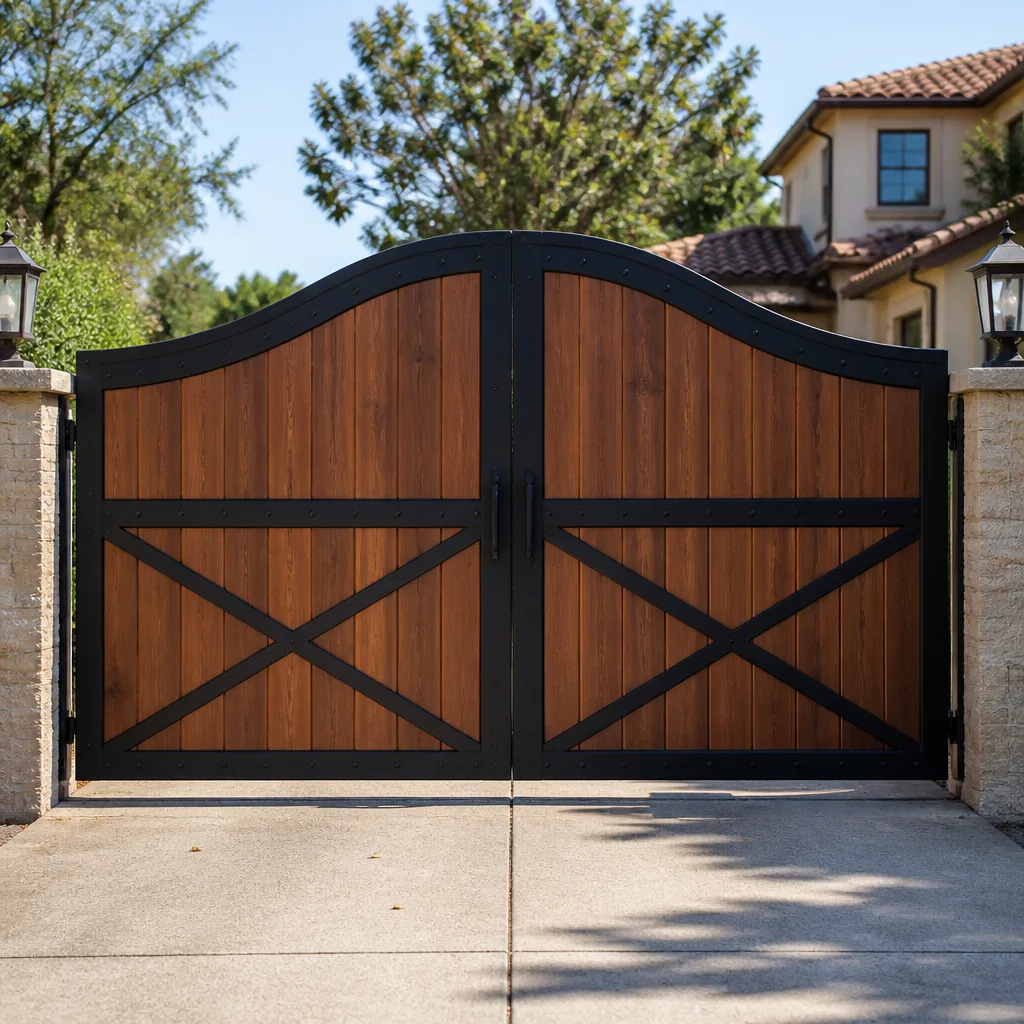 Wood & steel frame
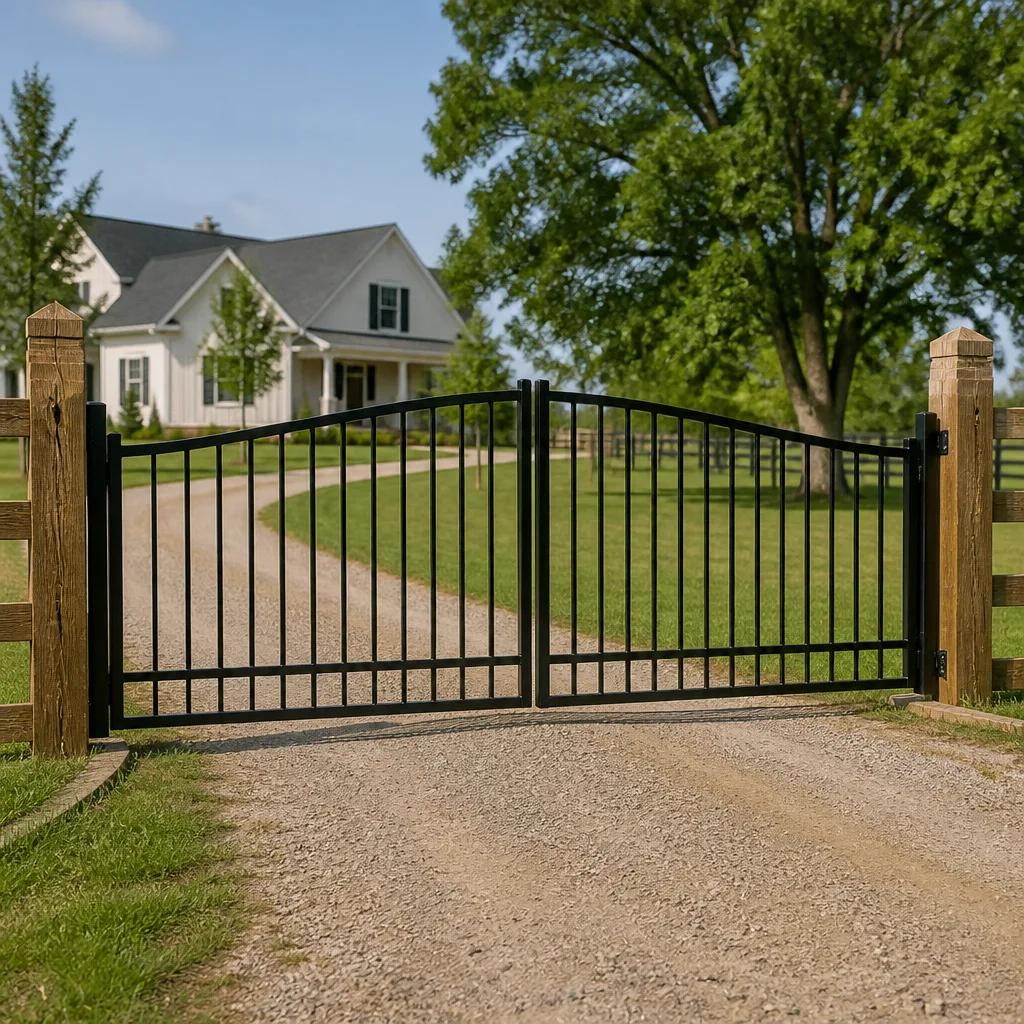 Farm & ranch
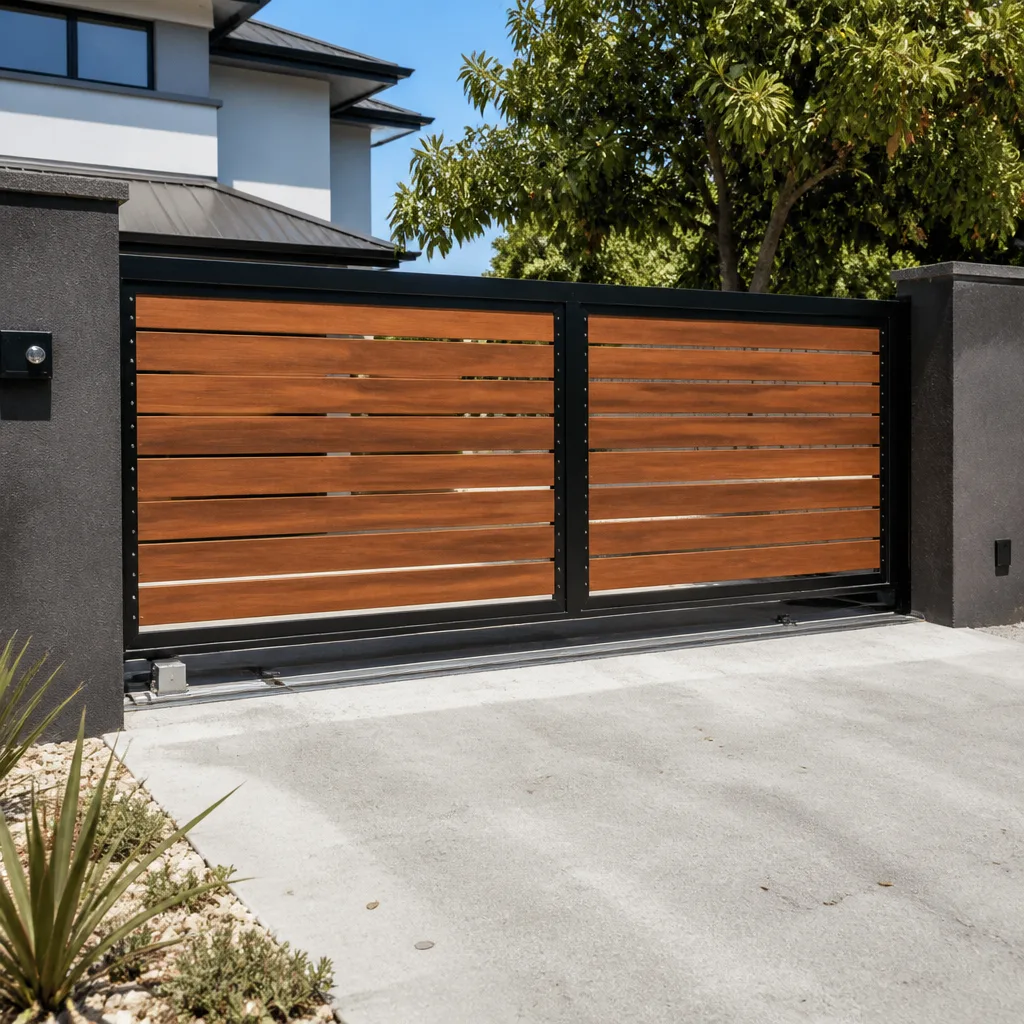 Sliding driveway gates
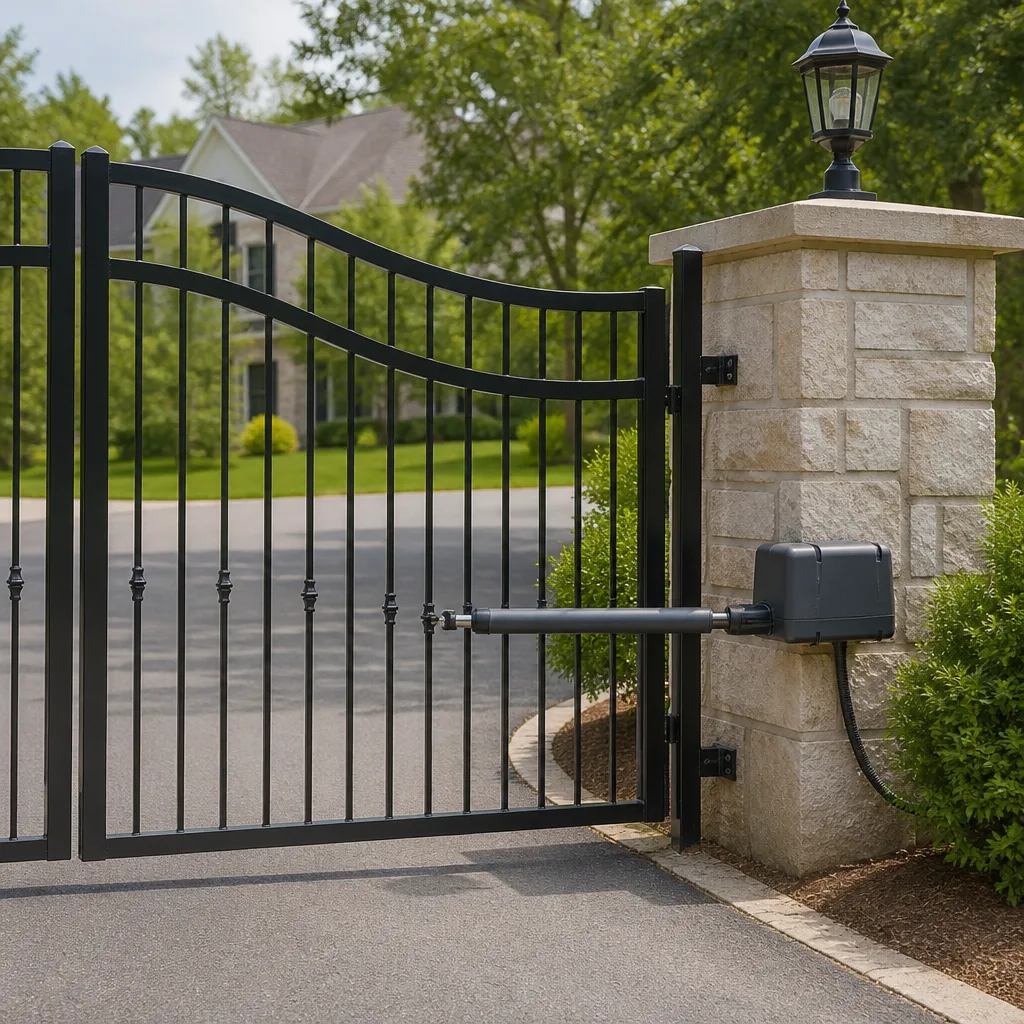 LiftMaster operators
Free on-site gate assessment - hinges, posts, and your LiftMaster or Nice gate operator checked before anything is quoted
The assessment is free and the quote is the invoice.
Get your free estimateSeasonal Gate Repair Care for West Palm Beach: Year-Round Homeowner’s Guide
In West Palm Beach, roughly 68% of automated gate failures we respond to could have been caught during routine seasonal checks. The salt air, afternoon thunderstorms, and seven months of high humidity don’t just age gate hardware, they accelerate specific failure patterns that a generic quarterly maintenance list never addresses. This guide organizes gate care around the South Florida calendar as it actually operates: a wet season that tests drainage and corrosion resistance, a dry season that hardens and exposes hardware stress, and two transition windows that demand attention before the weather turns. If you own an automated gate in West Palm Beach, you’ll learn what to check, when to check it, and which jobs genuinely need our Gate Repair services.
Styles & brands we work with
Quick Answer
Seasonal gate care in West Palm Beach hinges on four distinct phases: pre-hurricane preparation (May), wet season monitoring (June through October), post-storm assessment (as needed), and dry season adjustment (November through April). At minimum, check operator anchorage, battery backup, manual release function, and drainage paths before hurricane season, then schedule mechanical adjustments during the dry months when heat and humidity are lowest.
Table of Contents
- Pre-Hurricane Season Checklist: May Is Your Last Reliable Window
- Wet Season Gate Monitoring: June Through October
- Post-Storm Gate Assessment: What’s Cosmetic, What’s Functional, What’s an Insurance Claim
- Dry Season Gate Service: November Through April Is Your Repair Window
- Snowbird Vacancy and Your Gate: The Failure Pattern Nobody Warns You About
- Brand-Specific Vulnerabilities: What We See on FAAC, BFT, Linear, and Viking Systems
- Common Mistakes to Avoid
- When to Call a Professional
- Frequently Asked Questions
- The Bottom Line
Pre-Hurricane Season Checklist: May Is Your Last Reliable Window
The worst time to discover your gate operator isn’t hurricane-rated is when a tropical storm watch is already posted, and in West Palm Beach, that window to act is often 48 hours or less. By the time Palm Beach County issues a storm advisory, gate professionals are already booked solid, parts are backordered, and you’re left deciding between a gate that won’t secure and a gate that won’t open. May is the month to run through this checklist.
Start with the operator anchorage itself. Automated gate operators in West Palm Beach face two forces during a hurricane: direct wind load on the gate leaf and repeated micro-impact from wind-driven debris. We’ve seen operators pull loose from their mounting pads because the anchor bolts were corroded halfway through but nobody looked until the gate started swinging in 70 mph gusts. Check the four mounting points on the operator housing for rust, movement, or cracked concrete around the bolts. If you can rock the operator by hand, it won’t survive a named storm.
Battery backup health is the second critical check. Most residential gate operators in Florida are required to have a battery backup system that opens the gate automatically when line power fails, which is exactly when a hurricane takes down the grid. But a battery that’s three years old and has never been load-tested will often fail on its first real emergency. Disconnect the main power and test whether the gate actually opens and closes on battery alone, under load, not just on a bench test. If it moves slowly, hesitates, or fails to complete a full cycle, replace the battery before June 1.
Manual release function is the third item, and it’s the one most homeowners skip. In a real evacuation, the gate may need to be operated by hand if the operator fails entirely. Locate the manual release mechanism, usually a lever or keyed release on the operator housing or gate post, and test it with the gate in the closed position and again in the open position. A release that works on an unloaded gate but binds under the full weight of a 500-pound gate leaf is a trap waiting for a storm. If the gate has a magnetic lock or electric strike, test that release too.
Finally, walk the entire gate path and clear anything a hurricane could turn into a projectile: loose pickets, detached weatherstripping, unsecured signage, and vegetation that overhangs the gate travel. A palm frond wedged in the gate track during a storm becomes a lever that bends the gate frame.
Wet Season Gate Monitoring: June Through October
West Palm Beach receives an average of 62 inches of rain annually, and roughly 70 percent of that falls between June and October. For gate systems, the wet season isn’t just about corrosion; it’s about water finding its way into places it was never designed to go, and sitting there for months. The two systems that fail most often during Florida’s wet season are underground wiring conduits and operator control boards.
Underground conduit is the silent killer of electric gate systems. In most West Palm Beach installations, the low-voltage control wiring runs from the house or access panel through PVC conduit buried beneath the driveway or along the fence line. That conduit was sealed at installation, but Florida’s sandy soil shifts with the wet and dry cycle. Joints open. Water enters. And once water is inside a conduit that carries control board signals, the system develops intermittent faults that look like a bad control board, a failing loop detector, or a flaky keypad, but are actually water bridging connections underground. If your gate has started behaving erratically only during or after heavy rain, check the conduit before replacing any electronics.
Operator control boards face a different wet season threat: condensation. The control board inside an operator housing generates heat during operation. When rain cools the metal housing quickly, condensation forms inside. Over a full wet season, that moisture cycles across the board surface and accelerates corrosion on solder joints and connectors. Operators with poor ventilation seals, especially older FAAC and BFT residential units, are particularly prone to this. We recommend a visual inspection of the board enclosure in September, after the wettest stretch, looking for any white or green corrosion bloom on the board surface or connector pins.
Drainage around the gate posts is the third wet season priority. Gate posts set in low spots or at the base of a sloping driveway collect standing water around the post base. Over several wet seasons, that water works its way down the post and into the operator mount, the gate hinge blocks, or the underground sensor loop. Watch how water behaves around your gate during a heavy July thunderstorm. If it pools anywhere near the gate posts or operator pad, add drainage, regrade, or install a French drain before October. Standing water around an operator pad is the single most preventable cause of premature operator failure we see in West Palm Beach.
Corrosion monitoring during the wet season is mostly visual. Once a month, walk the gate and inspect hinge pins, operator arm connections, and all exposed bolt heads for surface rust. Florida’s salt air means surface rust appears quickly, but flash rust on hardware is cosmetic. The concern is pitting rust that has eaten into the metal. A good test is to wipe the area with a rag. If the rust wipes away to clean metal, it’s surface corrosion and can wait for the dry season. If it leaves visible pitting or the metal flakes, it’s structural and should be addressed before another wet season compounds the damage.
Post-Storm Gate Assessment: What’s Cosmetic, What’s Functional, What’s an Insurance Claim
After a hurricane or strong tropical storm passes through West Palm Beach, gate owners face a triage decision: what’s truly broken, what looks broken but still works, and what needs to be documented for insurance before anything is touched. This sequence matters because cosmetic damage often hides functional damage, and in our experience, the most expensive post-storm gate repairs are the ones that started as small, overlooked issues. For a deeper look at protecting your investment, see The Complete Gate Repair Guide for West Palm Beach Homeowners.
Begin with a visual and functional walkthrough before any repairs are attempted. Take dated photos of everything: the gate leaf, the operator, the posts, the hinges, the keypad, the access system, any visible wiring. Insurance adjusters in Florida are accustomed to storm claims, but they respond best to documentation that shows the gate’s condition immediately after the event. Photos taken before cleanup properly connects damage to the storm rather than to normal wear.
Then work through the system in this order:
- Structural gate frame and leaf: Is the gate still square within its frame? Check the diagonal measurement from top hinge corner to bottom latch corner on both the open and closed lane. A difference of more than 1/4 inch indicates racking.
- Hinge integrity: Open the gate fully and inspect each hinge for deformation, cracked welds, or play in the pivot. Hinges are the load path for the entire gate mass, and a hairline crack here fails catastrophically under repeated cycles.
- Operator function: Run the gate through three full open/close cycles and listen for new grinding, clicking, or hesitation. Storm debris in the track or gate path often causes subtle damage to the operator’s internal gear train that doesn’t surface until days later.
- Loop detector and safety edges: Test the vehicle loop by driving over the sensor location. Test safety edges by triggering them with the gate closing. Storm water intrusion often shorts loop detector circuits and safety edge sensors, which disables the gate’s auto-close or safety reversal.
- Electrical and access systems: Check the keypad, intercom, and any card reader for water damage. Saltwater intrusion into access panels is common after storm surge in lower-lying West Palm Beach neighborhoods and may not show immediate symptoms.
What’s an insurance claim? Structural racking of the gate leaf, bent posts, and operator damage from flooding are all standard homeowners insurance territory in Florida. What’s usually not: pre-existing corrosion, failed batteries, or operator damage from normal wear that a storm happened to finish off. If an adjuster sees rust pitting that predates the storm, they’ll attribute the failure to age, not wind. That’s another reason the pre-hurricane checklist matters: a gate that was documented as healthy in May is much easier to claim for in September. For any electrical damage claim, preserve the failed components. Don’t throw away a water-damaged control board or loop detector until the claim is settled.
Dry Season Gate Service: November Through April Is Your Repair Window
West Palm Beach’s dry season, from November through April, isn’t just more pleasant for working outdoors. It’s the optimal window for the mechanical work that heat and humidity make difficult or ineffective during the wet months. Specific adjustments, painting, and hardware replacement all perform measurably better when the metal isn’t sweating and the ground isn’t saturated.
Mechanical adjustments should top the dry season list. Gate hinges settle, operator arms develop play, and limit switches drift. In the wet season, these small misalignments absorb moisture and accelerate. During the dry months, a technician can make precise adjustments that will hold through the next wet season. This includes setting the open and close limits on the operator, adjusting the gate leaf so it hangs square in the frame, and tuning the operator’s force settings so it’s not overstraining the motor with every cycle. These are the jobs that extend the life of a gate system by years and cost a fraction of a full replacement.
Painting is the second dry season project. Metal gate frames in West Palm Beach take a beating from salt air, UV, and rain. The best paint adhesion and cure happens when the metal is dry and temperatures are between 70 and 85 degrees, which in South Florida means November through March. Any later and the spring humidity returns, and any earlier and you’re painting over residual moisture from the wet season. Before painting, wire-brush any surface rust, treat with a rust converter, and use a marine-grade primer and topcoat rated for coastal environments. A standard hardware store rustoleum won’t survive more than one or two wet seasons.
Hardware replacement follows painting. Hinge bolts, latch hardware, post caps, and gate wheels are inexpensive parts that fail predictably after several Florida wet/dry cycles. If you’re already at the gate for painting, replace any hardware that shows pitting, deformation, or looseness. The cost is minimal compared to the damage a failed hinge or latch causes when the gate sags or blows open.
The dry season is also the right time to schedule any planned upgrades: a new keypad, a loop detector replacement, an intercom upgrade, or a full operator swap. Because the ground is drier and the system isn’t fighting moisture, installation quality is higher and the new components start their service life in the least stressful conditions South Florida offers.
Snowbird Vacancy and Your Gate: The Failure Pattern Nobody Warns You About
West Palm Beach has a significant population of seasonal residents who leave their properties vacant or lightly used from May through October, exactly when the wet season hits. A gate system that sits in automated mode for months without manual use develops specific failure patterns that full-time residents never see. If you own a seasonal home in West Palm Beach, this section is for you.
The core problem is that automated gates depend on regular movement to stay healthy. Operator gears, hinge pins, and latch mechanisms stay lubricated through use. When a gate goes months without cycling, lubricants dry, seals stiffen, and corrosion forms on surfaces that would normally be wiped clean by motion. The first cycle after six months of vacancy is often the one that breaks something, because hardened seals and stiff joints put maximum strain on the operator’s motor and gear train.
The second vacancy problem is power. Many seasonal owners shut their property’s power down or reduce it to a minimal state. If the gate operator is on a circuit that’s switched off, the gate’s internal battery backup will drain over several weeks. The gate then sits in whatever position it was left in, which for a closed gate means it’s now a manual gate that may or may not have a functioning manual release. Worse, some operators will not re-initialize properly when power returns, requiring a service call just to restore normal operation.
The third problem is vegetation. Six months of South Florida growing season will wrap a gate in vines, let palm fronds drop into the gate track, and in some cases let tree roots lift or shift the gate post enough to disrupt alignment. When a seasonal owner returns in November, the gate often won’t open not because the operator failed, but because plant growth physically blocks the travel path or has fouled the safety sensors.
The solution isn’t complicated. If you leave West Palm Beach for the season, arrange for a gate check during the vacancy: someone cycles the gate, inspects for corrosion and vegetation, and verifies the battery and power state. It’s a much cheaper service call than the full repair that follows months of neglect. And before leaving in April or May, run the pre-hurricane checklist. A properly prepared gate will usually survive the summer with nothing more than surface corrosion.
Brand-Specific Vulnerabilities: What We See on FAAC, BFT, Linear, and Viking Systems
West Palm Beach gate installations span a wide range of brands because the market includes everything from modest canal-front homes to large equestrian properties and commercial access gates. In our experience working on all of them, certain brands have characteristic failure patterns in this climate. Knowing what your specific operator is prone to helps you spot problems early.
FAAC residential operators, common on higher-end West Palm Beach homes, are mechanically robust but sensitive to moisture intrusion at the control board enclosure. The board seals were designed for European climates, and Florida’s combination of heat and humidity accelerates the breakdown of the gasket material. The symptom is usually intermittent faults after heavy rain, which temporarily resolve when the board dries. If you have a FAAC system that misbehaves only after storms, the board enclosure is the first place to look. FAAC gearboxes are generally reliable in this climate, but hydraulic fluid should be checked annually because Florida’s heat thins the fluid and can cause the gate to drift.
BFT systems appear frequently in commercial and multi-family properties around West Palm Beach, and their primary vulnerability is the capacitor bank on some older models. Capacitors age faster in heat, and we’ve replaced more BFT capacitors on August service calls than at any other time of year. The warning sign is a gate that struggles to start moving, moves slowly at first, or hums without moving. BFT loop detectors are also more sensitive to moisture than most, and wet season false activations are a known issue on older BFT control panels.
Linear operators dominate older West Palm Beach residential installations, especially swing gates installed in the 2000s. The Linear gear train is generally sturdy, but the limit switch assembly tends to drift with temperature cycling, causing the gate to stop short or overtravel. This shows up more in the wet season when thermal swings are smaller but humidity causes the mechanical contacts to corrode. Linear systems from that era also commonly lack modern safety features, and if your gate doesn’t have a monitored safety edge, that’s an upgrade worth making before the next storm season.
Viking operators are popular on heavier ornamental gates and some commercial access points in the West Palm Beach area. Their known weak point in this climate is the hinge mounting hardware on the gate itself, not the operator. Viking operators can generate significant torque, which is fine when gate hinges are maintained, but when hinges begin to corrode and bind, the operator keeps applying force until something yields, often the hinge weld or the operator mounting plate. If you have a Viking system, inspect the gate hinges monthly during the wet season and address any stiffness immediately.
The common thread across all four brands is that Florida’s climate doesn’t care about the brand name. What matters is that the system is maintained for the conditions it actually lives in. That’s why we work on the brand you already have, rather than steering you toward whatever we happen to sell. A properly maintained FAAC from 2008 will often outlast a neglected Viking from 2020.
Common Mistakes to Avoid
- Skipping the manual release test because the gate “works fine.” The manual release only matters when the gate doesn’t work, and by then it’s too late to discover it’s seized. Test it twice a year, in May and again in November.
- Using a pressure washer on the operator housing. Pressure washers force water past gaskets and into control board enclosures. We see this several times a year in West Palm Beach, usually right after a homeowner’s landscaping crew blasts the gate clean.
- Ignoring intermittent faults because the gate “fixed itself.” A gate that works after it dries out still has a moisture problem. The next failure will be permanent and probably at the worst possible moment.
- Painting over rust without treating it. Paint seals rust in, and the corrosion continues underneath. Surface preparation and a rust converter are not optional in coastal Florida.
- Leaving a seasonal property’s gate in automated mode all summer without a single check. The first cycle in November is when the real damage announces itself, and it’s always more expensive than a mid-summer service visit would have been.
- Deferring battery replacement because the gate “runs on line power anyway.” Hurricane season in West Palm Beach is exactly when the battery matters most. A dead battery means a gate that won’t open when the power is out and someone needs to leave.
When to Call a Professional
A homeowner can handle visual inspections, vegetation clearing, basic lubrication, and photographic documentation. But certain situations warrant a professional gate technician, and waiting on them usually makes the repair more expensive. Call a specialist when the gate is racked or out of square, when the operator makes grinding or humming noises, when the gate has been submerged or hit by falling debris, when loop detectors or safety edges are malfunctioning, or when you’re not sure which component is causing an intermittent fault. Electric gate diagnostics require test equipment and a systematic approach that goes beyond what a multimeter and a guess can accomplish. Electric Gate Repair in West Palm Beach covers motor, control board, loop detector, and access system failures, and that’s the level of triage a failing gate system genuinely needs. If you’re in doubt about the condition of your gate after a storm or before a season change, Sovereign Gate Repair offers free estimates in West Palm Beach – call (855) 360-5979.
Frequently Asked Questions
Seasonal gate maintenance in West Palm Beach typically costs between $85 and $150 per visit for inspection and basic adjustments, with more involved work like battery replacement or operator repair priced separately. The final figure depends on the gate type, operator age, and whether parts are needed, and the exact quote is always agreed before any work starts. Call (855) 360-5979 for a free estimate on your specific system.
For mechanical failures and common electrical faults, same-day gate repair is often possible in West Palm Beach, assuming the needed part is on the service truck or available locally. Operator replacements and special-order parts for older FAAC, BFT, or Viking systems may take one to three days depending on supply, but many common failures are diagnosed and resolved in a single visit. Call (855) 360-5979 with your symptoms and we can tell you whether same-day service is realistic for your situation.
A full gate installation in West Palm Beach includes the gate leaf or gate panels, posts and hinges, the automated operator, safety devices such as photo eyes or safety edges, vehicle loop detectors where applicable, the access control system, and the low-voltage wiring and conduit connecting everything. The scope varies based on whether it’s a swing or slide gate, residential or commercial, and what access systems the property already has. See Gate Installation in West Palm Beach for a full breakdown of what a new automated gate system involves.
Yes, power runs, safety edges, photo eyes, loop detectors, and all associated low-voltage wiring are part of a complete Gate Repair in West Palm Beach or new installation. The power run from the electrical panel to the operator is often the part of the job that general contractors get wrong, and it’s one of the things we verify on every inspection because incorrect wire gauge or missing GFCI protection causes intermittent faults that are hard to trace.
Rain-related intermittent gate faults in West Palm Beach usually mean water is entering the control board enclosure, the underground wiring conduit, or the loop detector circuit. The most common culprit is a failed gasket on the operator housing, followed by water intrusion at conduit joints that have opened as the soil shifted. This is a condition that worsens with each wet season, and the fix is to locate the moisture entry point and seal it rather than replace electronics that will just fail again.
A gate in West Palm Beach should be professionally serviced twice a year: once in May before hurricane season and once in November before the dry season begins. The May visit focuses on storm readiness, battery health, and anchorage integrity, while the November visit handles mechanical adjustments, lubrication, and hardware replacement in the best working conditions the region offers. Seasonal residents leaving for the summer should add a mid-vacation check to catch issues before they compound.
The Bottom Line
West Palm Beach gate care is not a quarterly chore; it’s a seasonal discipline mapped to the South Florida calendar. The May hurricane prep check is your insurance against storm season failures. The wet season asks you to watch drainage, conduits, and control board enclosures. The dry season is your window for adjustments, painting, and component replacement. And if you leave for the summer, a single mid-season check can prevent the expensive November surprise. For a complete evaluation of your gate system before the next season turns, Sovereign Gate Repair home is the place to start. We work on the brand you already have, from residential Mighty Mule units to commercial-grade FAAC and BFT systems, and every job is treated as a complete solution, not a temporary patch. Call (855) 360-5979 for a free estimate.
Written by the team at Sovereign Gate Repair, serving West Palm Beach since 2015. Explore more guides & resources on gate maintenance and repair.
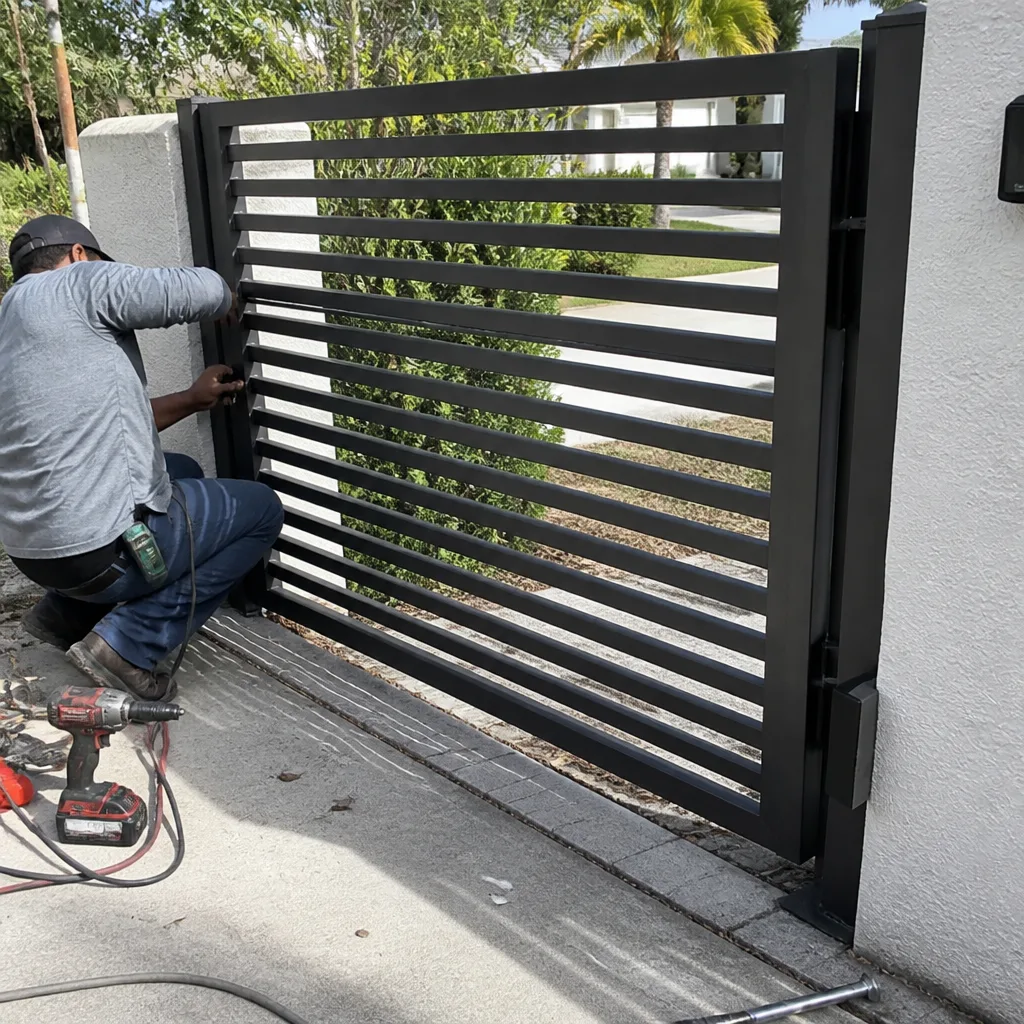
See the difference
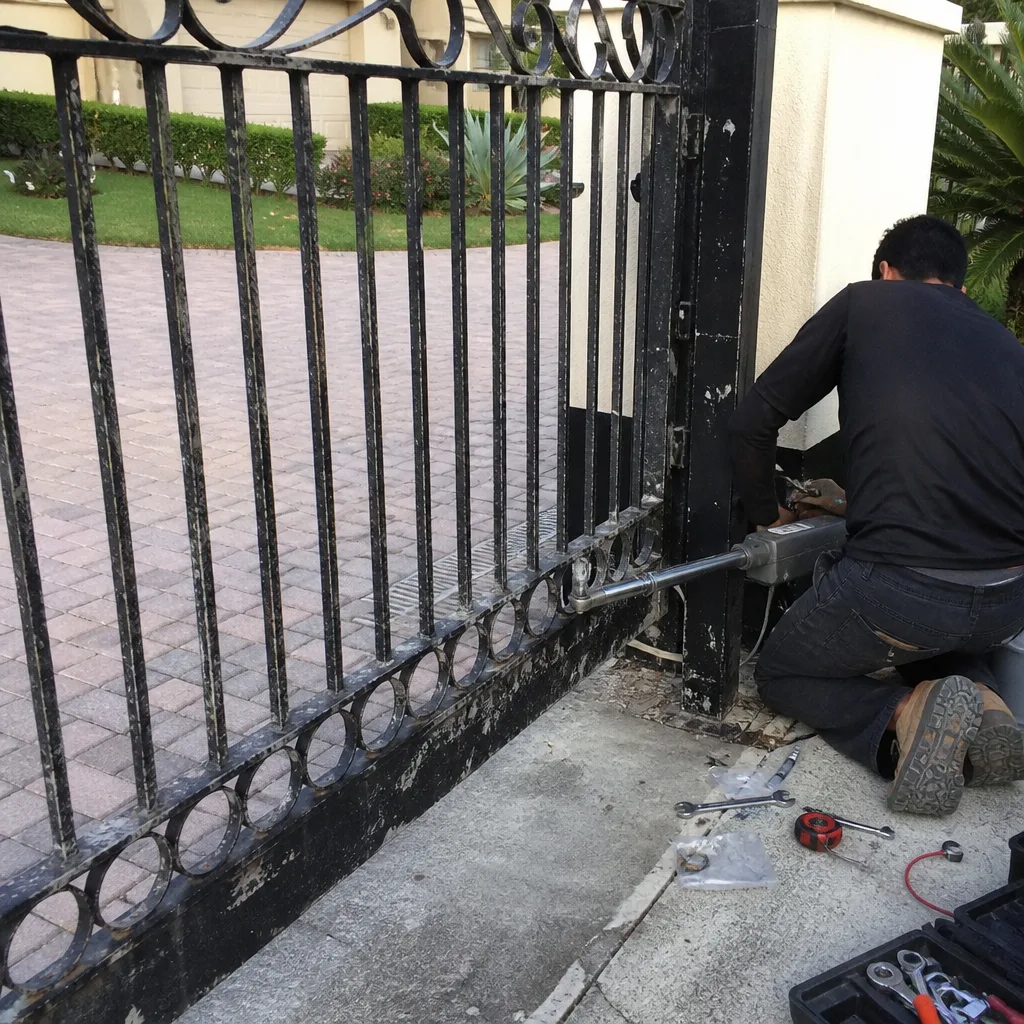 Before
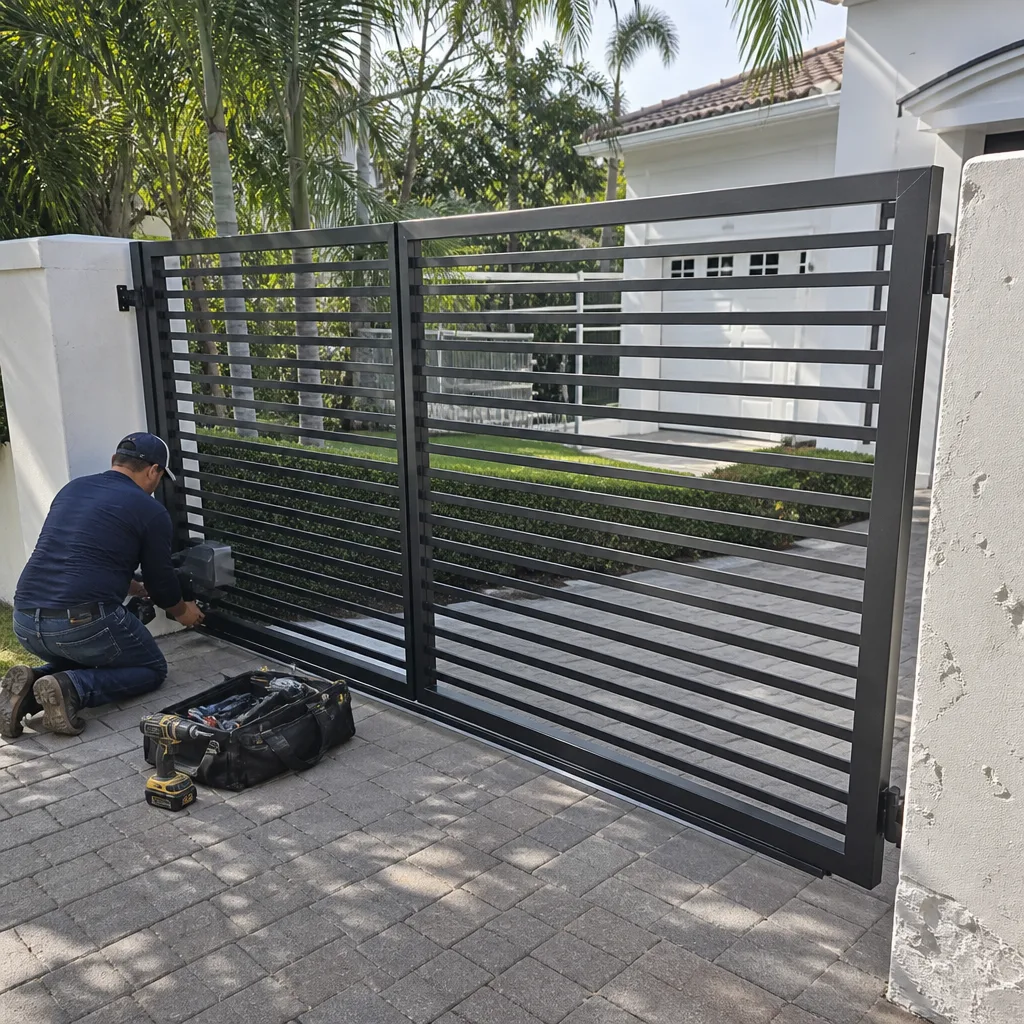 After
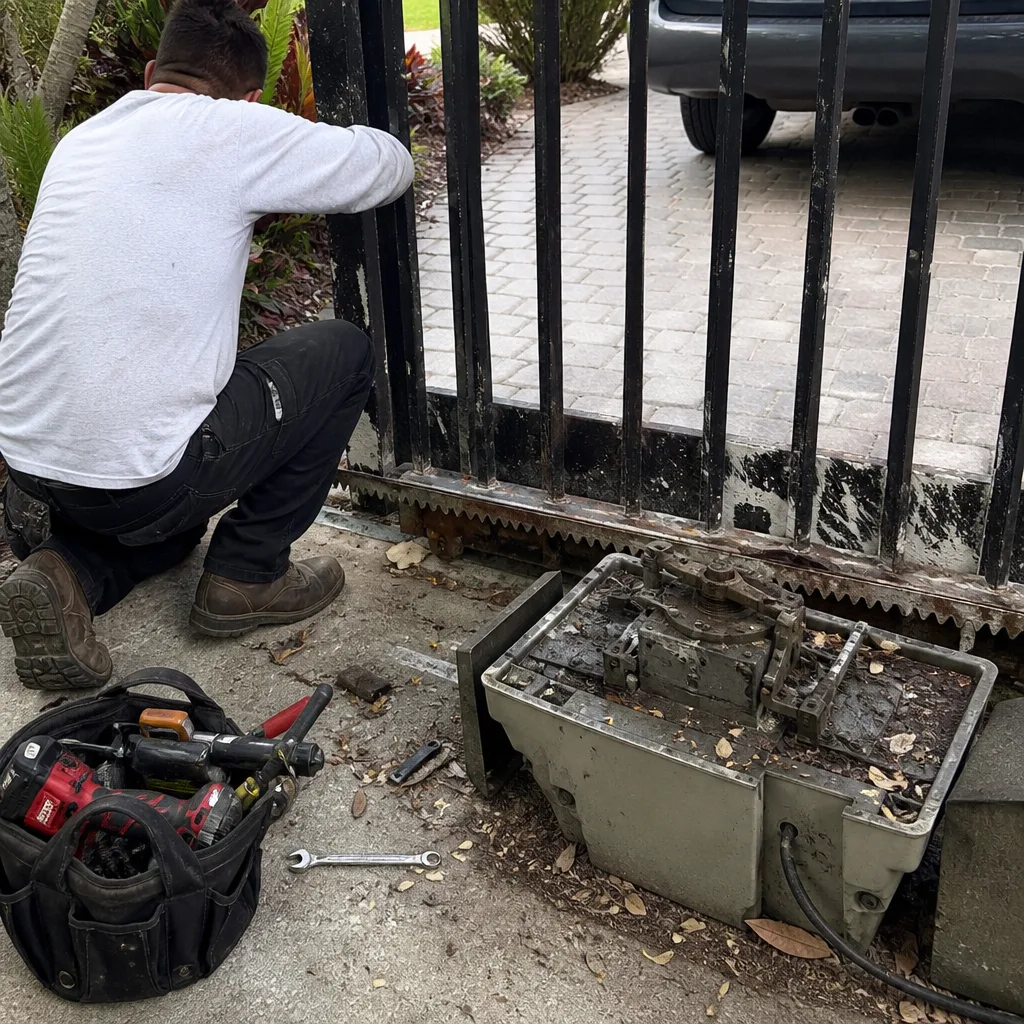
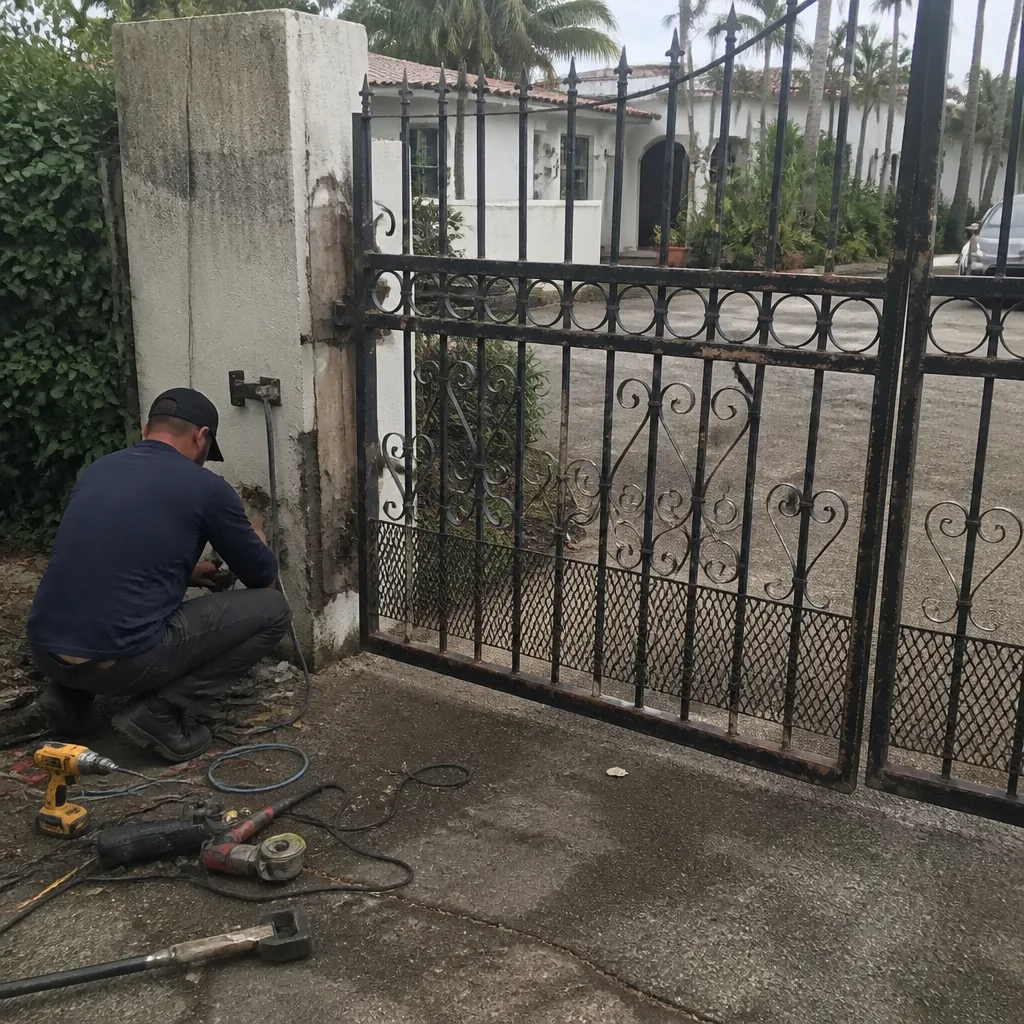 Before
 After
 Before
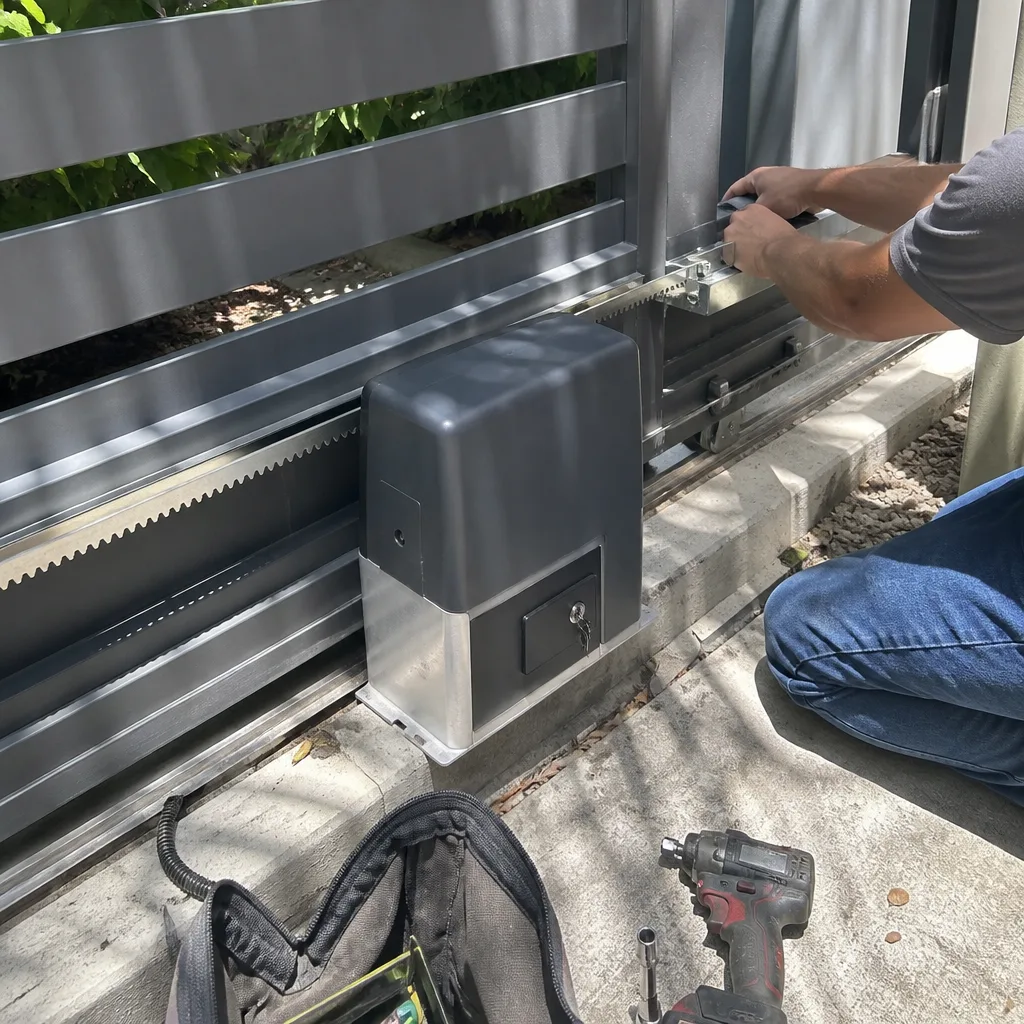 After