
Last updated October 30, 2026
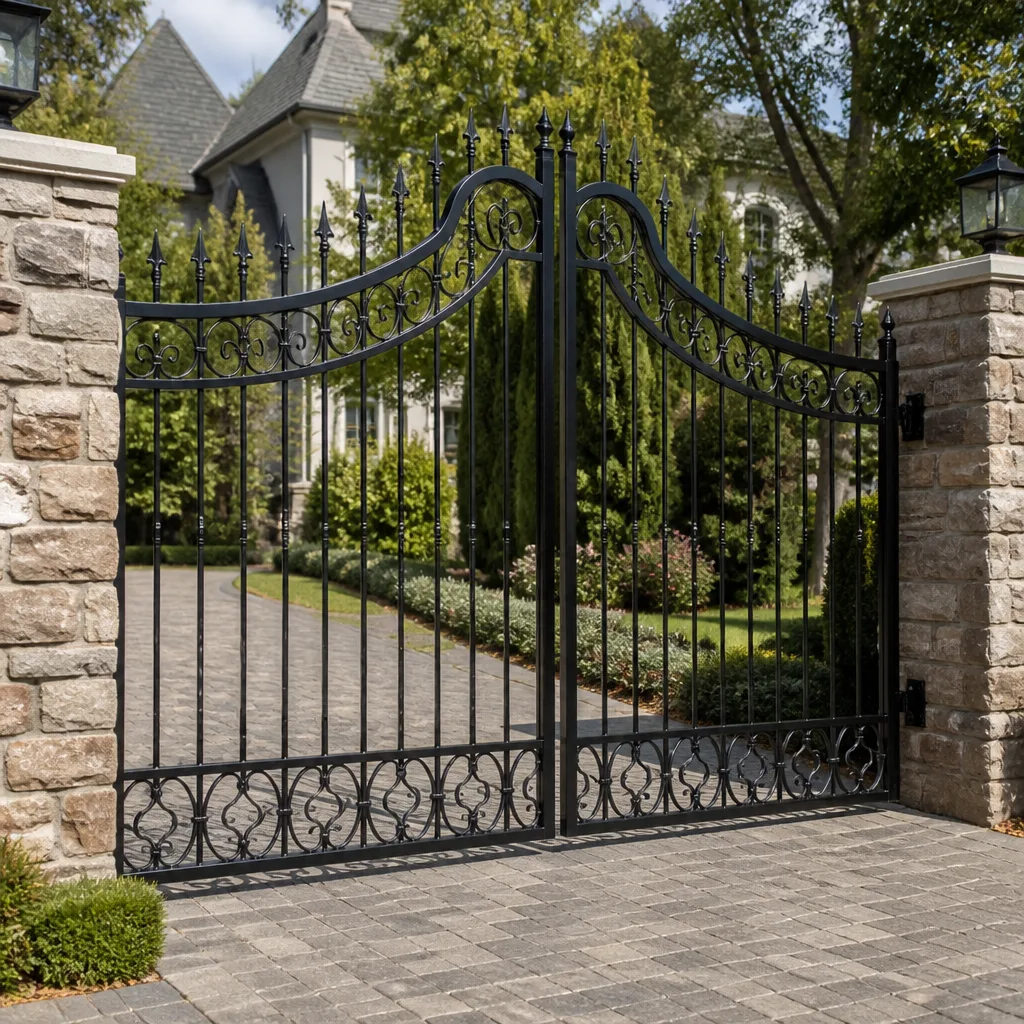 Wrought iron
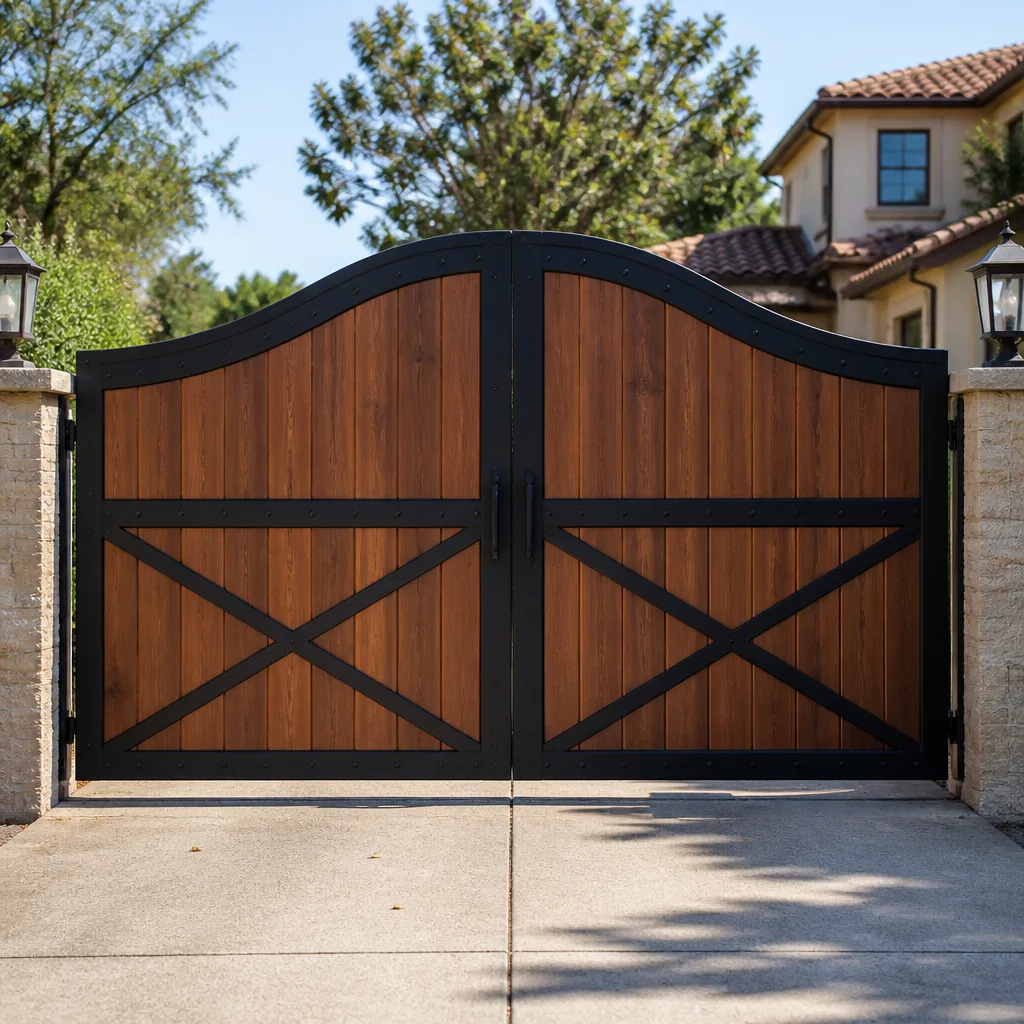 Wood & steel frame
 Farm & ranch
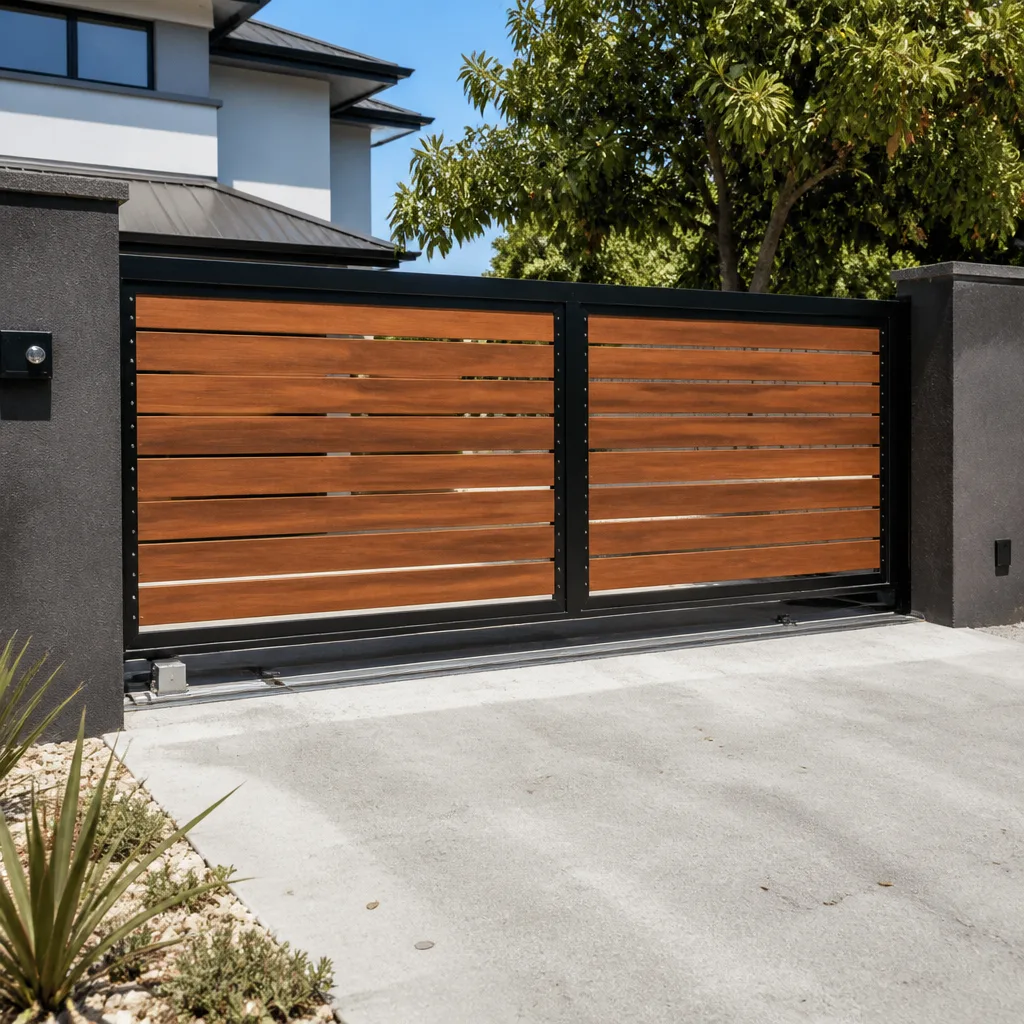 Sliding driveway gates
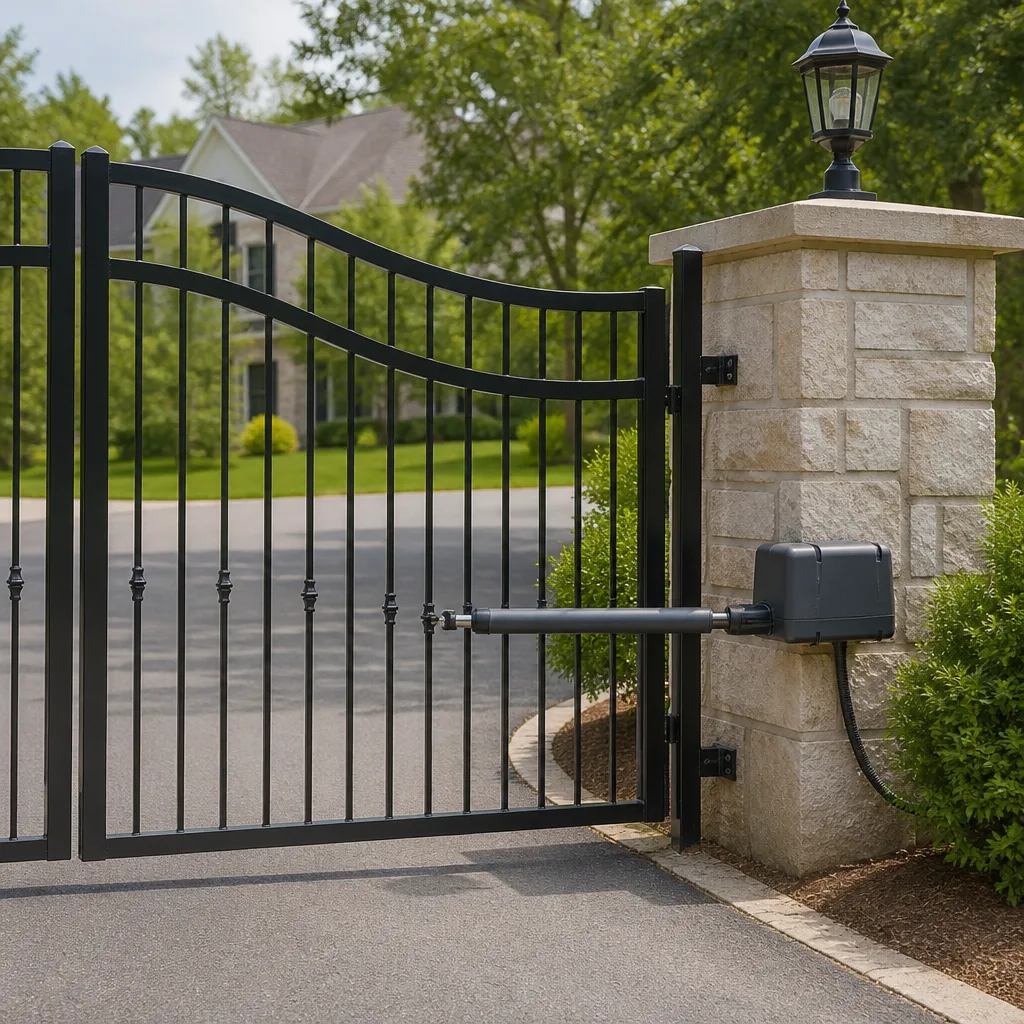 LiftMaster operators
Free on-site gate assessment - hinges, posts, and your LiftMaster or Nice gate operator checked before anything is quoted
The assessment is free and the quote is the invoice.
Get your free estimateGate Repair Maintenance Checklist for West Palm Beach Homeowners
Most gate maintenance checklists circulating online were written for somewhere else. Phoenix. Chicago. Maybe Dallas. They tell you to worry about freeze-thaw cycles and snow load on the operator arm. A West Palm Beach homeowner who follows that advice will spend time checking for problems that will never happen here, while completely missing the two things that kill gates in Palm Beach County: salt-driven corrosion on electrical contacts and UV degradation of safety sensor housings. This guide is built for our climate, our humidity, our rainy season, and the specific ways automated gates fail along the Florida coast. By the end, you’ll know exactly what to inspect, when to inspect it, and which products actually hold up in this environment—plus links to more guides & resources for ongoing gate care.
Styles & brands we work with
Quick Answer
A West Palm Beach gate maintenance checklist should prioritize monthly checks of operator drainage and enclosure seals, quarterly inspection of safety sensors and control board terminals for salt-air corrosion, lubrication every 4-6 months with marine-grade products, and full documentation of every inspection for HOA compliance and insurance purposes. Coastal humidity accelerates electrical degradation roughly twice as fast as inland Florida, so gates within three miles of the Intracoastal need inspection intervals cut in half compared to gates west of I-95.
Table of Contents
- The Real Threats to Gates in West Palm Beach
- Monthly Maintenance Checklist
- Quarterly Inspection Checklist
- Post-Rainy-Season Operator Drainage Protocol
- Lubrication: What Actually Works in South Florida
- Detecting Salt-Air Corrosion Before Visible Rust
- Documentation Habits That Protect You
- Common Mistakes to Avoid
- When to Call a Professional
- Frequently Asked Questions
- The Bottom Line
The Real Threats to Gates in West Palm Beach
West Palm Beach sits in a unique corrosion zone. The prevailing easterly winds off the Atlantic carry salt aerosol inland for roughly three to five miles, depending on wind speed and humidity. That means a home in El Cid or Southland Park gets hit with significantly more salt deposition than a home in Royal Palm Beach or Wellington. And salt does something specific to gate systems: it attacks the low-voltage terminals, limit switch contacts, and control board solder joints long before you see rust on the gate frame itself.
The second West Palm Beach-specific threat is UV exposure. We get roughly 3,200 hours of sunshine annually, and the UV index sits in the very-high range for most of the year. Safety photo-eye sensors are typically housed in plastic enclosures. After two to three years of direct sun, those housings become brittle and develop micro-fractures. Water gets in during the afternoon downpours that define our summers, and a shorted photo-eye is the most common reason a gate refuses to close. In our experience, we replace more sun-baked sensor housings in West Palm Beach than any other single component except control boards damaged by power surges from lightning storms.
A national template checklist won’t tell you any of this. It will tell you to check hinges, which rarely fail here because we don’t have freeze-thaw stress. It will tell you to check for snow buildup, which is irrelevant. What it won’t tell you is that the plastic grommets where wires enter the operator housing dry out and crack in this heat, creating a moisture pathway that corrodes the main board within months.
Monthly Maintenance Checklist
These are the items you or a family member can check every 30 days. Each takes under five minutes. The goal is catching degradation before it becomes a repair call.
- Visual sweep of the gate path. Walk the full arc of the gate and look for anything that has moved into the travel area. Landscaping grows fast in West Palm Beach, and a palm frond that droops into the gate path can bind the gate mid-cycle and burn out the operator motor.
- Operator enclosure wipe-down. Use a dry microfiber cloth to remove salt film and dust from the exterior of the operator housing. If you can see a white or gray haze on the housing, that’s salt and mineral buildup. It’s normal here, but it needs to be removed regularly or it will work its way into the enclosure seams.
- Safety sensor alignment. Make sure both photo-eye housings are pointing directly at each other and that nothing has shifted them. A bump from a lawn mower or a strong storm can knock a sensor out of alignment by a quarter inch, which is enough to trigger a false obstruction signal.
- Check for standing water near the operator base. After any significant rain, look at the pad or post where the operator is mounted. Standing water that persists for more than 48 hours is a problem. It means the drainage path has been compromised, and water will eventually find its way into the enclosure.
- Test the manual release. Pull the release handle and confirm the gate moves freely by hand through its full travel. A gate that binds manually is telling you something about the hinge or track condition before the motor has to fight it.
These checks don’t require tools or technical knowledge. They’re about observation. The thing we tell homeowners in West Palm Beach is that gates here fail slowly and quietly. A corroded terminal doesn’t announce itself. A cracked sensor housing looks fine until the afternoon storm fills it with water. The monthly sweep is your best defense against the slow failures.
If you’re not comfortable doing any of this yourself, or if you catch something you don’t understand during a check, our Gate Repair in West Palm Beach service covers everything from a quick inspection to a full diagnostic. But these monthly steps, done consistently, will prevent most of the calls we make.
Quarterly Inspection Checklist
Every three months, set aside about 45 minutes for a deeper inspection. These are the items that require a screwdriver, a flashlight, and a willingness to open the operator enclosure. If you’re not comfortable opening an electrical enclosure, skip to the When to Call a Professional section.
- Remove the operator cover and inspect the control board. Look for any white, green, or blue powdery residue on solder joints or terminals. That’s corrosion beginning, and in West Palm Beach it can start within six months of installation on a gate that’s close to the water. If you see it, photograph it and call a professional. Don’t scrape it off yourself.
- Check wire entry points. Every place a wire enters the operator housing should have an intact grommet or strain relief. These rubber or plastic parts dry rot in our UV and heat. A missing or cracked grommet is an open door for moisture and insects.
- Inspect limit switch actuation. Open and close the gate once while watching the limit switches. They should engage crisply, without hesitation. A limit switch that’s getting sticky from humidity will cause the gate to stop short or over-travel, and both conditions strain the motor.
- Tighten all visible fasteners. Gate hardware in West Palm Beach doesn’t rust out quickly, but it does vibrate loose. Check hinge bolts, rack bolts, track anchors, and operator mounting bolts. Use a torque driver if you have one. If any bolt is stripped or spinning, that’s a sign the threaded insert has failed and needs replacement.
- Test the auto-reverse function. Place a solid object (a trash can or a plank of wood) in the gate’s closing path and trigger a close cycle. The gate should reverse direction within two seconds of contact. If it doesn’t, disable the gate and call for service immediately. An auto-reverse failure is a safety issue.
- Inspect the keypad and intercom housing. Rubber keypad membranes crack in our sun. A cracked membrane lets water into the keypad electronics, which causes phantom inputs or complete failure. Replace cracked membranes before they fail.
These quarterly checks are where most homeowners catch the problems that would otherwise become weekend emergencies. The control board corrosion point is critical. In our service area along Flagler Drive and the waterfront neighborhoods, we see control board failures that start as tiny corrosion blooms on the back of the board, invisible from the front. By the time the gate stops working, the board is often beyond repair. A quarterly look at the back of the board catches it early.
Post-Rainy-Season Operator Drainage Protocol
West Palm Beach gets approximately 62 inches of rain per year, and roughly 40 of those inches fall between June and October. That’s not a season to ignore. When the afternoon thunderstorms finally taper off in late October or early November, there’s a specific inspection sequence we recommend every homeowner follow. Most checklists skip this entirely, and it’s one of the biggest gaps we see.
- Remove the operator cover and look for water staining. Water stains on the interior of the enclosure, even if everything is dry now, tell you that water got in at some point during the season. The stain lines show you the exact path the water took.
- Check the bottom of the enclosure for debris. Leaves, sand, and dead insects accumulate during the rainy season. Insects in particular are a problem in South Florida. Ants love to colonize gate operator enclosures, and a fire ant colony inside an operator will short out a control board in weeks.
- Inspect the enclosure gasket. The rubber seal around the operator lid compresses over time. In Florida heat, it also takes a set and loses its spring. Press your fingernail into the gasket. If it doesn’t bounce back, it needs replacement. A gasket replacement costs very little. A control board replacement does not.
- Clear the weep holes. Many operators have small drainage holes at the bottom of the enclosure. They’re designed to let condensation escape. If they’re clogged with insect debris or corrosion, the enclosure becomes a humidity chamber. Clear them with a toothpick or a can of compressed air.
- Check the actuator arm boot. On linear actuator operators (common on residential swing gates), there’s a rubber boot where the actuator rod enters the body. That boot cracks in our heat, and a cracked boot lets rain run directly down the rod into the motor. Replace it if you see any cracking.
This post-rainy-season sequence takes about 20 minutes and should be done every year in early November. It’s the single highest-value maintenance activity we can recommend for West Palm Beach homeowners, because it directly addresses the failure mode that sends the most gates to the scrap pile: water ingress into the electronics.
If any of these steps reveal water damage or corrosion inside the operator, that’s a Electric Gate Repair in West Palm Beach situation, not a DIY fix. Corroded control boards can behave unpredictably, and continued operation risks further damage.
Lubrication: What Actually Works in South Florida
Lubrication advice for gates is where we see the most misinformation. A national checklist will tell you to use WD-40 or white lithium grease. Both are wrong for West Palm Beach conditions. WD-40 is a solvent, not a lubricant, and it strips away the protective film that heavier lubricants leave behind. White lithium grease breaks down in sustained heat above 95 degrees, which we hit regularly from June through September. It turns into a gummy paste that attracts sand and grit.
For South Florida, here’s what we recommend:
- Hinges and pivot points: Use a marine-grade synthetic grease. It’s designed for constant salt exposure and doesn’t melt at our summer temperatures. Apply with a needle-tip applicator to avoid over-greasing. Over-greasing is almost as bad as under-greasing because the excess catches sand.
- Rack and pinion systems: Use a dry-film PTFE lubricant. It goes on wet, dries into a slick coating, and doesn’t attract grit. Wet lubricants on a rack gear in Palm Beach County become grinding paste within a month because of the sand in the air.
- Chain drive systems: Use a chain-specific lubricant with a wax base. It repels water, which matters during the rainy season, and it doesn’t fling off in heat.
- Actuator rod: A light coat of silicone-based lubricant, applied sparingly. Do not use grease on the actuator rod, as it will attract grit that then gets dragged into the actuator seal and destroys it.
Lubrication interval in West Palm Beach is every four to six months, more frequently if the gate is within a mile of the water. A gate in Palm Beach or the South End neighborhoods, for example, will need hinge service more often than a gate in Ibis or Bay Hill Estates simply because of the constant salt deposition.
One more thing: the lubrication step is the only time we recommend using anything on the gate hardware itself. Do not apply lubricant to the photo-eye lenses, the keypad surface, or the operator control board. Those components have specific cleaning protocols, and lubricant on any of them creates problems that are harder to fix than the one you were trying to prevent.
Detecting Salt-Air Corrosion Before Visible Rust
By the time you can see rust on a gate in West Palm Beach, the corrosion has been working on the electrical system for months or years. The frame rust is cosmetic. The electrical corrosion is what kills the gate. Here’s what to look for during your quarterly inspection, specifically to catch salt-air damage while it’s still treatable.
White powder on electrical contacts. This is the earliest visible sign of galvanic corrosion. Salt water creates a mild battery between dissimilar metals, and the result is a white or pale green powder on terminals, connectors, and wire ends. If you see it, the fix is cleaning with a specialized electrical contact cleaner and applying dielectric grease to protect the connection. But if the powder has worked its way down into the wire strands, the wire needs to be cut back and re-terminated.
Blackening on copper wire. Copper in a salty, humid environment turns black. That’s copper sulfide, and it’s non-conductive. A blackened wire end looks connected but may not be carrying current reliably. This is a particularly common problem in Viking and DoorKing operators that have been in service near the coast for five or more years.
Swelling or discoloration on the control board substrate. FR4 circuit board material absorbs moisture over time. A board that has been exposed to West Palm Beach humidity for years will show a slight swelling or discoloration around the mounting holes and the larger components. This is the board literally absorbing water from the air. Once this happens, the board’s days are numbered. Continued use risks a short that can damage the transformer or the motor.
Stiff or brittle wire insulation. The PVC insulation on low-voltage wire in South Florida hardens after five to eight years of UV and heat exposure. Flex a wire gently. If the insulation cracks, it’s done. Cracked insulation on wires inside the operator enclosure isn’t just a corrosion risk; it’s a short circuit waiting to happen.
These are the things we look for on every service call in West Palm Beach. A homeowner who learns to spot them during quarterly inspections can get ahead of failures that would otherwise happen at the worst possible time: the middle of hurricane season, when every gate company is booked solid.
Documentation Habits That Protect You
Here’s a part of gate maintenance that most checklists don’t mention, and it’s the part that matters most when something goes wrong—especially given Gate Repair Permits, Codes & Inspections in FL: What You Need to Know requirements. West Palm Beach has HOAs with specific requirements about gate condition. Insurance companies after a storm want receipts, photos, and records. A homeowner who has documentation is in a much stronger position than one who doesn’t.
What to document:
- Every inspection date. Keep a simple log. Date, what you checked, what you found, what you did. A notes app on your phone works fine. This log is your proof of maintenance if an HOA questions the gate condition or an insurance claim is disputed.
- Photographs of the operator interior. Every time you open the enclosure, take a photo of the control board, the wire terminations, and the general condition inside. Over time, these photos create a visual record of gradual degradation. They’re also invaluable when you call a repair company, because the technician can see the board before they arrive.
- Receipts for parts and lubricants. Save every receipt, even for a $12 can of lubricant. If an insurance adjuster asks when you last serviced the gate, a receipt is stronger than a memory.
- Storm damage photos, before and after. If a hurricane or tropical storm is approaching, photograph the gate and the operator area. After the storm, photograph again. The comparison is your proof of storm-related damage for insurance purposes.
Where this matters specifically in West Palm Beach:
Many communities in Palm Beach County were affected by Hurricane Ian in 2022 and Nicole shortly after. Homeowners who had documentation from before the storms had a significantly easier time with insurance claims for gate damage than those who didn’t. It’s not about being paranoid. It’s about being prepared in a region where named storms are a fact of life, not a possibility.
We also recommend keeping a copy of the gate’s model number, serial number, and any previous service records in the same log. When you call for service, having that information ready means the technician can arrive with the right parts for your specific Elite or Ghost Controls system instead of making a second trip.
Common Mistakes to Avoid
- Using WD-40 on gate hardware. It’s not a lubricant, and in West Palm Beach’s sandy environment, the thin film it leaves behind actually attracts more grit than it repels. Switch to marine-grade grease or dry-film PTFE and you’ll see an immediate difference.
- Ignoring the post-rainy-season inspection. The single biggest mistake we see in West Palm Beach. Homeowners think the gate survived the summer, so it’s fine. What they don’t know is that water has been slowly working into the enclosure for months, and the corrosion is already underway.
- Lubricating too often with the wrong product. More is not better. Over-lubrication creates a grease-and-sand paste that accelerates hinge wear. Every four to six months with the right product is correct. Every month with any product is harmful.
- Power-washing the gate and operator. Power washing drives water into the operator enclosure, the sensor housings, and the keypad. It’s the fastest way to destroy a control board in a single afternoon. If the gate needs cleaning, use a hose with a gentle spray and a soft brush, staying well away from all electrical components.
- Replacing a gate because one brand of parts is hard to find. We work on the brand you already have, including less common residential and commercial systems that other companies won’t touch. A gate that’s been well-maintained often has years of service life left even if the brand is not currently popular.
- Neglecting the auto-reverse test. This is a safety function, not a convenience feature. An auto-reverse failure on a gate in a community with children or pets is a serious liability. Test it quarterly, no exceptions.
- Calling a general handyman for electric gate diagnostics. Electric gate repair involves control boards, loop detectors, and access system integration. A general handyman doesn’t have the diagnostic tools or the brand-specific knowledge to fix a failing FAAC or Viking system correctly, and the attempted repair can cause more damage than the original problem.
When to Call a Professional
Some maintenance tasks are safe and simple. Others are not. If any of the following describes your situation, stop and call for service, or consult our Gate Repair Troubleshooting: Common Problems and How to Fix Them guide first. The cost of a professional diagnosis is almost always less than the cost of repairing the damage caused by continued operation of a failing system.
Call a professional if you find visible corrosion on the control board or inside the operator enclosure. Call if the gate is making a grinding, popping, or clicking sound that wasn’t there before. Call if the gate reverses unexpectedly or stops mid-cycle. Call if the keypad or intercom stops responding. Call if you see water inside the enclosure at any point. And call if the gate has been hit by a vehicle, even if it still looks fine. A vehicle strike can bend the gate frame imperceptibly, and a bent frame places stress on every other component.
Sovereign Gate Repair offers free estimates in West Palm Beach. If you’re not sure whether something is a problem, call (855) 360-5979 and describe what you’re seeing. We’d rather spend five minutes on the phone telling you it’s fine than have you ignore something that becomes a $1,500 control board replacement.
Frequently Asked Questions
Every four to six months, depending on your distance from the ocean. Gates within a mile of the Intracoastal Waterway or the Atlantic need lubrication on the shorter end of that range because salt deposition accelerates wear. Use marine-grade synthetic grease on hinges and dry-film PTFE on rack gears. Call (855) 360-5979 if you need a recommendation for your specific system.
Water ingress into the operator enclosure causing control board corrosion. It’s not the motor, not the hinge, not the track. It’s moisture getting past a degraded gasket or cracked wire grommet, and the resulting corrosion on the board terminals. The post-rainy-season inspection is your best defense.
The monthly checks are designed for homeowners. The quarterly inspection, particularly the part that involves opening the operator enclosure, is appropriate for homeowners who are comfortable working with electrical equipment. If you’re not, hire a professional. The safety risk from a mis-handled control board is real, and the cost of a professional inspection is modest.
Yes. We service both residential and commercial gate systems, from single-family driveway gates to commercial access gates with keypads, intercoms, and vehicle loop detectors. Our team is factory-familiar with commercial-grade brands like DoorKing, Elite, and Viking, and we handle electric gate diagnostics as a dedicated specialty, not an add-on.
Inspection pricing varies based on the system type and the scope of the inspection. We provide free estimates, which means we’ll come out, assess the gate, and give you a written price before any work starts. Call (855) 360-5979 to schedule an estimate. There’s no obligation, and you’ll get a clear picture of what’s needed.
Complete the post-rainy-season inspection before the season starts, not after. Clear drainage paths around the operator base, check that the enclosure gasket is intact and pliable, verify that all wire entry points are sealed, and photograph the entire system for your records. If a storm is approaching, set the gate to manual mode and secure it in the open or closed position according to your community’s protocol. After the storm, photograph again and check for water ingress before restoring power.
Yes. We’re brand-agnostic, and we work on the brand you already have, including Ghost Controls and other systems that some companies won’t touch. A gate that’s been well-maintained often has years of service life left regardless of brand. We’d rather repair what’s there than sell you a replacement you don’t need. This applies to Gate Installation in West Palm Beach too: we’ll give you an honest assessment of whether repair or replacement makes more sense for your situation.
The Bottom Line
Gate maintenance in West Palm Beach is not a monthly chore you can handle with a national template. It’s a specific routine built around the realities of salt air, intense UV, and a rainy season that dumps four months of rain in a few hours every afternoon. The homeowners who get the longest life from their gates are the ones who check the operator drainage every month, open the enclosure every quarter, use the right lubrication for a coastal environment, and keep records that prove they did the work. It’s not complicated, but it is specific. If you haven’t been following a coastal Florida maintenance routine, or if your gate has been running for more than two years without a professional gate repair inspection, start now. The problems this checklist is designed to catch are exactly the ones that become expensive repairs when they’re ignored.
Written by the team at Sovereign Gate Repair, serving West Palm Beach since 2015.
Ready to get your gate on a proper maintenance schedule? We work on the gate you already have, from Mighty Mule to FAAC, and we’ll give you an honest assessment of what needs attention and what doesn’t. Call (855) 360-5979 for a free estimate in West Palm Beach.
See the difference
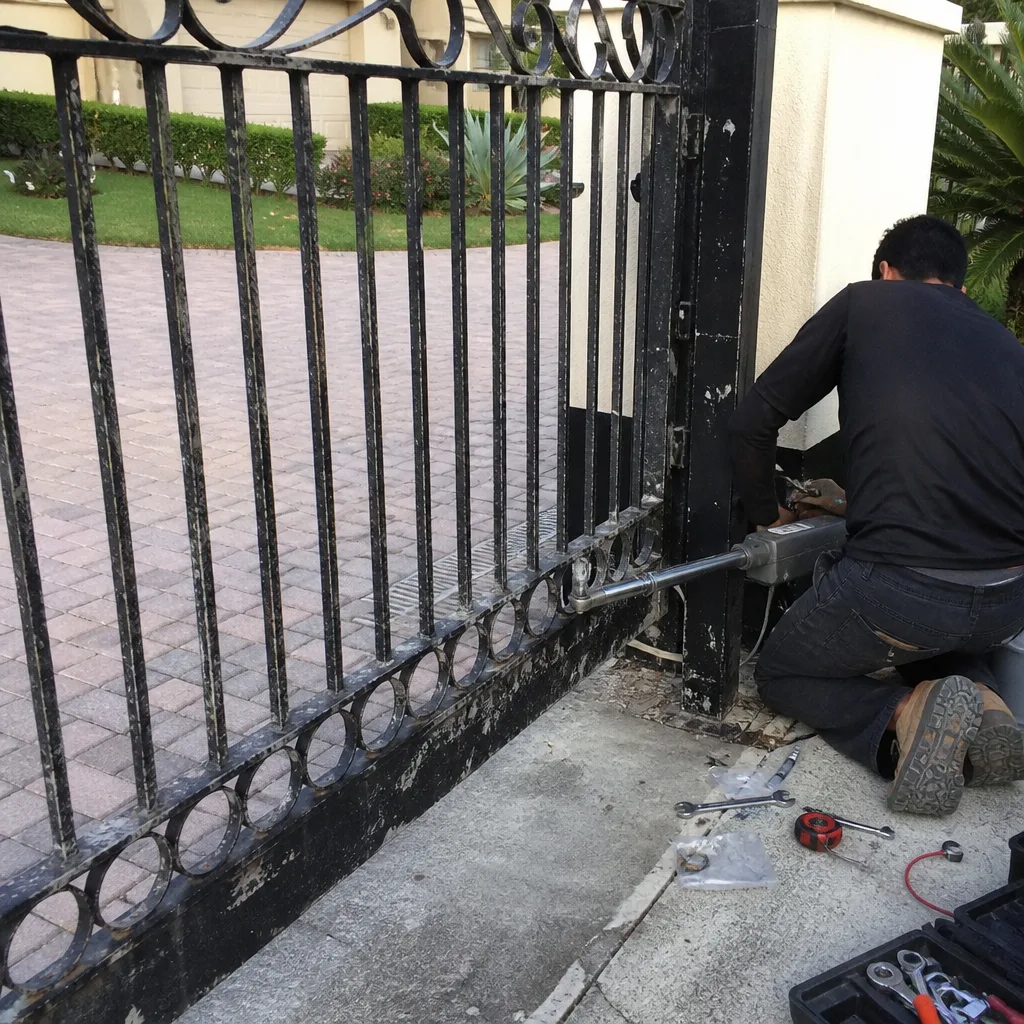 Before
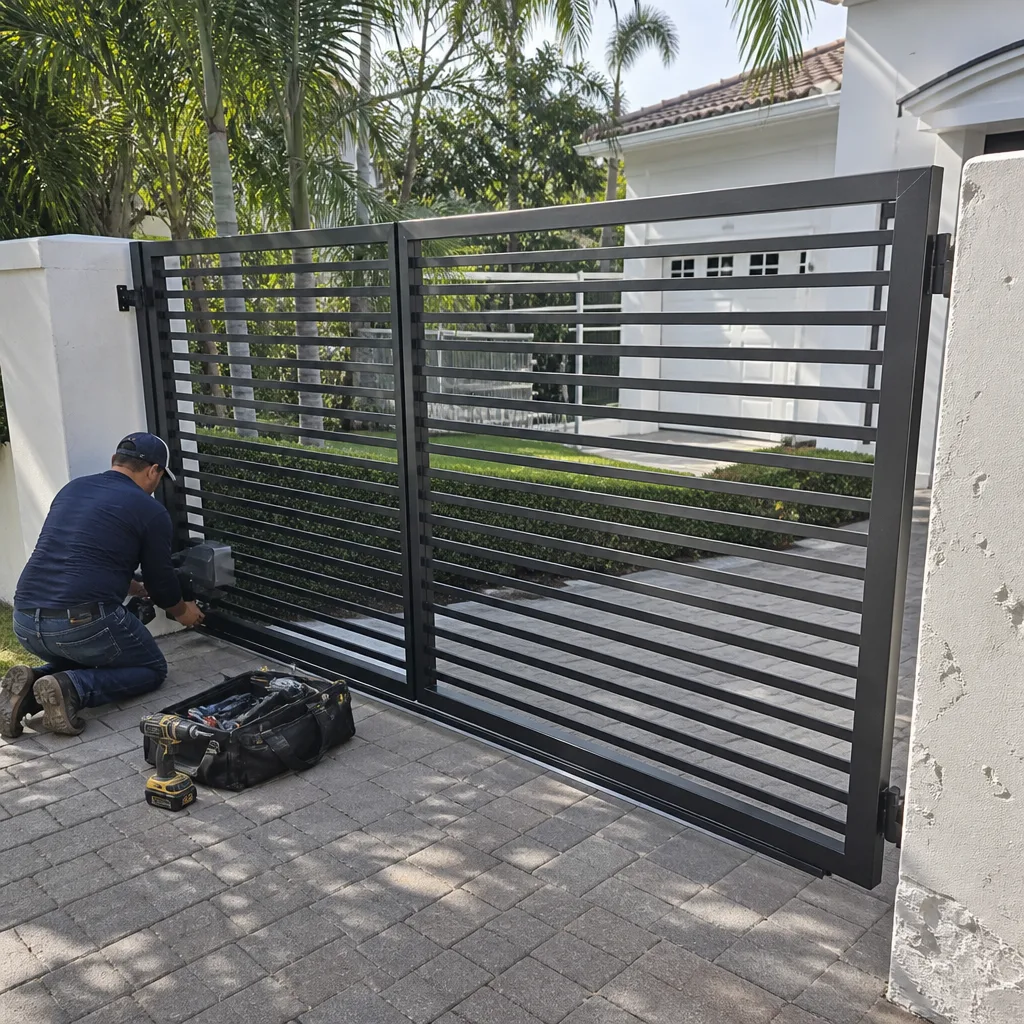 After
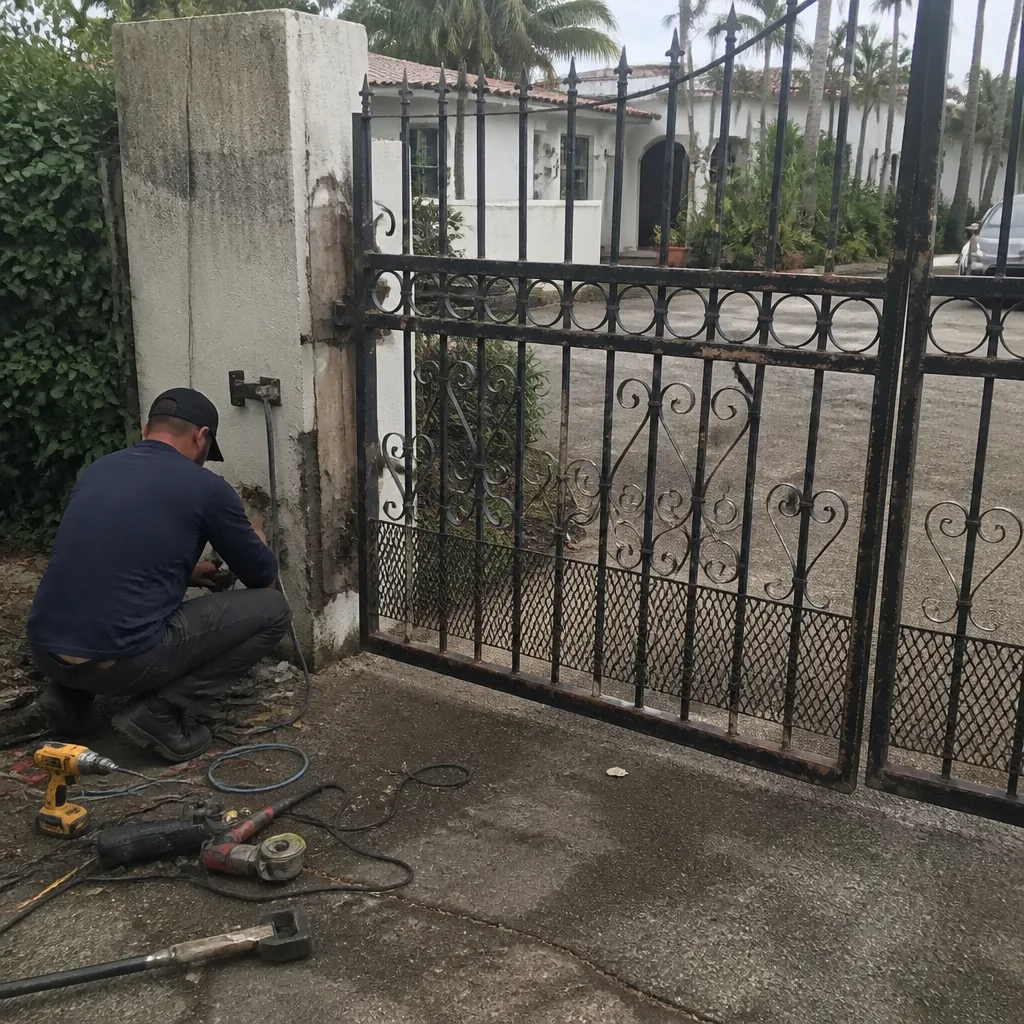 Before
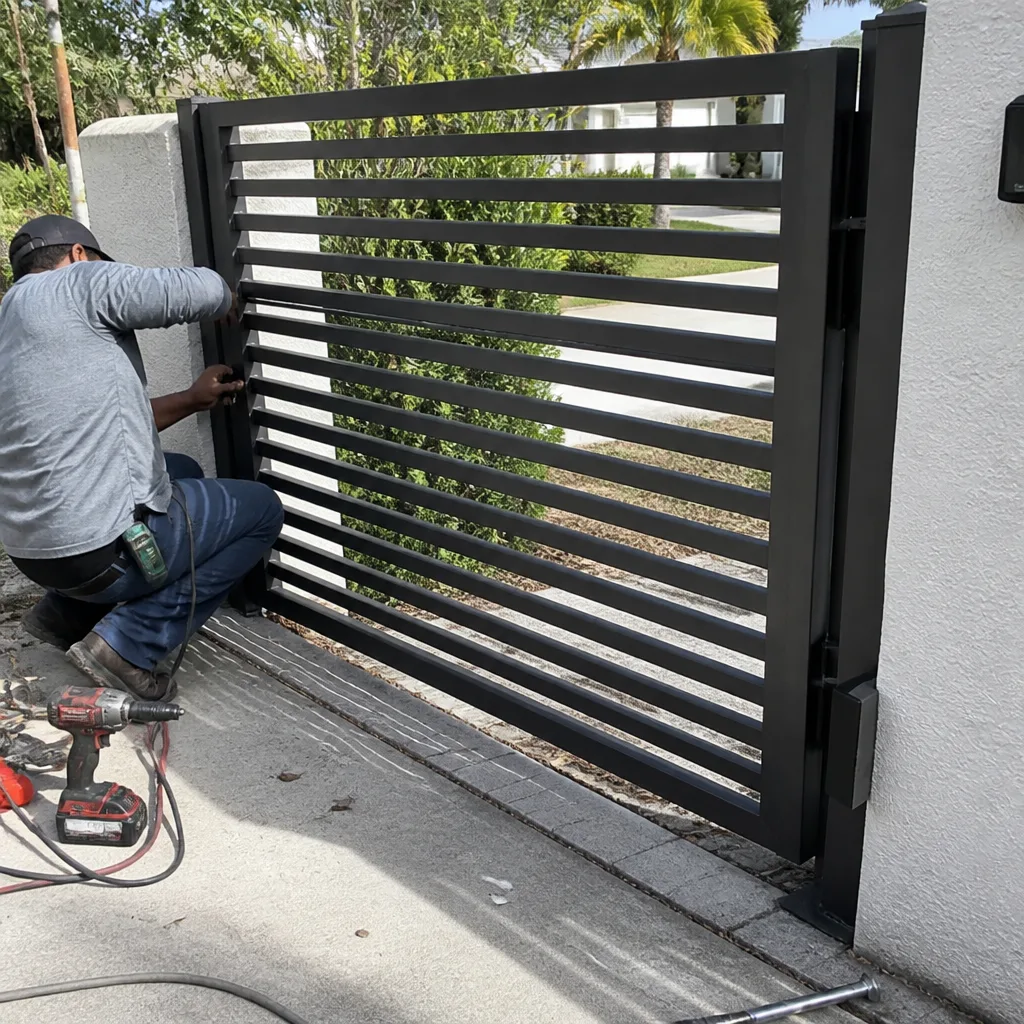 After
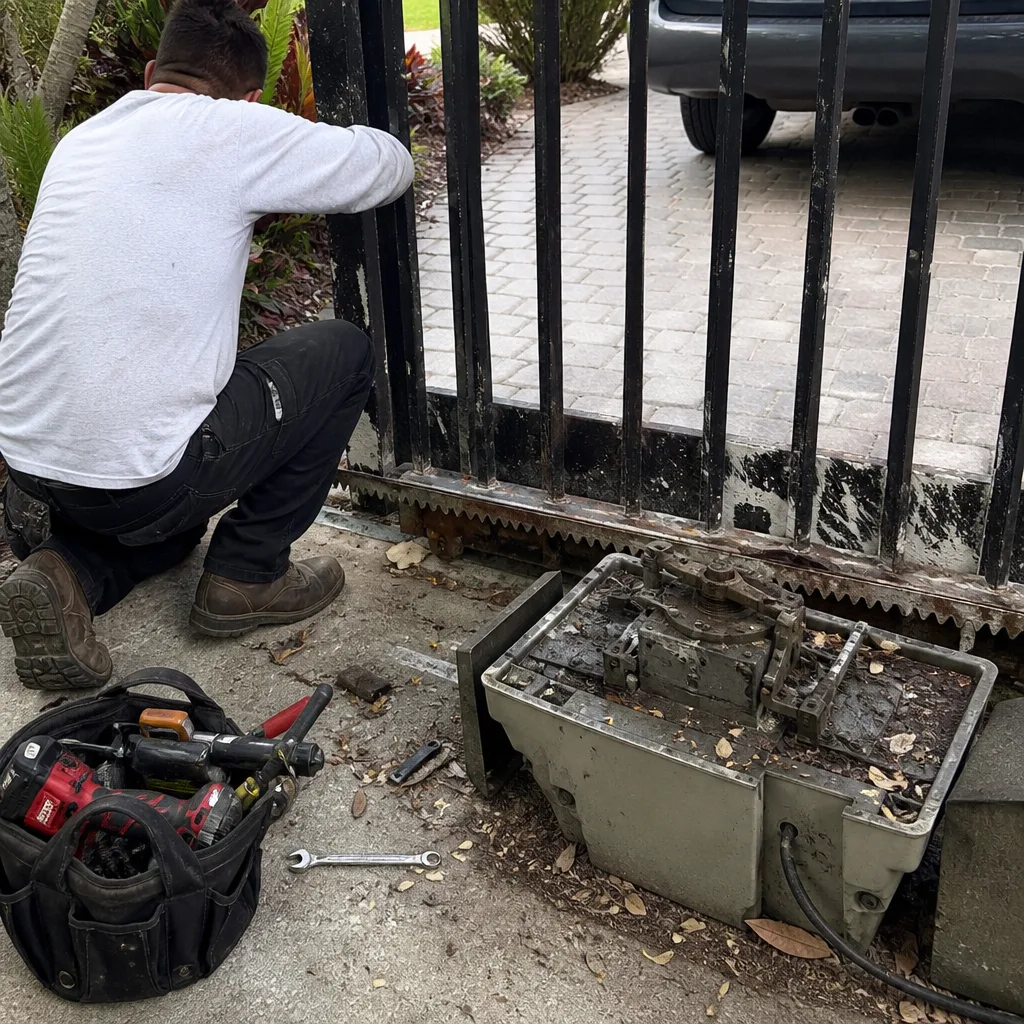 Before
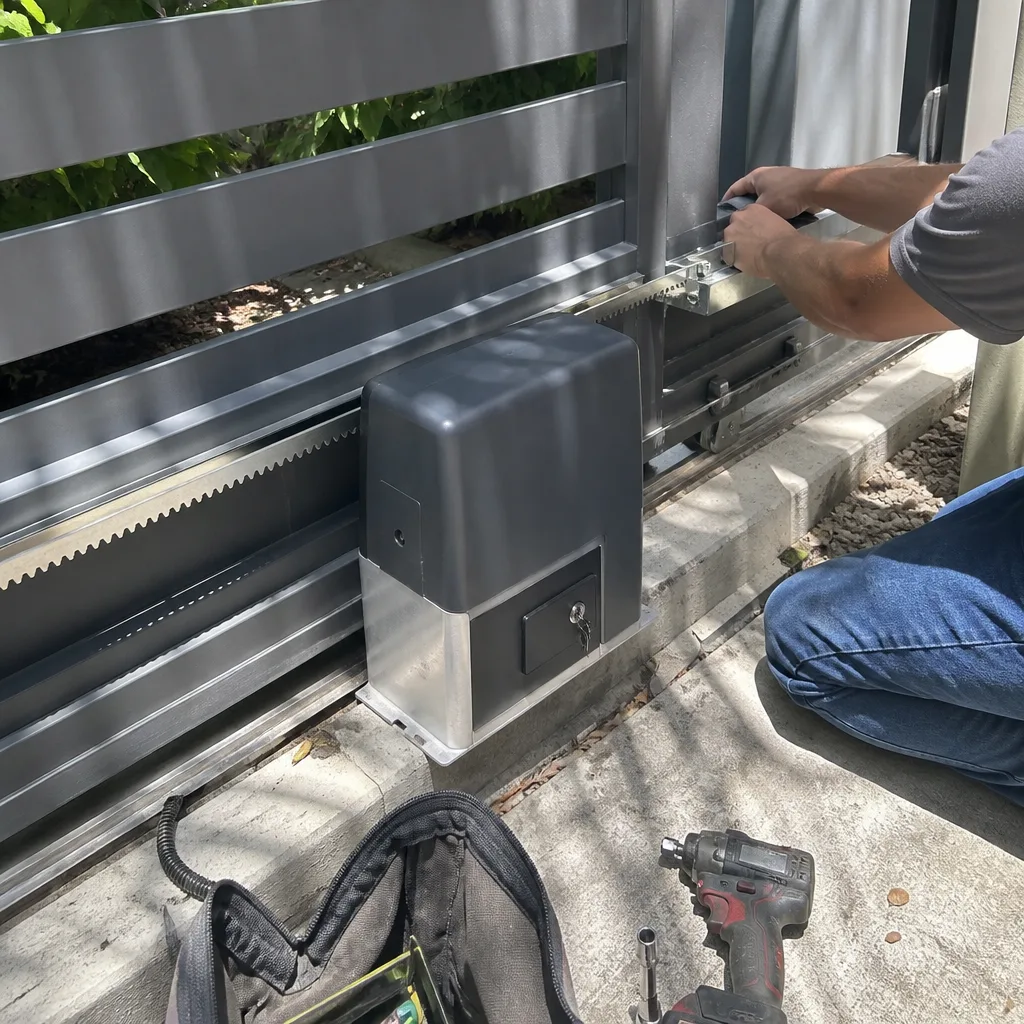 After