
Last updated October 30, 2026
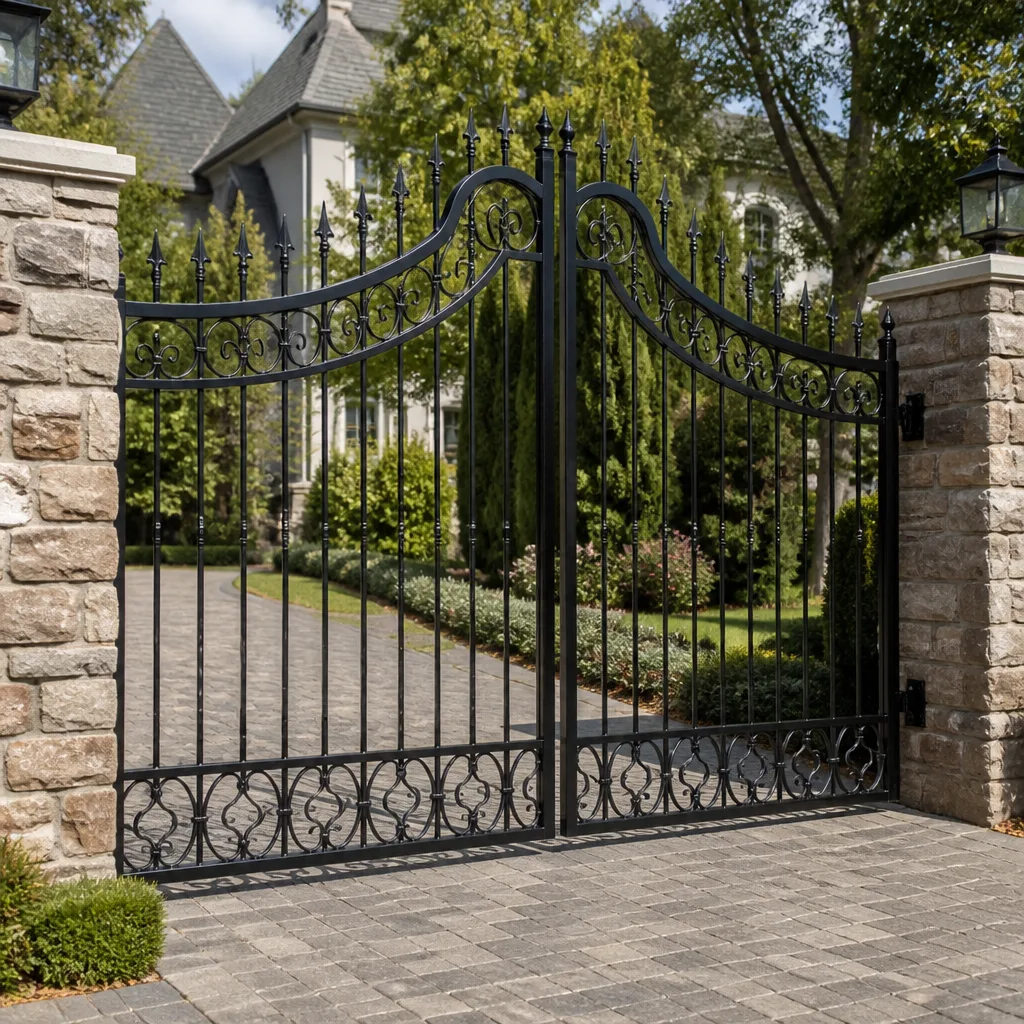 Wrought iron
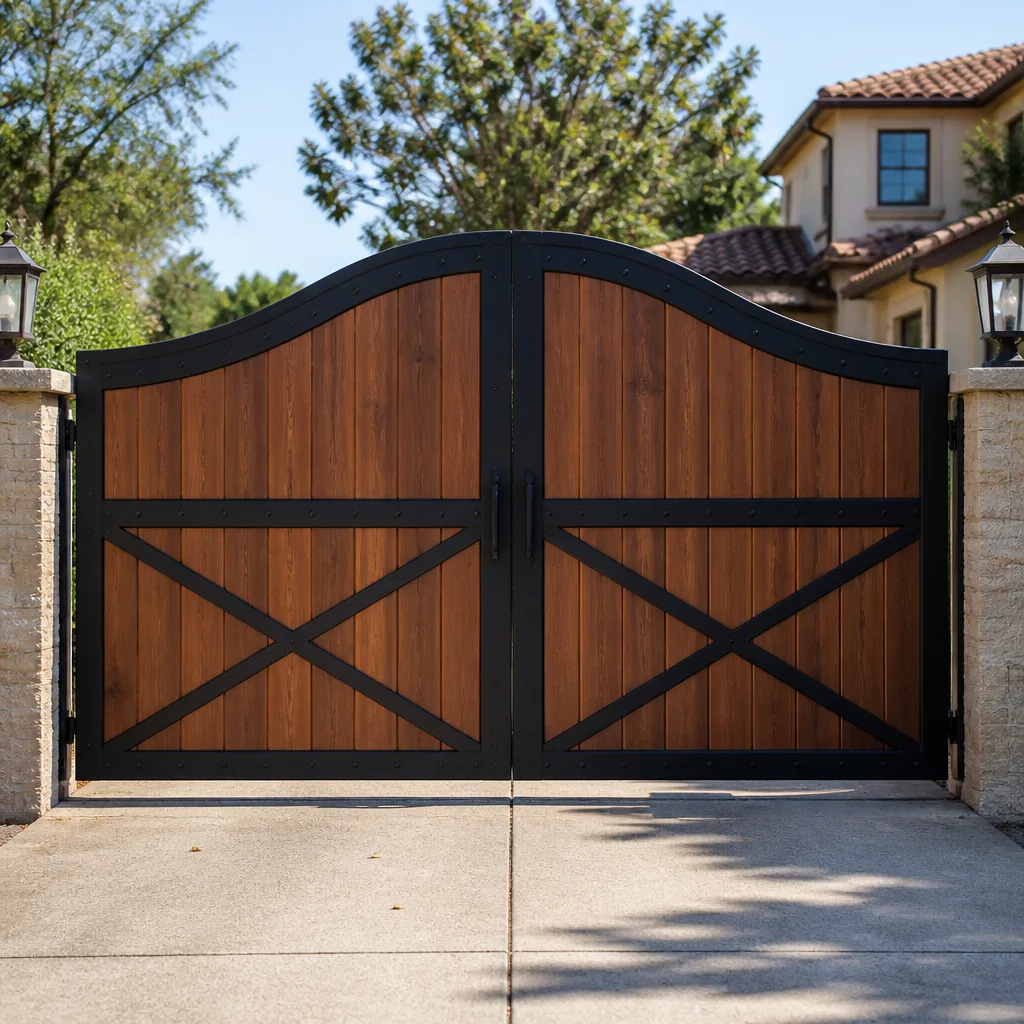 Wood & steel frame
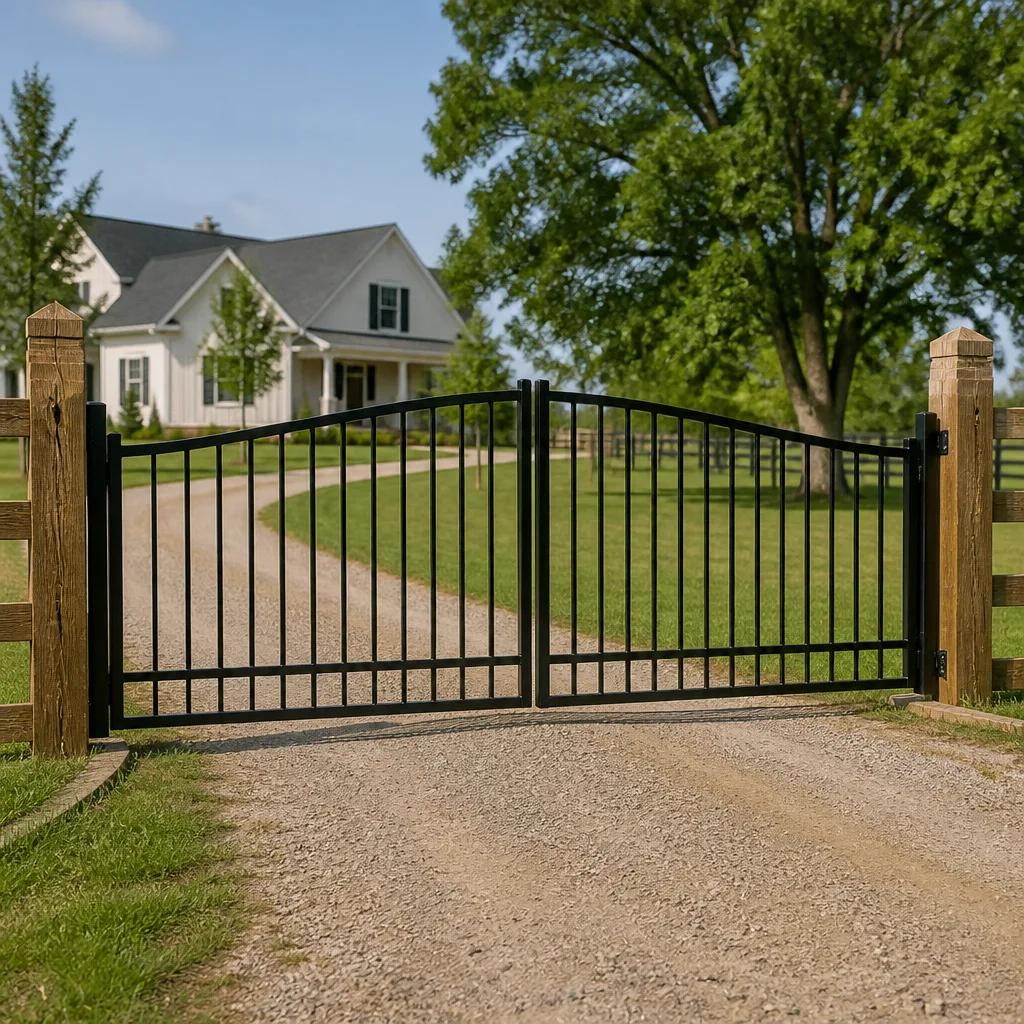 Farm & ranch
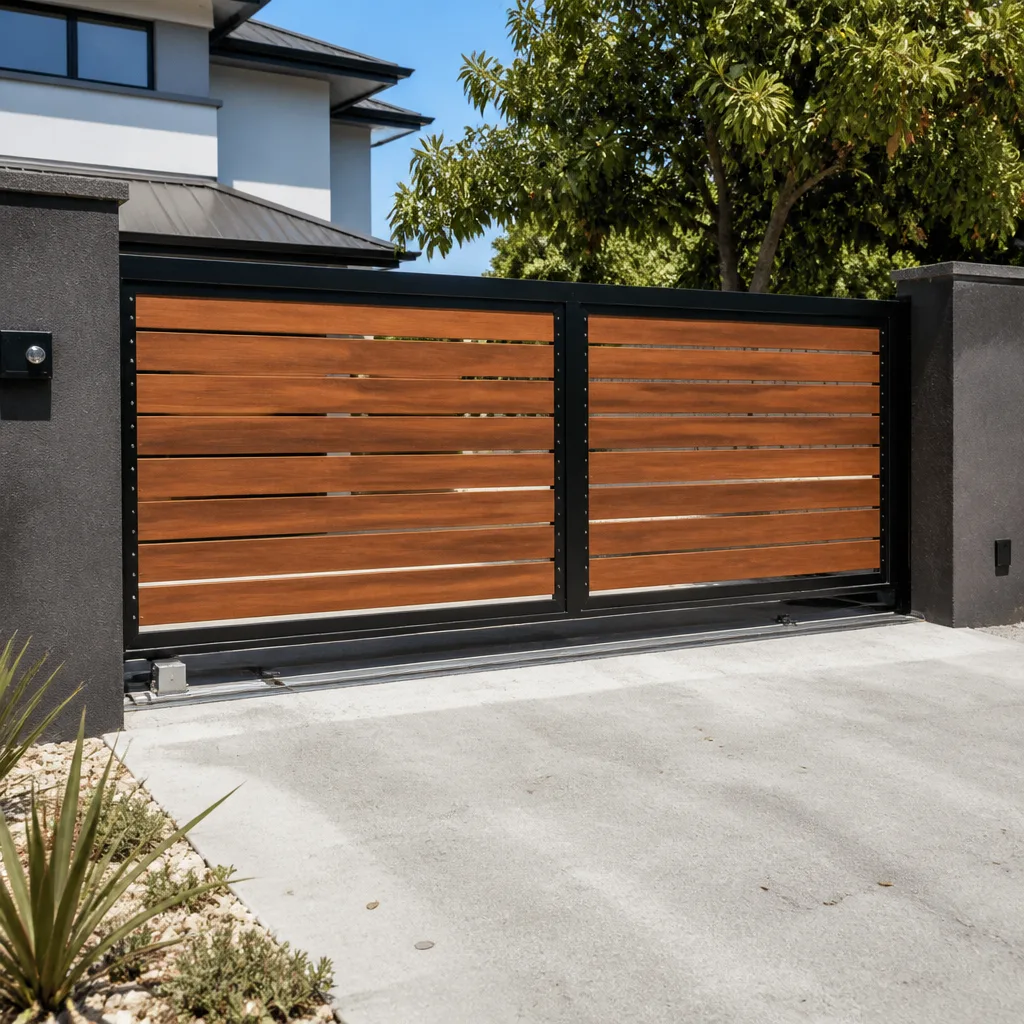 Sliding driveway gates
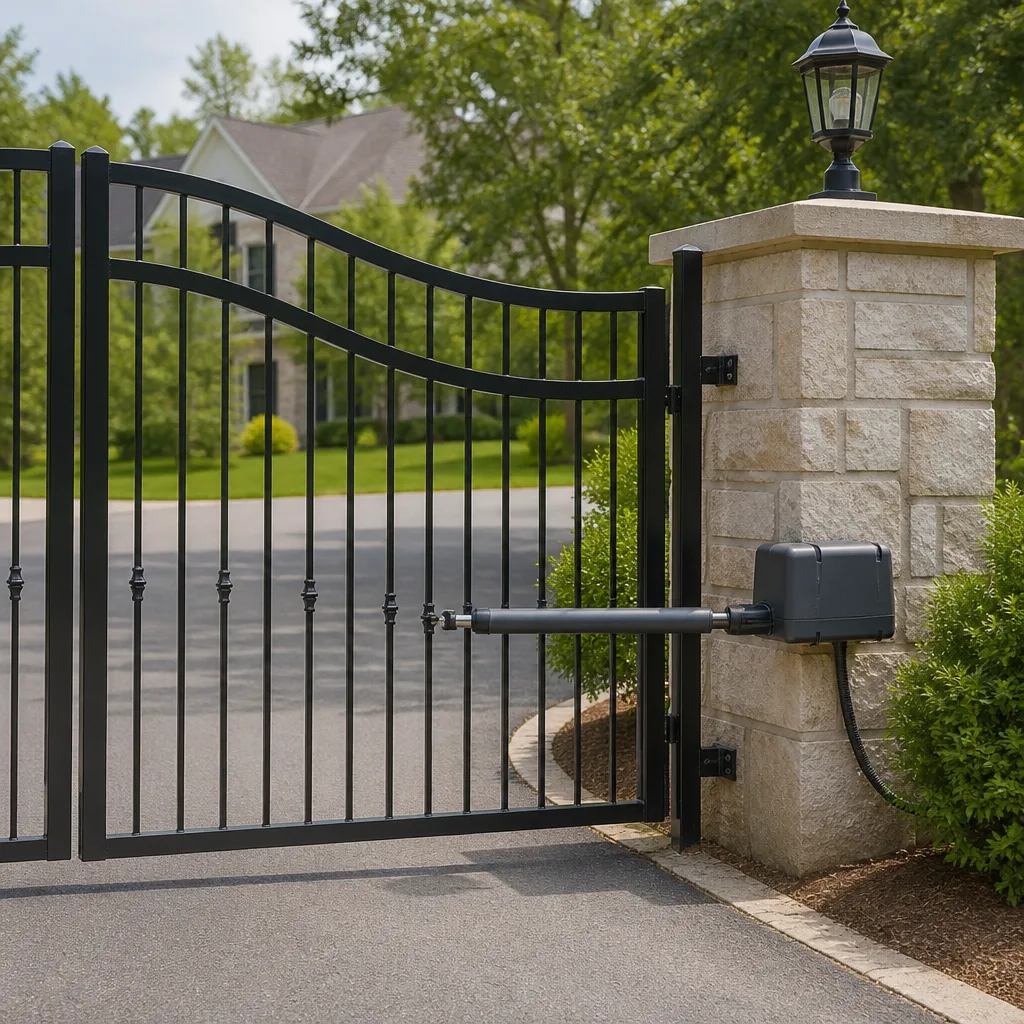 LiftMaster operators
Free on-site gate assessment - hinges, posts, and your LiftMaster or Nice gate operator checked before anything is quoted
The assessment is free and the quote is the invoice.
Get your free estimateGate Repair Permits, Codes & Inspections in FL: What You Need to Know
One of the most common reasons a home sale stalls in Palm Beach County is an unpermitted gate installation the seller didn’t know required a permit, discovered during buyer inspection at the worst possible moment. We’ve watched this exact scenario unfold in West Palm Beach more times than we can count: a beautifully installed electric gate becomes a liability because nobody pulled the paperwork. In this guide, you’ll learn exactly when a permit is required, what Florida Building Code says about gate work, how Palm Beach County inspections actually work, and what to do if you discover unpermitted gate work on a property you already own. For more details, see our Gate Repair Warning Signs: A West Palm Beach Homeowner’s Reference Guide.
Quick Answer
In Florida, gate repair typically does not require a permit when you’re replacing like-for-like components such as hinges, wheels, or control boards. Gate installation, structural modification, or adding an electric operator almost always requires a permit through your local building department, with Palm Beach County enforcing Florida Building Code thresholds that trigger review at specific points. HOA approvals exist as a separate layer on top of municipal requirements, and in West Palm Beach, skipping either one can delay a sale or void an insurance claim.
Styles & brands we work with
Table of Contents
- Repair vs. Alteration: Where Florida Draws the Line
- Florida Building Code Thresholds for Gate Work
- Palm Beach County Permit Process: Timelines and Fees
- HOA Overlay Requirements That Exist Independent of County Code
- How Inspectors Evaluate Gate Operators vs. Structural Work
- Purchased a Home With Unpermitted Gate Work? Here’s the Path
- Common Mistakes to Avoid
- When to Call a Professional
- Frequently Asked Questions
Repair vs. Alteration: Where Florida Draws the Line
Florida Building Code draws a line between repair and alteration that catches a lot of West Palm Beach homeowners off guard. The distinction matters because it determines whether you need a permit at all. A repair restores something to its original condition without changing its function, size, or capacity. An alteration changes any of those three things.
Replacing a worn gate wheel, a rusted hinge, or even a failed LiftMaster control board on the same mounting pattern counts as repair. You’re restoring the gate to working order. Swapping a mechanical gate for an electric one, widening a gate opening, adding a pedestrian gate alongside a vehicle gate, or changing a swing gate to a slide gate counts as alteration. That triggers the permit process in Palm Beach County.
The practical consequence: if your gate broke and you’re repairing it in place with equivalent parts, you’re generally fine to proceed without paperwork. If you’re changing what the gate does or how it’s powered, you need to pull a permit before work starts. In our experience, the confusion usually comes with electric conversions. A homeowner could replace a manual gate operator with an electric opener and assume it’s a simple upgrade. The county sees it as a new installation subject to code review.
This matters beyond the permit itself. Insurance adjusters in West Palm Beach increasingly ask for permit records after storm damage claims involving gates and fences. If the gate that failed during a hurricane was installed without a required permit, the claim gets complicated fast.
Florida Building Code Thresholds for Gate Work
Florida Building Code (FBC) applies to gates in several specific ways that most homeowners never encounter until an inspector brings them up. The thresholds below are the ones we see enforced in West Palm Beach and throughout Palm Beach County.
- Structural posts and footings: Any gate post set in concrete over 4 feet tall falls under FBC wind load provisions. Florida’s high-velocity hurricane zone (HVHZ) requirements apply in Palm Beach County, meaning posts need specific embedment depth and concrete volume based on gate height and panel weight.
- Electric operators and wiring: Any electric gate operator installation requires an electrical permit. This applies whether you’re running line voltage to a LiftMaster operator or low-voltage wiring to a FAAC control board. The electrical inspection covers wiring method, grounding, and disconnect requirements.
- Gate weight and safety devices: FBC references UL 325 for automatic gate safety. Operators need inherent entrapment protection (obstruction sensors or force settings) and, on vehicular gates, photo eyes or contact edges depending on installation type. Inspectors check these during final.
- Wind load calculations: For gates over 6 feet tall or over 8 feet wide in HVHZ zones, you may need engineered wind load calculations. This is where many DIY gate installations in West Palm Beach fail inspection: the post footings weren’t sized for hurricane wind loads.
- Access control integration: When a gate operator ties into a building’s fire alarm or emergency access system (common with commercial properties in West Palm Beach), the county requires fire marshal review as part of the permit package.
The most frequent threshold we see missed is the electric operator piece. A homeowner replaces a manual swing gate with an electric BFT actuator and never thinks about an electrical permit. The county does, and the inspector will flag it if the work is discovered later.
Palm Beach County Permit Process: Timelines and Fees
Palm Beach County handles permits through its Planning, Zoning and Building Department. For gate work on residential properties in unincorporated areas, that’s the direct authority. Within West Palm Beach city limits, the city’s Development Services Department processes permits using county code standards.
The process for gate permits follows a consistent sequence:
- Application submission: You’ll submit a permit application with a site plan showing gate location, property lines, and setbacks. For electric gates, you’ll also submit electrical drawings or manufacturer spec sheets for the operator.
- Plan review: For structural gate work (posts, footings, gates over threshold sizes), a plans examiner reviews for code compliance. Typical review time is 5 to 10 business days for straightforward residential gates. In West Palm Beach, we’ve seen reviews stretch to two weeks during the winter construction season.
- Permit issuance: Once approved, you pay the permit fee. Gate permits in Palm Beach County typically run between $75 and $250 depending on the scope. Electric gate work adds a separate electrical permit, usually $50 to $150.
- Inspection scheduling: Inspections are scheduled by phone or online. For structural work, you’ll typically need a footing inspection before concrete pour and a final inspection after gate installation.
- Final approval: The inspector signs off, the permit is closed, and the paperwork goes on file with the county.
Total timeline for a simple gate permit in West Palm Beach runs two to four weeks from application to final approval. Larger or commercial gate projects, especially those with access control systems tied to electric gate repairs or retrofits, can take four to eight weeks with plan review iterations.
HOA Overlay Requirements That Exist Independent of County Code
Here’s where West Palm Beach homeowners get caught even when they’ve done everything right with the county. Your HOA has architectural review authority that exists completely separate from Palm Beach County permitting. Getting a county permit doesn’t satisfy your HOA, and HOA approval doesn’t waive the county permit. You need both.
HOAs in West Palm Beach communities like Ibis, Mirasol, and Ironhorse routinely impose gate standards stricter than county code. Common HOA requirements we encounter:
- Material restrictions: Wrought iron or aluminum only. No chain-link for vehicle gates. Specific powder coat color palettes.
- Height and design standards: Gate height maximums often run lower than FBC limits, and decorative elements must match the community’s architectural style guide.
- Operator enclosure rules: Many HOAs require control boxes to be concealed or painted to match the fence line, restricting brands and mounting configurations.
- Approval timelines: Architectural review boards (ARBs) meet monthly, sometimes quarterly. Skipping this step can delay a gate project by 60 to 90 days beyond the county permit timeline.
- Retroactive enforcement: HOAs in Palm Beach County can fine you for unapproved gate work even if you have a closed county permit. They can also require you to modify or remove the gate at your expense.
We’ve seen a homeowner with a fully permitted, code-compliant FAAC electric gate get slapped with an HOA violation because the gate’s ornamental design didn’t match the community’s style guide. The county sign-off didn’t matter. The HOA overlay is real, and it functions like a second building department with its own priorities.
How Inspectors Evaluate Gate Operators vs. Structural Work
Palm Beach County inspectors approach gate operator installation first as an electrical inspection, then as a safety inspection. The structural side gets a different pass with different priorities. Understanding both helps you prepare for what the inspector will actually check.
For structural gate and post work, the inspector verifies:
- Post embedment depth meets FBC wind load requirements for HVHZ. In Palm Beach County, this typically means posts set 36 to 48 inches deep with proper concrete volume.
- Gate frame construction matches the approved plan, including material gauge and reinforcement.
- Gate swing direction and clearance meet setback requirements.
- Hinges and hardware are rated for gate weight.
For electric gate operator installation, the inspector checks:
- Proper electrical disconnect within sight of the operator.
- Wiring method, raceway, and grounding per NEC.
- UL 325 safety device presence: photo eyes, contact edges, or force-sensing controls depending on the gate type and installation date code.
- Operator brand and model listed for the application (inspectors in West Palm Beach are familiar with LiftMaster, FAAC, BFT, Linear, and the other brands we service).
- Access control wiring where applicable, especially for commercial gates with keypads, loop detectors, or telephone entry systems.
On a gate installation in West Palm Beach that includes both structural and electric scope, you’ll have separate inspections at different stages. Footing inspection comes before concrete. Electrical rough-in comes before operators are mounted and covered. Final comes after everything is live and testable.
Purchased a Home With Unpermitted Gate Work? Here’s the Path
This scenario is more common in West Palm Beach than most real estate agents will tell you up front. A buyer closes on a home, later discovers the electric gate was installed without a permit, and assumes the only fix is full demolition and rebuild. That’s rarely the case. Palm Beach County has provisions for after-the-fact permitting of existing work.
Contrary to what many assume, the county wants unpermitted work brought into compliance far more than it wants to punish property owners. The fear we hear from homeowners in communities like Flamingo Park and El Cid is that calling the county about unpermitted work will trigger fines or forced removal. In our experience, Palm Beach County takes a compliance-first approach for after-the-fact permits when the work was done by a previous owner and the current owner is acting in good faith.
The path typically looks like this:
- Document existing conditions: Photograph the gate, operators, posts, and any electrical connections. Note the operator brand (LiftMaster, FAAC, BFT, Linear, etc.) and model if visible. If not visible, plan to have a gate professional identify it during assessment.
- Hire a licensed contractor to assess: A gate specialist or licensed electrician evaluates the installation against current FBC requirements. This identifies gaps: footing depth that can’t be verified, missing UL 325 safety devices, wiring that doesn’t meet NEC, post sizes below wind load minimums.
- Bring deficient items into compliance: Common retrofits include adding photo eyes or contact edges, upgrading the electrical disconnect, adding surge suppression (a real concern for West Palm Beach gates given lightning frequency), and verifying or extending post footings with proper concrete reinforcement.
- File the after-the-fact permit: The contractor files a permit package with the county describing the existing installation, the retrofits performed, and the compliance path for each code section. Palm Beach County will review and, in most cases, approve the permit and schedule inspection.
- Pass inspection and close the permit: The final inspection confirms the gate meets compliance standards. You now have a permit record that resolves the title issue and removes the sale-blocking liability.
The cost of this compliance path runs well below full replacement in most cases. A gate that was solidly built but simply unpermitted often needs safety device retrofits and electrical grounding corrections, not new posts and a new operator. That’s the difference between a few thousand dollars and twenty thousand.
This is where Sovereign Gate Repair home service area coverage helps. We’ve walked West Palm Beach homeowners through after-the-fact permit compliance multiple times, including installations with older operators that single-brand dealers won’t touch.
Common Mistakes to Avoid
- Skipping both permits and HOA approval, then selling the home. This creates a title defect that most West Palm Beach buyers will catch during inspection. You’ll either fix it under time pressure or lose the sale.
- Assuming an electric gate converted from manual needs no electrical permit. Any electric operator or automation, including a Mighty Mule or Ghost Controls retrofit, triggers electrical permit review in Palm Beach County. The county treats it as a new electrical installation.
- Installing a heavier gate on posts sized for a lighter one. Changing the gate panel material from aluminum to wrought iron without upsizing posts is a structural permit trigger and a safety issue. Inspectors flag this during related permit reviews.
- Skipping wind load considerations in West Palm Beach’s HVHZ. This is Florida-specific. If you’re installing a gate over 6 feet tall or wide and haven’t verified footing depth, you’re betting against hurricane season. The inspector will verify if the work is permitted; the wind will verify if it isn’t.
- Hiring a general handyman who doesn’t do electric gates, then trying to permit the work later. The resulting installation usually fails on UL 325 safety devices and electrical code. Bringing non-compliant work to code after the fact costs more than doing it right the first time.
- Treating HOA approval as optional for gate replacement. Even like-for-like gate replacement can require ARB review in stricter West Palm Beach communities. Check your governing documents before any gate work. The fine for skipping it is often higher than the gate.
- Assuming the county won’t find out. Permit records are public, and unpermitted work gets discovered at the worst possible moments: home sale, insurance claim, lien inspection, or when the gate fails and a licensed contractor has to file paperwork to fix it.
When to Call a Professional
Any gate project that involves structural posts, footings, electric operators, or access control in West Palm Beach is professional territory. The permit process requires drawings, spec sheets, and code compliance that a handyman isn’t equipped to navigate. If your gate is over 6 feet tall or wide, if it’s electric, if your HOA requires architectural review, or if you’ve discovered unpermitted gate work on a property you own, get a gate specialist with Gate Repair services involved before you file anything.
Sovereign Gate Repair offers free estimates in West Palm Beach, call (855) 360-5979. We work on the brand you already have, handle electric gate diagnostics not just mechanical fixes, and can manage the permit process for gate work from start to final inspection.
Frequently Asked Questions
No permit is required for like-for-like gate repair in Florida, including replacing hinges, wheels, rollers, control boards, and operators with equivalent models. A permit is required when the work changes the gate’s size, function, power source, or structural configuration. Call (855) 360-5979 for help determining which category your project falls into.
Gate permits in Palm Beach County typically range from $75 to $250 for structural work, with a separate electrical permit of $50 to $150 for electric operator installation. Actual fees depend on project scope and current county fee schedules. Estimates are free when you call (855) 360-5979.
No. Electric gate operator installation requires an electrical permit in West Palm Beach and throughout Palm Beach County. The operator is treated by the county as an electrical installation, subject to NEC requirements for wiring, grounding, and disconnect, plus UL 325 safety device standards.
Buyer inspections commonly flag unpermitted gate work in West Palm Beach, and the issue can stall or kill the sale. The seller typically has to either provide after-the-fact permit compliance before closing or negotiate a credit. Bringing existing gate work into compliance is usually faster and less expensive than full replacement.
No. HOA architectural approval and Palm Beach County permits are separate requirements. You need both for gate work that triggers either authority. HOA approval does not waive county permitting, and a county permit does not satisfy HOA review. Check both before any gate installation or major modification.
Simple residential gate permits in Palm Beach County typically take two to four weeks from application to final inspection. Plan review alone runs 5 to 10 business days, with longer timelines during the winter construction season in West Palm Beach. Larger or commercial gate projects with access control integration can take four to eight weeks. Call (855) 360-5979 to discuss your timeline.
The Bottom Line
Permitting in Florida for gate work is a layered system: Florida Building Code thresholds, Palm Beach County review processes, and HOA architectural standards operating on top of each other. Repair work generally skips the permit requirement. Installation and alteration generally triggers it. Electric operators always need electrical permits. And unpermitted gate work is fixable without a full rebuild when you take the after-the-fact compliance path. The key is knowing which layer applies before you start, so a gate that was meant to protect your West Palm Beach property doesn’t become the thing that endangers the sale of it. Explore our more guides & resources for additional help.
Written by the team at Sovereign Gate Repair, serving West Palm Beach since 2015. For gate repair permits, code questions, or a free estimate on gate work in West Palm Beach, call (855) 360-5979.
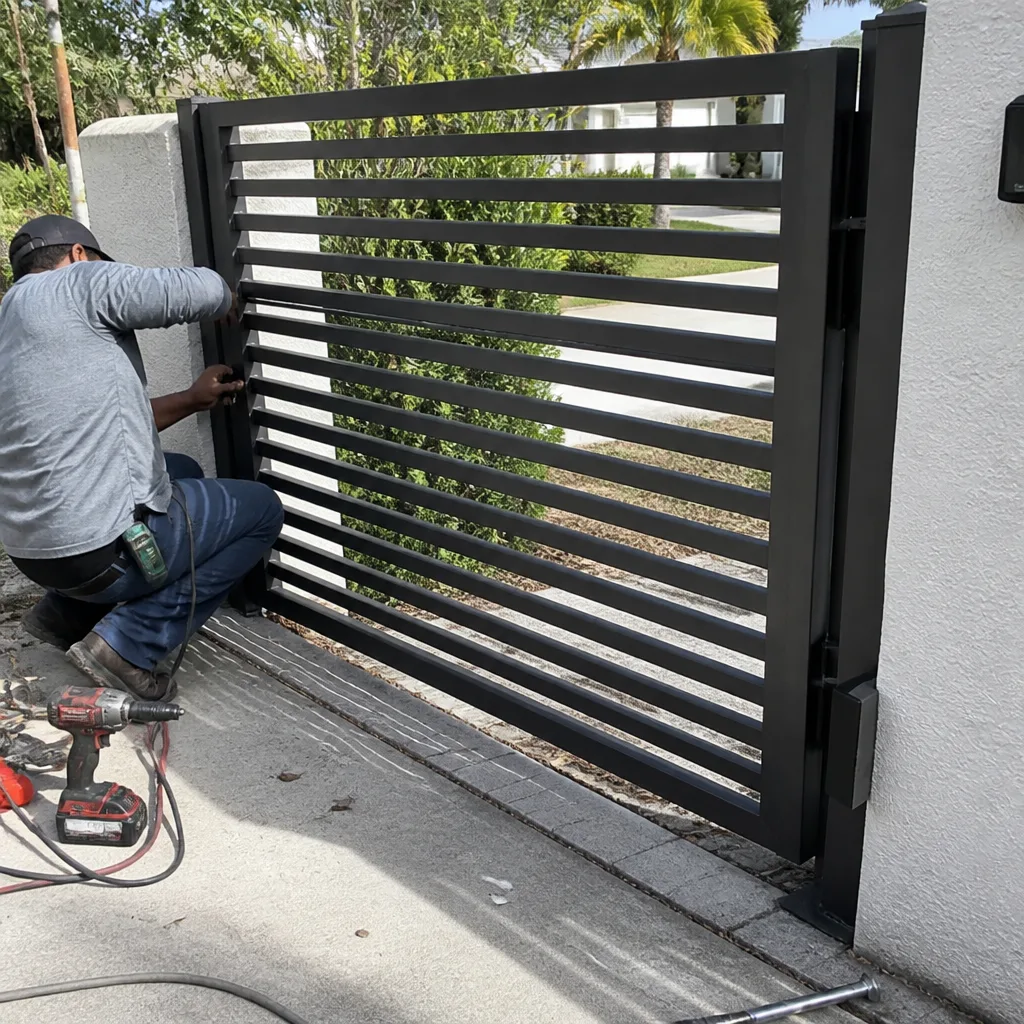
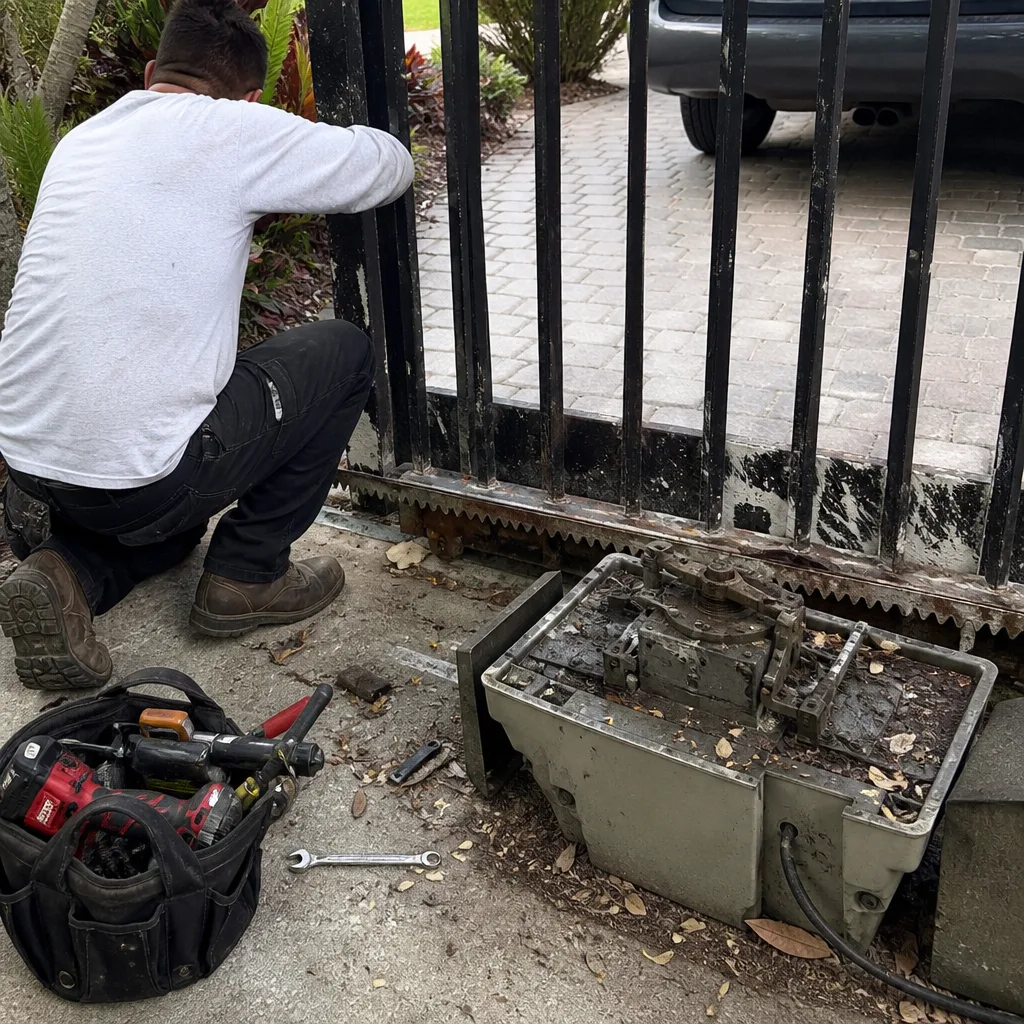
See the difference
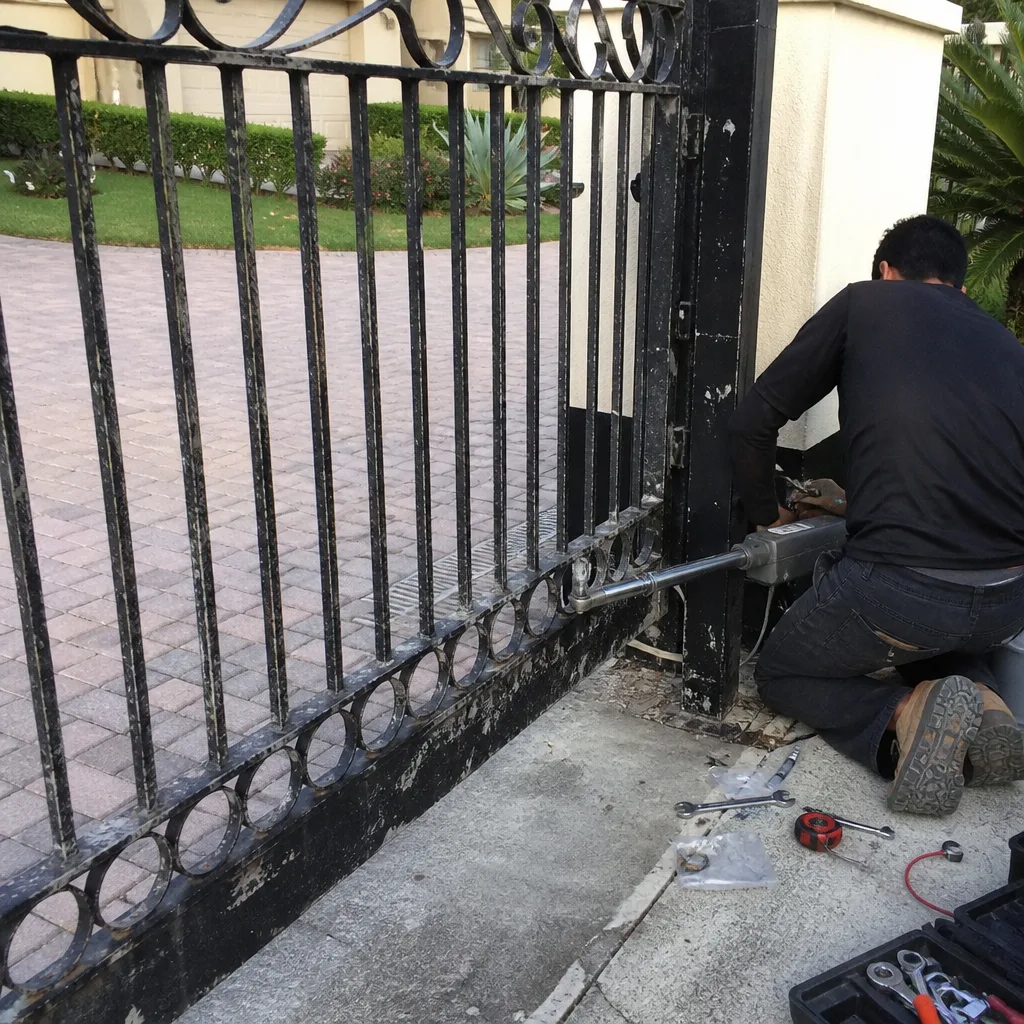 Before
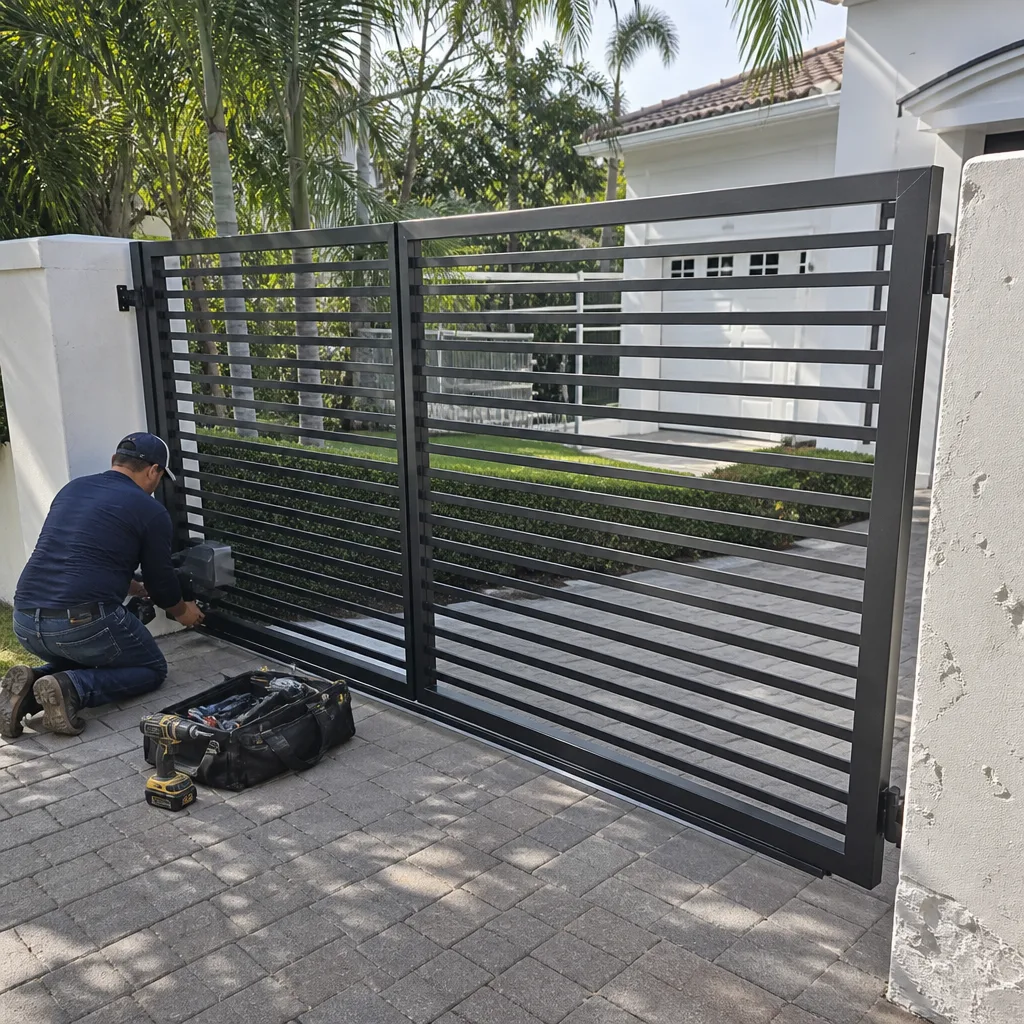 After
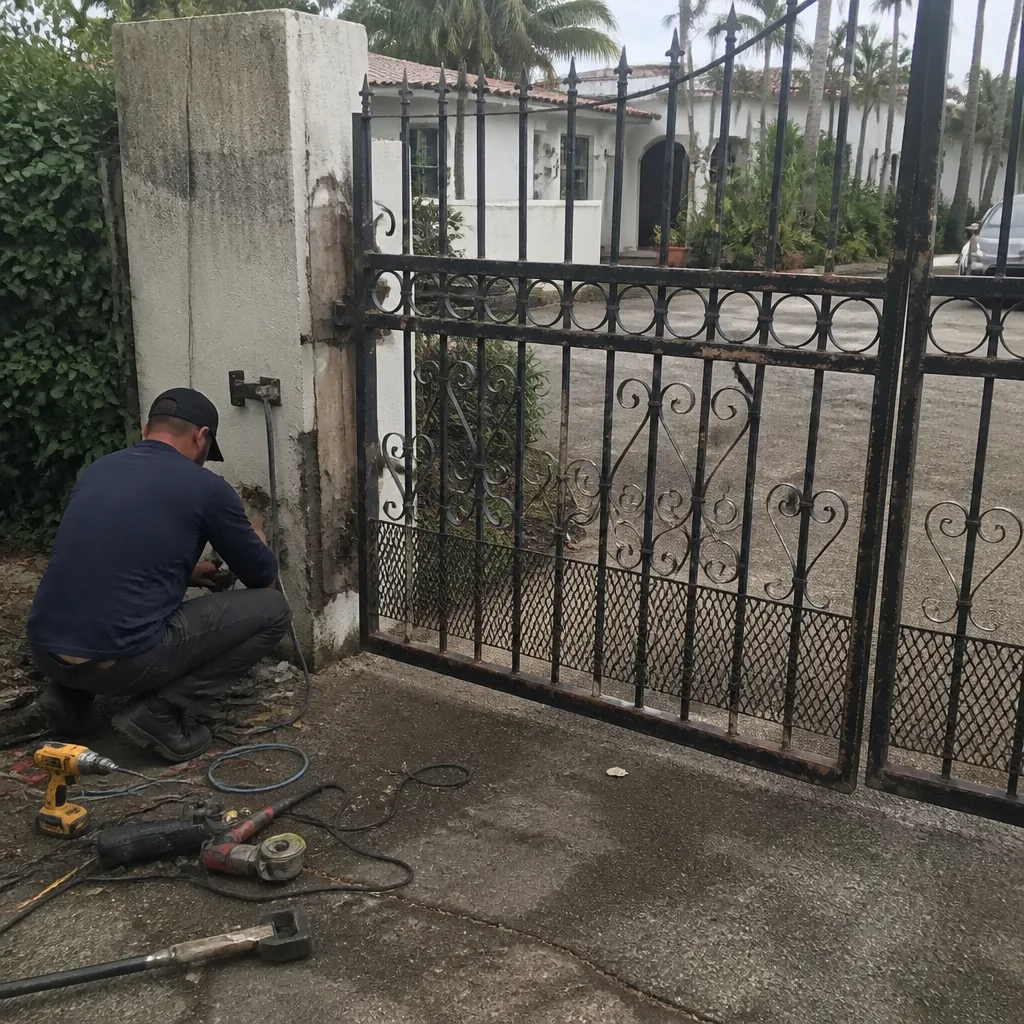 Before
 After
 Before
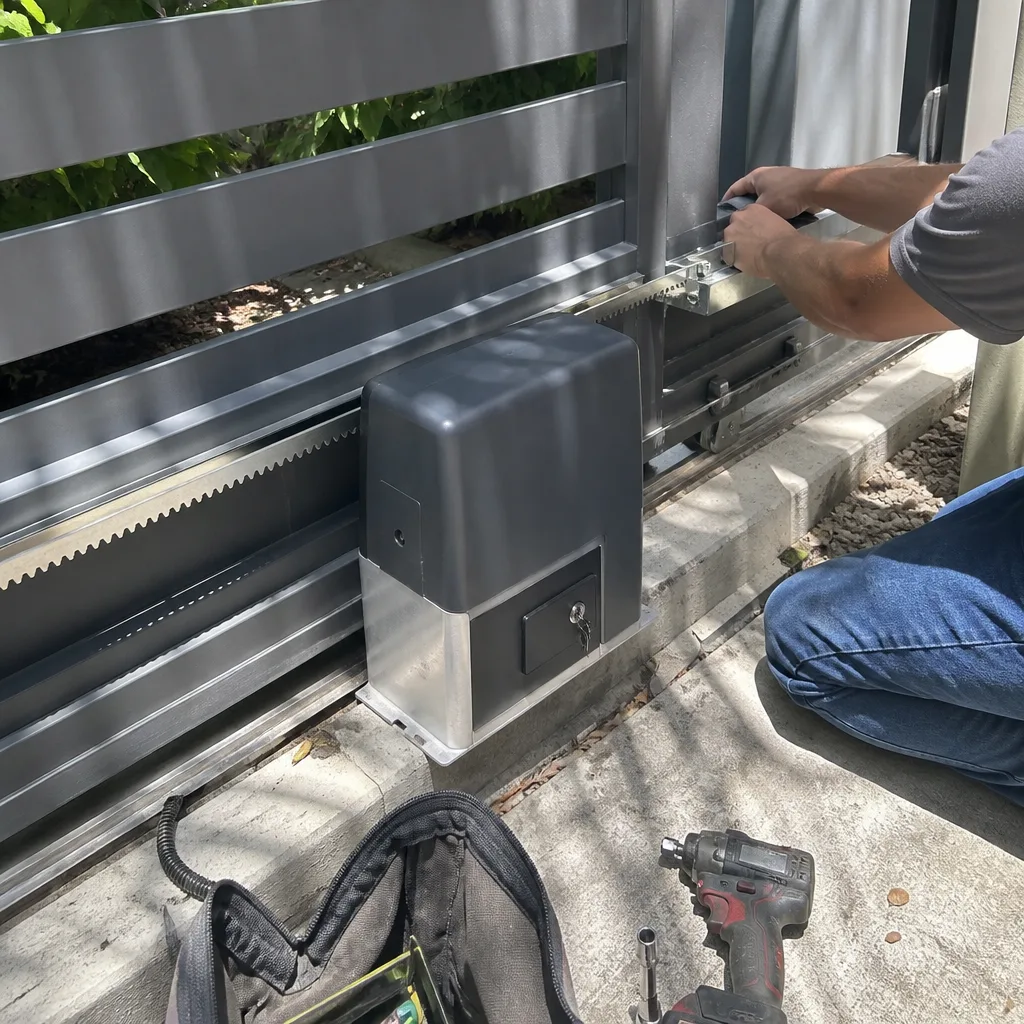 After